Indian Wildlife Safari Trail – 12 Days
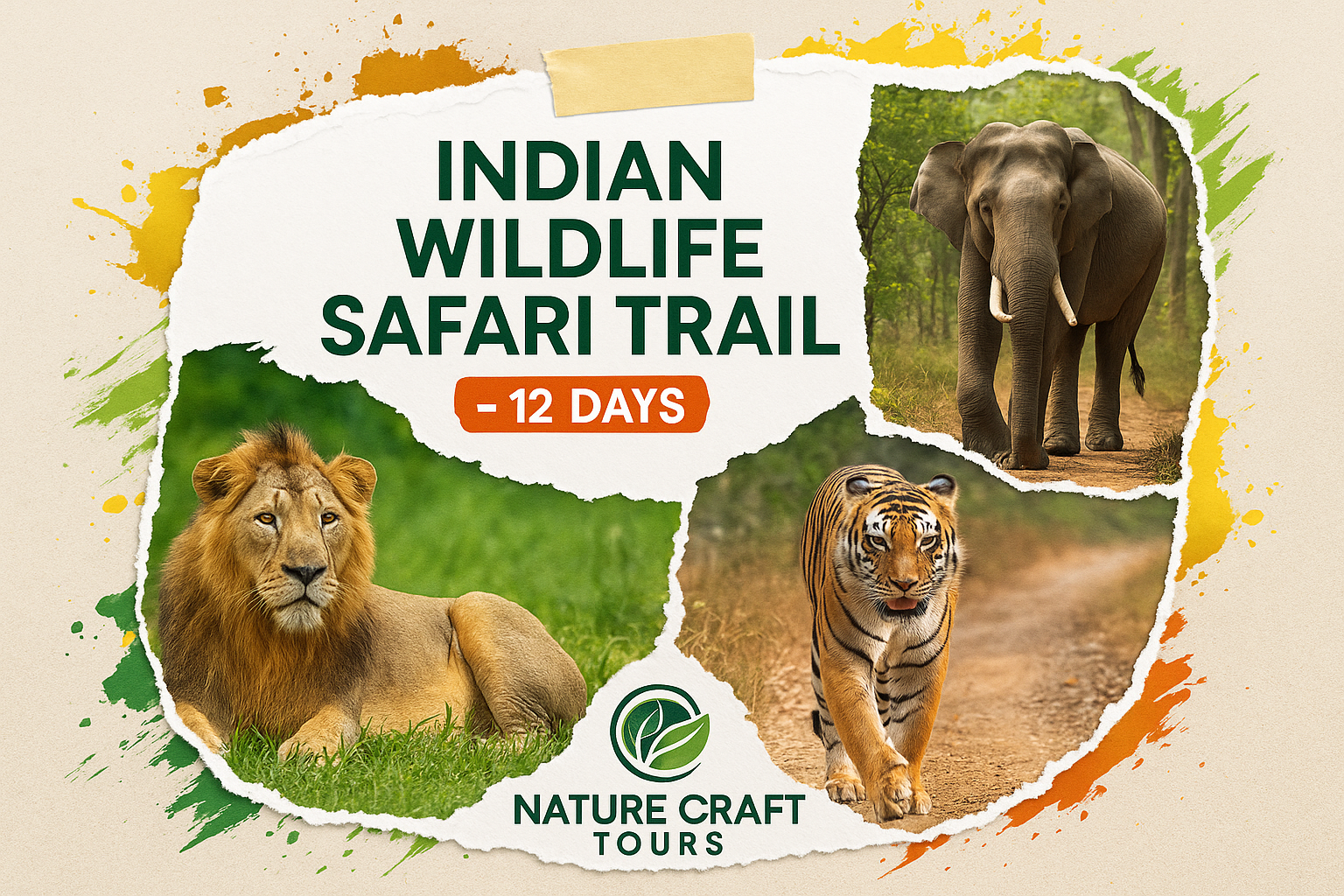
India is one of the world’s richest wildlife destinations, blessed with an extraordinary diversity of landscapes—from dense jungles and riverine forests to grasslands, deserts, wetlands, and Himalayan foothills. The “Indian Wildlife Safari Trail – 12 Days” is a remarkable journey curated for nature lovers, wildlife photographers, adventure enthusiasts, and eco-conscious travellers who wish to explore India’s most iconic national parks and wildlife sanctuaries.
This grand expedition blends thrilling safaris, guided nature walks, birdwatching experiences, cultural insights, and immersive stays amidst pristine wilderness. Designed to cover important destinations such as Ranthambore, Corbett, Kaziranga, Kanha, Bandhavgarh, Pench, Gir, and Sundarbans (depending on chosen circuit), this trail showcases India’s remarkable biodiversity including majestic tigers, Asiatic lions, Indian rhinoceros, leopards, elephants, sloth bears, gharials, and over 1,200 species of birds.
This detailed guide covers the day-wise itinerary, key attractions, major distances, how to reach the destinations, preferred staying options (without hotel contact numbers), and the best time to visit. It is a comprehensive resource designed for travel companies, eco-tour planners, wildlife enthusiasts, and honeymooning couples who seek an adventurous yet meaningful travel experience.
Overview of the Indian Wildlife Safari Trail
The Indian Wildlife Safari Trail is not just a tour—it is a deep exploration of India’s ecological treasures. Over 12 days, travellers experience:
- The roar of the Royal Bengal Tiger in ancient forests
- The calm presence of the Asiatic Lion in its natural kingdom
- The prehistoric charm of the one-horned rhinoceros in lush grasslands
- Elephants roaming freely across riverine landscapes
- Birds migrating from distant continents
- Untouched ecosystems that support thousands of species
This tour is recommended for travellers who appreciate nature’s beauty, wilderness photography, conservation learning, and immersive jungle experiences.
12-Day Detailed Itinerary
Day 1: Arrival in Delhi
Arrive in Delhi, India’s capital city. Depending on your arrival time, explore India Gate, Lodhi Gardens, or Humayun’s Tomb for a peaceful introduction. Overnight stay in Delhi.
Day 2: Delhi to Ranthambore National Park
Depart after breakfast for Ranthambore, one of India’s most famous tiger habitats. Located in Rajasthan, it is home to lakes, palaces, rocky outcrops, and dense forests.
Distance: 380 km
Travel Time: 6–7 hours by road
Evening free for relaxation. Overnight stay in a jungle lodge or resort near the park.
Day 3: Ranthambore Jungle Safari
Enjoy two thrilling safaris—morning and evening. Ranthambore is known for its bold tigers, who often appear near lakes and open grasslands. Key species include:
- Royal Bengal Tiger
- Leopard
- Sloth Bear
- Chital & Sambar Deer
- Nilgai
- Crocodiles (near Padam Talao)
Optional visit to Ranthambore Fort, a UNESCO World Heritage Site.
Day 4: Ranthambore to Jaipur to Guwahati (Fly) – Kaziranga
Travel to Jaipur Airport and catch a flight to Guwahati (Assam). From Guwahati, proceed to Kaziranga National Park, UNESCO World Heritage Site and home to India’s largest population of the one-horned rhinoceros.
- Jaipur to Guwahati Flight Time: approx. 2.5 hours
- Guwahati to Kaziranga Distance: 195 km (4 hours)
Overnight stay in a wildlife resort in Kaziranga.
Day 5: Kaziranga Elephant Safari & Jeep Safari
Early morning elephant safari in the Central or Western Zone—best for rhino sightings. Kaziranga’s landscapes include wetlands, grasslands, forest patches, and riverine belts.
Major Wildlife Species:
- Indian One-Horned Rhinoceros (flagship species)
- Asiatic Water Buffalo
- Swamp Deer
- Eastern Wild Elephant
- Hoolock Gibbon
- Over 500 species of birds
Evening Jeep Safari for deeper exploration into the Eastern Zone.
Day 6: Kaziranga to Guwahati – Fly to Jabalpur – Kanha National Park
Proceed to Guwahati Airport, take a flight to Jabalpur (Madhya Pradesh), and continue to Kanha National Park—one of India’s most scenic tiger reserves and the inspiration behind “The Jungle Book.”
Distance (Jabalpur to Kanha): 165 km
Travel Time: 4 hours
Check-in at the wildlife lodge and relax with a traditional tribal dinner or nature walk.
Day 7: Kanha National Park – Full Day Safari
Kanha is known for its well-managed conservation programs and diverse biodiversity. A full-day safari includes visits to Kanha Meadows, Sondar Camp, Bamni Dadar (Sunset Point), and dense sal forests.
Key Wildlife Species:
- Royal Bengal Tiger
- Barasingha (Swamp Deer) – exclusive to Kanha
- Indian Gaur
- Leopard
- Sloth Bear
- Wild Dogs (Dholes)
Evening at leisure or documentary screening at the lodge.
Day 8: Kanha to Bandhavgarh National Park
Drive to Bandhavgarh, one of India’s best tiger-spotting reserves thanks to its high density of the species.
Distance: 220 km
Travel Time: 5 hours
Bandhavgarh is famous for its rugged terrain, ancient Bandhavgarh Fort, and high probability of tiger sightings. Overnight stay at the lodge.
Day 9: Bandhavgarh Jungle Safari
Enjoy morning and evening safaris. Bandhavgarh’s Tala, Magdhi, and Khitauli zones are particularly popular for wildlife encounters.
Major Species:
- Royal Bengal Tiger
- Leopard
- Blue Bull
- Spotted Deer
- Indian Fox
- Over 250 species of birds
Optional: Visit to Shesh Shaiya, the reclining statue of Lord Vishnu.
Day 10: Bandhavgarh to Gir National Park (Flight via Ahmedabad)
Drive to Jabalpur or Khajuraho Airport for a flight to Ahmedabad. Continue to Gir National Park—the only home of the Asiatic Lion.
Ahmedabad to Gir Distance: 360 km
Travel Time: 7 hours by road
Evening cultural experience with local Gujarati cuisine.
Day 11: Gir Jungle Safari
Gir National Park offers a completely different habitat—dry deciduous forests, rocky ridges, and river systems. Take morning and evening Jeep Safaris.
Major Species:
- Asiatic Lion (exclusive to Gir)
- Leopard
- Striped Hyena
- Nilgai
- Chinkara
- Crocodiles near Kamleshwar Dam
Photography enthusiasts will find Gir’s golden sunset landscapes particularly captivating.
Day 12: Departure
Drive back to Ahmedabad and board your onward flight. This marks the end of your exceptional Indian Wildlife Safari Trail, carrying memories of jungles, rare species, conservation insights, and nature’s raw beauty.
Important Points to See Throughout the Safari Trail
Ranthambore
- Padam Talao Lake
- Ranthambore Fort
- Raj Bagh Ruins
- Three lakes (Padam, Malik, Rajbagh)
Kaziranga
- Eastern, Central & Western Safari Zones
- Kohora Range
- Elephant safari belts
- Tea Gardens & Village Walks
Kanha
- Bamni Dadar (Sunset Point)
- Kanha Meadows
- Interpretation Centre
- Shravan Tal
Bandhavgarh
- Shesh Shaiya
- Bandhavgarh Fort Trek
- Cliff viewpoints
Gir
- Kamleshwar Dam
- Crocodile Breeding Center
- Devalia Safari Park
Major Distances in the Wildlife Circuit
| Route | Distance | Time |
|---|---|---|
| Delhi → Ranthambore | 380 km | 6–7 hours |
| Guwahati → Kaziranga | 195 km | 4 hours |
| Jabalpur → Kanha | 165 km | 4 hours |
| Kanha → Bandhavgarh | 220 km | 5 hours |
| Ahmedabad → Gir | 360 km | 7 hours |
How to Reach the Wildlife Circuit
Reaching Ranthambore
Nearest Airport: Jaipur
Nearest Railway Station: Sawai Madhopur
Excellent road connectivity via national highways.
Reaching Kaziranga
Nearest Airport: Guwahati
Nearest Railway Station: Furkating
State-run and private vehicles connect Guwahati to Kaziranga.
Reaching Kanha
Nearest Airport: Jabalpur
Nearest Railway Station: Gondia / Jabalpur
Reaching Bandhavgarh
Nearest Airport: Jabalpur or Khajuraho
Nearest Railway Station: Umaria
Reaching Gir
Nearest Airport: Rajkot / Diu
Nearest Railway Station: Junagadh / Veraval
Staying Options (Properties)
Ranthambore
Ranthambore offers luxury jungle lodges, boutique resorts, heritage properties, and eco-friendly tented camps. Many provide tiger-themed décor, nature walks, and curated safari experiences.
Kaziranga
Kaziranga features wildlife resorts, tea-garden bungalows, Assamese-style cottages, and nature camps, all set amidst forests and grasslands.
Kanha
Expect luxury lodges, tribal-themed resorts, boutique forest stays, and experiential eco-camps offering serene stays with high chances of wildlife interactions.
Bandhavgarh
Known for safari lodges with private decks, treehouse stays, luxury tents, and photography-centric resorts.
Gir
Travelers can choose from forest lodges, Gujarati heritage stays, luxury wildlife retreats, and comfortable eco-resorts.
Best Time to Visit the Indian Wildlife Safari Trail
The best time to embark on this wildlife trail is between October and June.
The peak tiger-sighting months are:
- March to June: Hot, dry weather increases wildlife visibility near water bodies.
- October to February: Pleasant climate, ideal for nature walks and birdwatching.
Monsoon months (July–September) remain closed for most parks due to breeding seasons and heavy rainfall.
Conclusion
The “Indian Wildlife Safari Trail – 12 Days” is an immersive and enriching journey through India’s most iconic forests and biodiversity hotspots. It is crafted for travellers who seek more than a vacation—those who crave adventure, learning, and a deep connection with nature. This trail unravels India’s ecological wealth, its conservation success stories, and the mystique of jungles where ancient stories echo between the trees.
Whether you are a wildlife photographer, nature lover, luxury traveller, or adventure seeker, this 12-day safari trail promises unforgettable encounters, breathtaking landscapes, and moments of awe that stay with you forever.