Jhalong & Bindu
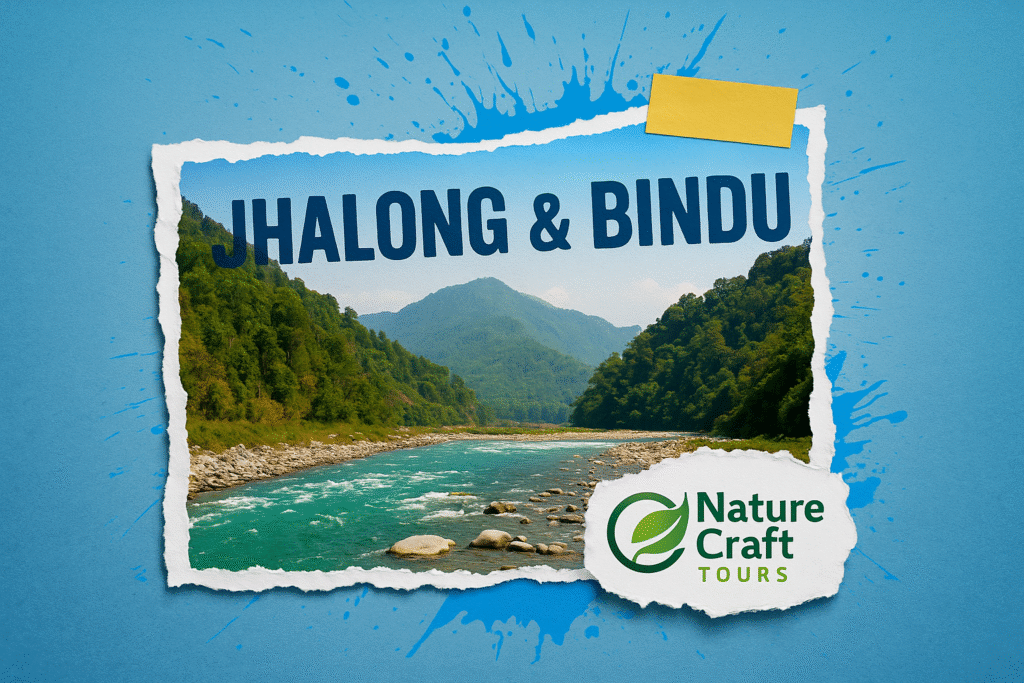
– A Serene Himalayan River Valley Destination in the Dooars
Jhalong and Bindu, two stunning settlements nestled deep within the Dooars Himalayan foothills of West Bengal, have emerged as some of the most enchanting river-valley destinations for nature lovers and travellers seeking peace, serenity, and untouched wilderness. Located along the shimmering banks of the Jaldhaka River and embraced by the Bhutan hills, these twin destinations offer unparalleled scenic beauty, vibrant biodiversity, and a soothing mountain-river atmosphere.
Jhalong, known for its hydroelectric project, forested landscapes, and rich birdlife, is a haven for travellers who wish to disconnect from their hectic urban lifestyle. Bindu, the last Indian village on this part of the Indo-Bhutan border, stands proudly with its iconic dam, terraced hills, pristine river crossings, and charming countryside ambiance. Together, Jhalong & Bindu create a captivating travel circuit ideal for families, photographers, honeymooners, birdwatchers, and anyone drawn towards nature’s raw beauty.
Understanding the Essence of Jhalong & Bindu
These two destinations lie on the Indo-Bhutan border along the Jaldhaka River, which originates from the glacial lakes of the Himalayas in Bhutan. The cultural influences, architecture, and natural surroundings subtly reflect this cross-border connection. The region is home to lush forests, cardamom plantations, terraced cultivation, and scenic mountain roads. The soothing sound of the river flowing over polished rocks, combined with the deep silence of the surrounding forests, creates an unmatched atmosphere of tranquility.
Jhalong and Bindu form part of the greater Baramangua–Complex region, which includes Paren, Godak, Todey-Tangta, and the Neora Valley landscape. The destinations are also an important part of the Dooars tourism circuit, famous for wildlife, tea gardens, river valleys, and monsoon landscapes that appear refreshingly green and vibrant.
Major Attractions in Jhalong & Bindu
Both Jhalong and Bindu are rich in scenic beauty, natural landscapes, and cultural significance. The following are the key highlights every visitor should explore:
1. Jhalong Hydel Project
The Jhalong Hydroelectric Project is one of the most significant attractions in the region. Built on the Jaldhaka River, this project plays a vital role in Indo-Bhutan hydroelectric cooperation. The massive dam, the river channel, and the surrounding mountains create a panoramic landscape perfect for photography. The sound of rushing water from the dam adds a dynamic element to the quiet mountain valley.
2. Bindu Dam
The Bindu Dam is the most iconic landmark of the region and marks a strategic point on the Indo-Bhutan border. It helps regulate water flow from Bhutan into the Indian plains. The view of Bhutanese hills on one side and the Dooars landscape on the other makes this an exceptional photo point. The dam is not open for public crossing, but the surrounding viewpoints offer mesmerising vistas of the Jaldhaka River.
3. Jaldhaka River Valley
Jhalong & Bindu unfold themselves along the curving valleys of the Jaldhaka River. The emerald green water, rocky riverbeds, pine-covered slopes, and distant mountains create a dramatic Himalayan landscape. During early mornings and sunset hours, the valley glows with colours that appeal strongly to painters and photographers alike.
4. Birdwatching Hotspots
Jhalong and its neighbouring forests are a paradise for birdwatchers. The region is home to a variety of Himalayan and migratory birds such as:
- Black Eagle
- Scarlet Minivet
- Oriental Magpie Robin
- Himalayan Bulbul
- Rufous Treepie
- Common Green Magpie
- Verditer Flycatcher
- Spangled Drongo
During winter months, several migratory birds visit the area, making the region attractive for serious birdwatching enthusiasts and photographers with telephoto lenses.
5. Forest Walks and Nature Trails
The dense forests around Jhalong and Bindu offer several peaceful and scenic walking trails. These paths wind through tall trees, bamboo groves, orange orchards, ferns, moss-covered stones, and Alpine vegetation. The quiet ambiance is interrupted only by bird calls, flowing streams, and the distant sound of the river.
6. Paren Forest Village
Located close to Jhalong, Paren is a forest village with charming wooden houses and scenic trails. Its peaceful surroundings make it ideal for a half-day visit. Terraced farms, small bridges, bamboo fences, and the lush environment create a postcard-like setting.
7. Godak
A culturally rich village located near the Nepal-Bhutan border, Godak is known for its sacred Beesh Ghar (Poison House), located inside a forested area. Surrounded by cardamom plantations and traditional rural houses, Godak offers a unique blend of spiritual heritage and nature.
8. Todey & Tangta
For travellers who wish to journey deeper into remote Himalayan terrain, Todey and Tangta provide a surreal escape. These areas are known for cardamom farming, tribal villages, and some of the most untouched landscapes in the region.
9. Bhutan Viewpoints
The viewpoints at Bindu offer clear views of Bhutanese villages, forested hills, and the mountain ridges that divide India and Bhutan. The peaceful coexistence and natural beauty of the border region leave a lasting impression.
Experiences to Enjoy in Jhalong & Bindu
A visit to Jhalong & Bindu is not just about sightseeing—it is a holistic experience where travellers connect with nature, villages, forests, and the river valley. Some essential experiences include:
- Riverside Picnics: Enjoy peaceful moments near the Jaldhaka River, surrounded by mountains and flowing water.
- Bird Photography: Capture stunning images of Himalayan and migratory birds.
- Forest Meditation: Find silence among the dense Dooars forests.
- Village Walks: Interact with locals and observe mountain farming practices.
- Sunrise & Sunset Views: Golden light falling on valleys and forests creates remarkable scenes.
- Tea Garden Visits (Near Dooars Plains): Explore the famous tea estates near Malbazar and Chalsa.
- Local Cuisine: Taste freshly prepared meals made from organic vegetables and traditional ingredients.
Distances and Travel Time Between Major Locations
Below are approximate distances from Jhalong & Bindu to key destinations:
| Location | Distance | Approx. Travel Time |
|---|---|---|
| New Jalpaiguri (NJP) | 95 km | 3 – 3.5 hours |
| Bagdogra Airport | 100 km | 3.5 – 4 hours |
| Kalimpong | 63 km | 2.5 hours |
| Paren | 10 km | 25 minutes |
| Godak | 15 km | 35 minutes |
| Todey–Tangta | 25 km | 1.5 hours |
| Malbazar | 35 km | 1.5 hours |
How to Reach Jhalong & Bindu
By Air
The nearest airport is Bagdogra. After arriving, travellers can hire private vehicles to reach Jhalong and Bindu through Chalsa or via the Gorumara National Park belt. The route offers scenic views of rivers, forests, and tea gardens.
By Train
New Jalpaiguri (NJP) is the closest major railhead. From NJP, taxis and shared vehicles are available to Jhalong and Bindu. The journey is scenic, passing through Dooars forests and the Himalayan foothills.
By Road
Jhalong and Bindu are well connected by motorable roads. The preferred route is:
NJP → Sevoke → Malbazar → Chalsa → Jhalong → Bindu
This route offers spectacular forest views and river crossings.
Local Transportation
Local sightseeing is typically arranged by homestays, offering small cars for trips to Paren, Bindu, Godak, Jhalong Hydel Project, and other nearby attractions. Walking is also a common method for exploring the immediate surroundings.
Staying Options in Jhalong & Bindu
The region offers scenic forest lodges, riverside cottages, and traditional homestays. Most properties are surrounded by greenery and offer peaceful verandas overlooking the river or valley.
Types of Accommodations Available
- Riverside cottages facing the Jaldhaka River
- Forest-view homestays with wooden architecture
- Eco-resorts near the foothills
- Budget-friendly properties for backpackers
- Family-run lodges offering local hospitality
Most stays provide home-cooked meals, sightseeing arrangements, and access to natural viewpoints, making them ideal for peaceful retreats.
Local Cuisine of Jhalong & Bindu
Food in this region is simple, fresh, and rooted in local Himalayan traditions. Meals are prepared largely from organic ingredients grown in nearby fields.
- Rice and lentils with vegetables
- Local chicken curry
- Momos and thukpa
- Pickles made from bamboo shoot and mountain herbs
- Fresh seasonal fruits like oranges
- Steamed breads and millet-based dishes
The freshness of ingredients combined with the mountain atmosphere enhances the flavour of every meal.
Best Time to Visit Jhalong & Bindu
These destinations are accessible all year round, but each season offers a unique appeal.
Summer (March to June)
Pleasant weather, clear river views, and refreshing mountain breezes make summer ideal for sightseeing and picnics.
Monsoon (July to September)
The region transforms into lush greenery. Waterfalls grow stronger, clouds drift over the hills, and the river becomes livelier. Perfect for nature lovers, though travellers should be cautious of slippery routes.
Autumn (October to November)
Clear skies and cool weather make autumn the best season for photography. Forests appear vibrant after monsoon showers.
Winter (December to February)
Winters are cool and serene. Orange orchards glow bright, and the river valley becomes exceptionally beautiful.
Suggested 3-Day Itinerary for Jhalong & Bindu
Day 1
- Arrival from NJP/Bagdogra
- Check-in at a Jhalong riverside lodge
- Evening walk along the Jaldhaka River
Day 2
- Visit Bindu Dam
- Explore Paren Forest Village
- Drive to Godak and cardamom plantations
- Bonfire by the river at night
Day 3
- Visit Todey-Tangta
- Return journey to NJP/Bagdogra through Dooars
Travel Tips for Visitors
- Carry warm clothes throughout the year.
- Wear trekking shoes for forest trails.
- Carry cash as ATMs are limited.
- Respect local traditions and border regulations.
- Book accommodations in advance during peak seasons.
- Avoid plastic and maintain ecological balance.
Conclusion
Jhalong & Bindu stand as jewels of the Eastern Himalayan foothills. With their shimmering river valleys, dense forests, Bhutan-border landscapes, and warm rural hospitality, these destinations present a rejuvenating escape into nature’s arms. Whether it’s the soft sound of flowing water, the glowing hillsides at sunset, the rustling pine trees, or the simple charm of mountain villages, every moment spent here stays etched in memory. Ideal for peaceful retreats and scenic exploration, Jhalong & Bindu remain among the most captivating offbeat destinations of North Bengal.