Kakochang Waterfall (Kaziranga Region):
Scenic Break from Safari Rhythm
In the Kaziranga region, travel often follows a predictable cadence. Mornings begin before sunrise, vehicles line up at forest gates, and the day unfolds to the rhythm of safaris—dust, anticipation, sudden sightings, and long stretches of patient waiting. This rhythm defines Kaziranga for most travelers. Yet beyond this well-established narrative exists a quieter counterpoint, a place where movement slows and the landscape asks nothing more than attention. Kakochang Waterfall offers that pause.
Set away from the core safari zones, Kakochang Waterfall introduces a different conversation with the land. Here, water replaces wheels, stone replaces grassland, and time loosens its grip. For the explorer who looks beyond headline attractions, Kakochang is not merely a scenic stop; it is a deliberate interruption of momentum, allowing the Kaziranga experience to unfold in fuller dimension.
Destination Overview: Understanding Kakochang in Its Regional Context
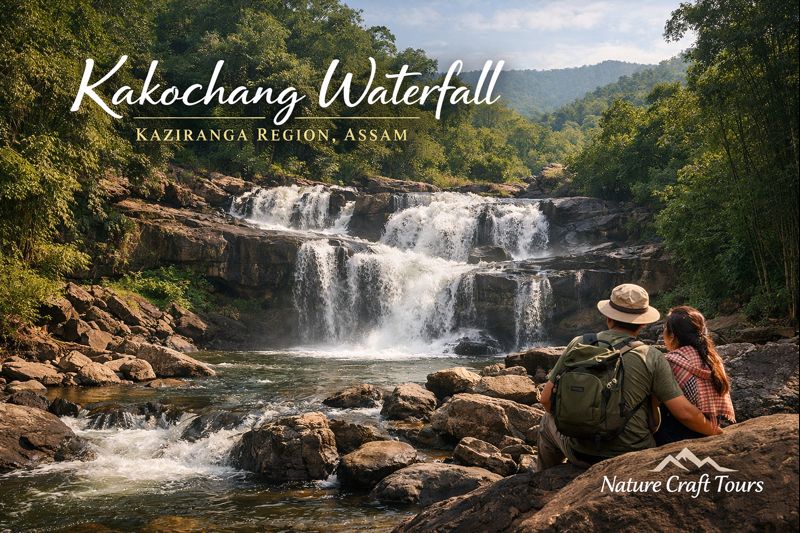
Kakochang Waterfall is located on the fringes of the Kaziranga region, close to the interface where the alluvial plains of the Brahmaputra Valley gradually give way to the forested uplands of Karbi Anglong. This geographical transition is essential to understanding the waterfall’s character. It is not a dramatic alpine plunge nor a heavily engineered viewpoint, but a naturally layered cascade shaped by seasonal streams flowing down ancient rock formations.
Unlike many well-known waterfalls that rise to prominence through height or volume, Kakochang draws its appeal from subtlety. Water moves across broad rock shelves, forming shallow pools and gentle drops that reflect the surrounding forest. During post-monsoon months, the flow is steady and expansive, while in winter it becomes calmer, exposing textured rock surfaces and inviting closer observation.
Landscape and Geological Setting
The rocks at Kakochang are part of older geological formations linked to the Karbi Plateau. Their dark, weathered surfaces suggest long exposure to monsoon cycles, creating natural steps rather than sharp vertical falls. This structure disperses water laterally, allowing it to spread, shimmer, and slow down before continuing toward the plains.
Vegetation around the waterfall includes bamboo groves, semi-evergreen trees, tall grasses, and seasonal undergrowth. This blend mirrors the ecological transition between Kaziranga’s floodplains and Karbi Anglong’s hill forests, making Kakochang a living example of ecological overlap rather than separation.
Kakochang as a Counterbalance to Safari-Centric Travel
Kaziranga’s global reputation rests firmly on its wildlife. The region’s identity is shaped by megafauna, conservation success, and tightly regulated tourism. While these elements are central to its significance, they can also dominate the traveler’s perception. Kakochang Waterfall introduces balance by shifting focus from observation to immersion.
At the waterfall, there is no checklist of species to identify, no urgency to move from one zone to another. The experience is sensory rather than goal-driven. The sound of water over stone replaces the constant scanning of grasslands, and this change often reveals how travel fatigue can accumulate unnoticed during intensive safari schedules.
Psychological and Experiential Value
From an experiential standpoint, Kakochang functions as a reset point. Travelers frequently report a heightened awareness of sound, texture, and temperature here—sensations often muted during vehicle-based exploration. The waterfall environment encourages stillness, making it particularly valuable after consecutive early mornings and long drives.
Complete Tour Plan for Kakochang Waterfall
Best Time and Season to Visit
The most suitable period to visit Kakochang Waterfall is between October and March. Following the monsoon, water flow remains sufficient to sustain the waterfall’s character, while reduced rainfall ensures safer access and clearer trails. Winter sunlight softens the forest tones, creating a calm visual palette ideal for photography and quiet exploration.
Monsoon months from June to September transform Kakochang into a powerful cascade, but access can become challenging. Trails may be slippery, and water levels unpredictable. Summer months from April to May see reduced flow, though the area remains shaded and tranquil, appealing to those who value solitude over spectacle.
Ideal Travel Duration
Kakochang Waterfall is best experienced as a half-day excursion. A typical visit, including travel time, walking, and time spent at the site, takes approximately three to four hours. This makes it suitable for inclusion on non-safari days or as a midday retreat between morning and afternoon activities.
For travelers with flexible schedules, pairing Kakochang with nearby villages or cultural stops can extend the experience into a full day without inducing fatigue.
Route and Accessibility
Kakochang Waterfall lies around 13 to 15 kilometers from Bokakhat, a major access point to the Kaziranga region. From Bokakhat or Numaligarh, travelers follow local roads toward the Karbi Anglong foothills. The final approach involves a short walk across uneven terrain, requiring basic mobility and stable footwear.
Road conditions vary seasonally. During winter and post-monsoon months, access is generally smooth, while heavy rains can affect trail stability. There is minimal signage, reinforcing the importance of local knowledge or prior route planning.
Key Attractions and On-Site Highlights
Multi-Tiered Cascade Formation
Kakochang’s defining feature is its layered structure. Rather than a single dramatic drop, water moves across multiple rock levels, forming interconnected pools and shallow falls. This structure allows visitors to explore different vantage points without disturbing the flow.
Natural Pools and Reflections
At certain points, water collects in broad, shallow basins where reflections of bamboo and sky become visible. These pools change character with light conditions, offering different visual experiences throughout the day.
Forest Soundscape
The acoustic environment around Kakochang is distinctive. Continuous water flow blends with bird calls, insects, and wind moving through bamboo leaves. The absence of mechanical noise creates an atmosphere that feels markedly removed from safari circuits despite geographic proximity.
Ecological Significance of Kakochang Waterfall
While often viewed as a scenic destination, Kakochang Waterfall plays a role within the broader regional ecosystem. Seasonal streams feeding the waterfall contribute to groundwater recharge and support vegetation corridors that link hill forests with lowland grasslands.
Water Systems and Wildlife Movement
During drier months, these streams provide residual moisture that sustains plant growth and attracts smaller fauna. In monsoon periods, they help regulate water distribution, reducing erosion pressure on surrounding slopes.
Ecological Transition Zone
Kakochang sits within a transition zone rather than a core protected area. Such zones are often overlooked, yet they are critical to ecological resilience. They allow species movement, genetic exchange, and seasonal adaptation—functions essential to long-term conservation success.
Cultural and Historical Dimensions
The Kaziranga–Karbi Anglong interface has long been inhabited by indigenous communities whose relationship with the land emphasizes coexistence. For these communities, waterfalls and forest streams are part of daily life rather than destinations.
Kakochang is visited by locals for rest, seasonal activities, and informal gatherings. Its value lies not in mythology or monumentality but in continuity—a shared natural space preserved through habitual respect rather than regulation.
Practical Insights for Travelers
Preparation and Essentials
Travelers should carry drinking water, light snacks, and basic first-aid supplies. Footwear with good grip is essential, particularly near wet rock surfaces. Weather conditions can change quickly, so light rain protection is advisable.
Responsible Conduct
Kakochang remains largely unspoiled due to limited infrastructure. Visitors are encouraged to maintain this balance by avoiding littering, refraining from using soaps or chemicals in water, and respecting the site as a shared natural resource.
Safety Considerations
Swimming is not recommended during periods of high flow. Rocks can be slippery even in dry weather, and caution should be exercised when moving close to the water’s edge.
Integrating Kakochang into a Broader Travel Narrative
For travelers who value landscapes shaped by water and time, Kakochang offers an experience that resonates beyond its immediate surroundings. Much like journeys through riverine forests and tidal ecosystems experienced during a Sundarban Tour, the waterfall invites a slower engagement with place.
Such experiences remind travelers that natural heritage is not confined to flagship attractions. It thrives equally in transitional spaces where ecosystems overlap and human presence remains light.
Reframing the Kaziranga Experience
Kakochang Waterfall does not compete with Kaziranga’s wildlife spectacles; it reframes them. By offering stillness after intensity, it deepens appreciation rather than diluting excitement. This scenic break from safari rhythm allows travelers to absorb the region’s diversity in a more holistic way.
For those who seek journeys defined by texture, sound, and reflection, Kakochang is an essential inclusion. Its understated presence reinforces a broader travel philosophy—one also evident in thoughtfully designed experiences such as a Sundarban Tour Package—where meaningful travel emerges not from accumulation, but from balance.