Kolakham
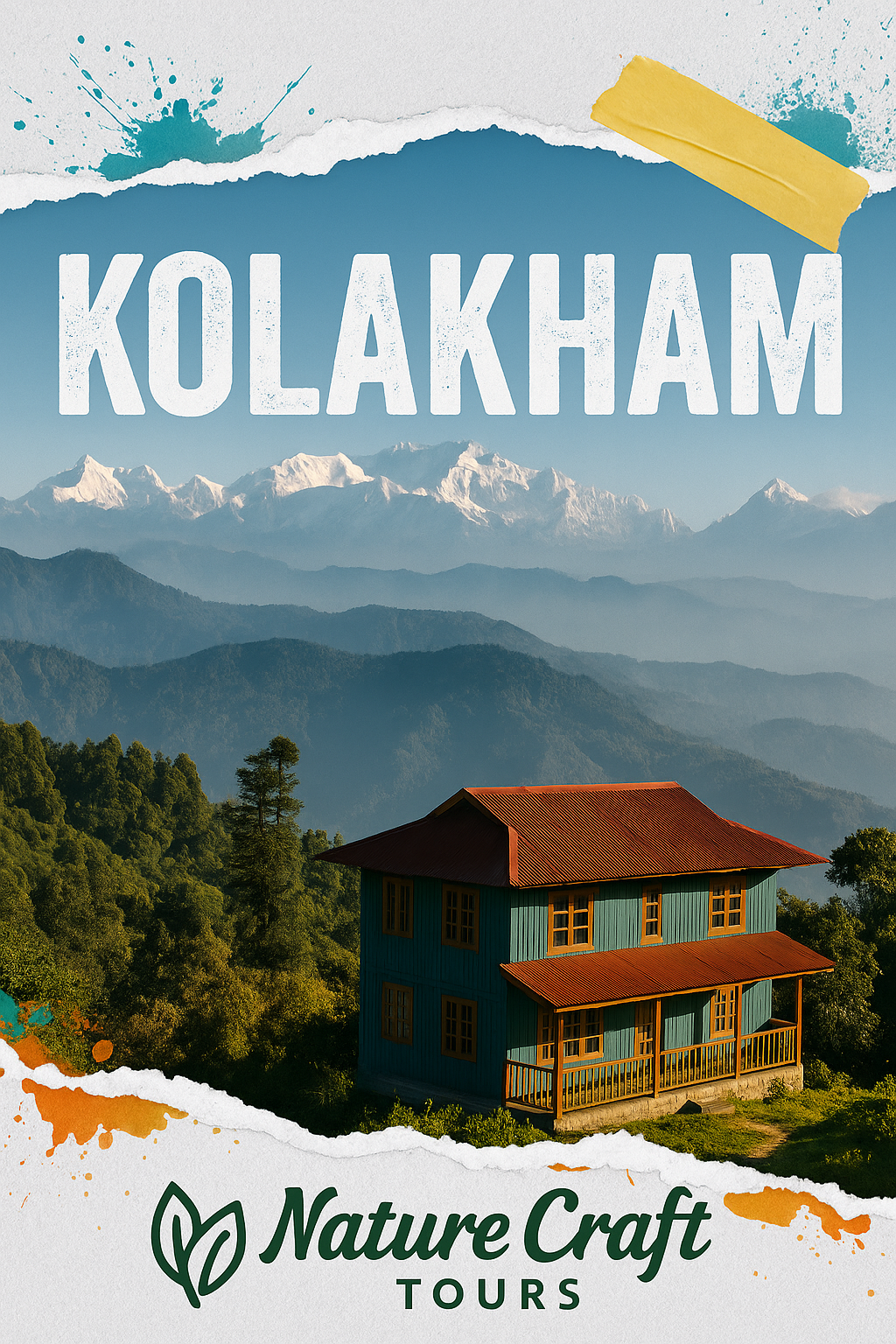
– A Complete Travel Guide to the Eastern Himalayan Wilderness
Kolakham, a pristine mountain village nestled deep within the forests at the fringes of the Neora Valley National Park in Kalimpong district, is one of the most spectacular offbeat destinations in the Eastern Himalayas. Situated at an altitude of approximately 6,500 feet (about 2,000 metres), this serene settlement is known for its untouched natural beauty, dense pine and coniferous forests, exotic birdlife, cascading waterfalls, and extraordinary views of the Kanchenjunga range.
Over the last decade, Kolakham has emerged as a peaceful nature retreat away from crowded hill towns—ideal for birdwatchers, trekkers, nature photographers, honeymoon couples, and families who want to experience the Himalayas in their raw, undisturbed form.
This comprehensive and research-based guide presents detailed information on key attractions, access routes, travel distances, climate, biodiversity, cultural heritage, stay options, and essential travel tips—structured to serve as an authoritative travel reference for exploring Kolakham.
Introduction to Kolakham
Kolakham is a small and sparsely populated hamlet near Lava in West Bengal. Its elevated location provides a majestic view of the Kanchenjunga massif and the surrounding Himalayan peaks. The village lies inside the buffer zone of Neora Valley National Park, one of India’s richest biodiversity hotspots. This perfect blend of dense forests, dramatic landscapes, and silent mountain air makes Kolakham a gateway to a purely immersive Himalayan wilderness experience.
The calmness of the region—marked only by the sound of wind, chirping birds, and distant waterfalls—has made Kolakham a preferred retreat for travellers seeking solitude and nature therapy.
Geography & Landscape
Kolakham lies in the eastern fringes of the Kalimpong hills, at the intersection of the lower Himalayas and the untouched subtropical forests of Neora Valley. The terrain is rugged, with steep slopes, narrow forest paths, and deep valleys shaped by mountain streams. The village overlooks a vast canvas of snow-covered peaks, making sunrise views especially dramatic.
The region is characterized by:
- Thick coniferous forests
- Rhododendron and magnolia groves
- Wild orchids and forest ferns
- Waterfalls cascading across rocky cliffs
- Dense bamboo clusters
On clear days, travellers can witness an unobstructed view of:
- Mt. Kanchenjunga
- Mt. Kabru
- Mt. Pandim
- Mt. Siniolchu
How to Reach Kolakham
Nearest Major Transport Hubs
- New Jalpaiguri (NJP) Railway Station → 98–105 km (4–4.5 hours)
- Bagdogra Airport → 105–110 km (4–4.5 hours)
- Siliguri → 95–100 km (4 hours)
- Kalimpong Town → 32–35 km (1.5–2 hours)
- Lava → 8–10 km (25–30 minutes)
Main Access Routes
Route 1 (Most Popular):
Bagdogra / NJP → Sevoke → Kalimpong → Algarah → Lava → Kolakham
This is the smoothest and most scenic route.
Route 2:
Siliguri → Gorubathan → Lava → Kolakham
Ideal for travellers visiting the Dooars region before heading to Kolakham.
Route 3:
Kalimpong → Pedong → Lava → Kolakham
Popular among visitors exploring Pedong and Sillery Gaon.
Road Conditions
The last 3–4 km stretch leading to Kolakham is rugged and narrow. It is advisable to hire a local vehicle, preferably a high-ground-clearance car, for a safe and comfortable arrival.
Major Distances from Key Locations
- Kolakham → Lava: 8–10 km
- Kolakham → Neora Valley National Park (Entry): 5–6 km
- Kolakham → Kalimpong: 32–35 km
- Kolakham → Pedong: 22–25 km
- Kolakham → Gourbathan: 24–26 km
- Kolakham → Rishop: 17–18 km
- Kolakham → Changey Waterfall: 3–4 km
History & Cultural Background
Kolakham is primarily inhabited by the Lepcha community—an indigenous tribe native to the eastern Himalayan regions of Sikkim, Kalimpong, and Bhutan. Their rich cultural heritage, traditional houses, bamboo craft, and deep connection with nature make the village a center of cultural authenticity. Over time, Nepali communities, including Tamang, Rai, and Sherpa groups, have also settled in the region.
The community lives a simple, nature-bound life. Most villagers are engaged in agriculture, animal husbandry, beekeeping, and forest-based livelihoods. Religious and cultural festivals such as Losar, Tihar, Dasain, and harvest celebrations hold significant importance in the village.
Places to Visit in Kolakham
1. Neora Valley National Park
One of the last remaining virgin forests in the Eastern Himalayas, this park is home to rare species such as:
- Red Panda
- Himalayan Black Bear
- Clouded Leopard
- Himalayan Goral
- Himalayan Salamander
- Over 250 species of birds
The entrance to the national park is located a short distance from Kolakham, making it an excellent base for exploring the dense tropical-subtropical forest ecosystem.
2. Changey Waterfall
Located only 3–4 km from Kolakham, Changey Waterfall is one of the region’s most captivating natural spectacles. The waterfall cascades through rugged cliffs surrounded by dense green forests, making it a photographer’s dream.
3. Kolakham Viewpoints
The natural viewpoints around the village offer breathtaking vistas of the Kanchenjunga range. Early mornings and late afternoons are best for capturing dramatic hues across the Himalayan skyline.
4. Lava Monastery
Located around 8–10 km away, the Lava Monastery (Kaagyud Monastery) is a serene Buddhist institution with rich Tibetan architecture and religious significance. Its tranquil surroundings make it ideal for meditation and quiet reflection.
5. Loleygaon
A scenic settlement 24–26 km from Kolakham, famous for its Canopy Walk—a 180-metre-long hanging bridge inside a dense pine forest. The village offers majestic sunrise views of the Himalayan peaks.
6. Rishop / Rishyap
Another offbeat Himalayan gem, Rishop offers magnificent views of the entire Eastern Himalayan range. It is a short and scenic drive from Kolakham.
Things to Do in Kolakham
1. Birdwatching & Nature Trails
Kolakham is a birdwatcher’s paradise. Early mornings are ideal for spotting species such as:
- Rufous Sibia
- Scarlet Minivet
- Blue-throated Barbet
- Great Barbet
- Himalayan Bulbul
2. Forest Walks
The village is surrounded by ancient forests offering peaceful trails perfect for photography, meditation, and quiet exploration.
3. Visit Changey Waterfall
One of the most rewarding experiences—ideal for a half-day excursion.
4. Village Walks
Walking through the charming village lanes provides a glimpse into traditional Lepcha and Nepali lifestyles.
5. Photography
Kolakham offers striking compositions—snow peaks, waterfalls, forests, village huts, and star-filled night skies.
Flora & Fauna
Floral Diversity
- Rhododendron (blooms in spring)
- Magnolia flowers
- Wild orchids
- Ferns and mosses
- Pine and deodar forests
- Bamboo groves
Faunal Species
- Red Panda (rare sightings)
- Himalayan Black Bear
- Himalayan Goral
- Barking Deer
- Clouded Leopard (deep forest only)
Birdlife
- Green-tailed Sunbird
- Himalayan Monal (rare)
- Blue Whistling Thrush
- Yellow-billed Blue Magpie
- Brown Parrotbill
Where to Stay (Properties Only, No Contact Numbers)
Kolakham offers a variety of accommodation options designed to blend with nature:
- Wooden cottages overlooking the Kanchenjunga range
- Forest-view eco huts
- Village homestays run by local families
- Nature lodges near trekking routes
Most stays provide basic yet comfortable amenities, with warm food, homely hospitality, and balcony views of the Himalayas.
Food & Local Cuisine
The cuisine in Kolakham reflects a blend of Nepali, Tibetan, and Lepcha culinary traditions. Meals are largely organic and prepared using locally sourced ingredients.
- Steamed rice and local vegetables
- Momo (steamed dumplings)
- Thukpa and noodle soups
- Bamboo shoot curry
- Country chicken (desi murgi)
- Pork curry
- Nettle soup (traditional Himalayan dish)
- Local pickles and fermented vegetables
Climate & Best Time to Visit
Spring (March–April)
The weather is mild; forests bloom with rhododendrons and magnolias.
Summer (May–June)
Cool and pleasant, ideal for family travel and nature walks.
Autumn (October–November)
The best time for crisp Himalayan views, ideal weather and photography.
Winter (December–February)
Cold and sometimes snowy; ideal for travellers who enjoy winter landscapes.
Avoid the monsoon (July–September) due to fog, heavy rain, and slippery roads.
Suggested 3-Day Itinerary for Kolakham
Day 1: Arrival & Local Exploration
- Arrive via Lava or Kalimpong
- Check-in and relax
- Walk to nearby forest viewpoints
- Enjoy sunset views from the cottage balcony
Day 2: Neora Valley & Changey Waterfall
- Visit Neora Valley National Park (buffer zone)
- Explore forest trails
- Visit Changey Waterfall
- Return to Kolakham for evening relaxation
Day 3: Lava & Loleygaon Excursion
- Visit Lava Monastery
- Explore Lava town and local shops
- Drive to Loleygaon for the Canopy Walk
- Return for departure via Kalimpong or NJP
Travel Tips
- Carry warm clothing throughout the year; temperatures drop in the evenings.
- Roads near Kolakham are steep—use experienced drivers.
- Maintain silence in forest areas to observe wildlife.
- Avoid plastic usage to preserve the fragile ecosystem.
- Plan morning activities early for clear mountain views.
Conclusion
Kolakham stands as a breathtaking escape into the untouched Himalayan wilderness, offering travellers spectacular mountain views, pristine forests, exotic birdlife, and rich cultural heritage. Whether it is the call of the wind through pine forests, the grandeur of Kanchenjunga at sunrise, or the peaceful rhythm of village life, Kolakham provides a refreshing break from modern chaos.
For travellers seeking serenity, nature therapy, and authentic Himalayan experiences, Kolakham remains one of the most rewarding destinations in Eastern India—an unforgettable journey into the heart of the mountains and forests.