Konark Sun Temple
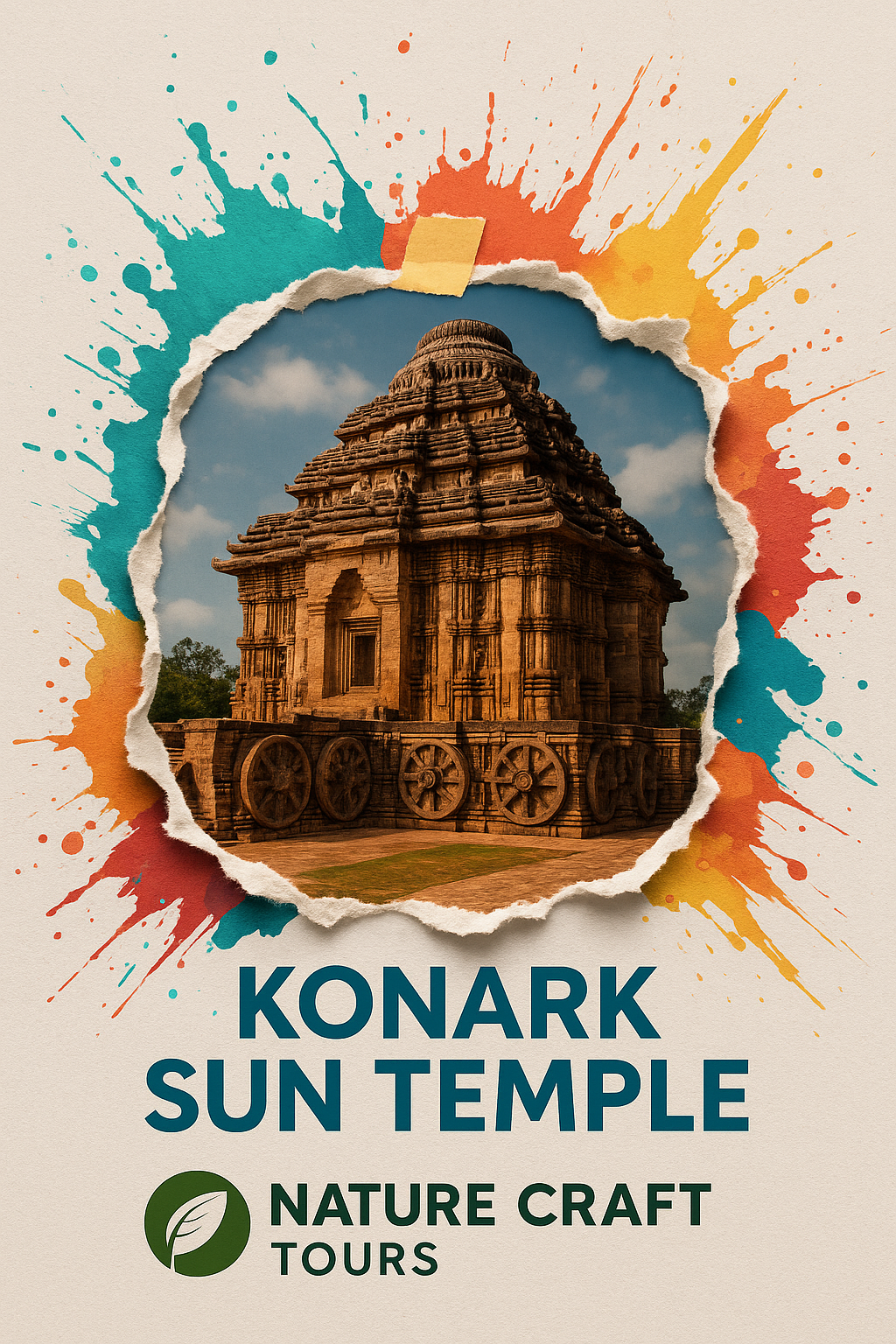
– A Timeless Symphony of Stone, Light, and Devotion
Konark Sun Temple, standing majestically on the golden coastline of Odisha, is more than a monument—it is a monumental poem carved in stone. Often described as the “Poetry of Architecture,” this UNESCO World Heritage Site embodies the pinnacle of ancient Indian craftsmanship. Built in the 13th century under the patronage of King Narasimhadeva I of the Eastern Ganga Dynasty, the temple celebrates Surya, the Sun God, through an architectural design that mirrors the celestial movement of the sun itself.
Today, Konark remains one of India’s most remarkable cultural symbols—an immortal canvas where mythology, engineering, astronomy, sculpture, and devotion converge. Visitors are drawn to its grand chariot-shaped design, massive wheels that double as sundials, and the unparalleled stone carvings that narrate stories of life, time, and cosmic order.
A Historical Introduction to Konark Sun Temple
Konark, derived from the Sanskrit words Kona (angle) and Arka (Sun), literally means “The Sun at an Angle,” symbolizing the oblique rays of the rising sun that once illuminated the temple’s majestic sanctum. Historians regard Konark as one of the finest examples of Kalinga architecture—an architectural style known for grandiose scale, geometric precision, and deeply symbolic sculptural narratives.
The temple was originally constructed as a colossal chariot drawn by seven prancing horses, representing the seven days of the week or seven stages of life, depending on philosophical interpretation. Twenty-four magnificent wheels, each nearly 3 meters high, flank the temple on both sides. These wheels are not merely decorative—they are functional sundials capable of telling time with remarkable accuracy.
Although parts of the main sanctum have collapsed over centuries due to natural decay and possibly military invasions, the surviving structures still stand as a testament to India’s ancient architectural brilliance.
Architectural Grandeur: A Study in Stone and Light
Konark Sun Temple is often called the “Black Pagoda” due to its once-dark, weather-worn exterior that guided sailors along the Bay of Bengal. The architectural layout reflects a cosmic chariot that merges astronomy with sacred geometry.
The Chariot of the Sun
The temple structure is conceived as the grand chariot of Surya, pulled by seven horses and supported on twenty-four giant wheels. The horses symbolize the seven colours of sunlight or the seven days of the week. Each wheel embodies an hour of the day, aiding ancient priests and scholars in astronomical calculations.
The Intricate Stone Carvings
Every surface of the temple—walls, pillars, and stairs—is covered in elaborate carvings. These intricate sculptures portray military processions, hunting scenes, dancers, musicians, celestial beings, flora, fauna, and mythological narratives.
Noteworthy carvings include:
- The divine dance of celestial apsaras
- Scenes depicting royal court life
- The Wheel of Time (Kalachakra)
- Depictions of animals symbolizing strength and intelligence
- The famous erotic sculptures showcasing ancient India’s understanding of life, love, and fertility
The Natya Mandapa (Dancing Hall)
The dance pavilion, partially ruined but still breathtaking, illustrates the deep connection between Odissi dance and temple culture. The sculptures here depict dancers frozen in graceful movements, musicians holding ancient instruments, and scenes expressing rhythm, emotion, and devotion.
Important Points to See Inside Konark Sun Temple Complex
A well-planned visit to Konark should include the following highlights:
- The Main Jagamohana: The surviving assembly hall of the Sun Temple, showcasing some of the finest stone artistry in India.
- The Giant Stone Wheels: Twenty-four wheels serving as sundials—their shadows reveal time with surprising precision.
- The Seven Horses: Representing the cosmic chariot pulling the temple toward the rising sun.
- The Natya Mandapa: A masterpiece displaying the evolution of classical dance and sculpture.
- The Lion and Elephant Statues: Symbolic sculptures at the entrance showing triumph over ego and ignorance.
- The Archaeological Museum (ASI): A curated collection of stone sculptures, artefacts, and preserved fragments from the collapsed sanctuary.
- The Konark Beach: A serene coastline just a few minutes from the temple, ideal for sunrise photography.
- The Konark Light & Sound Show: An enchanting audiovisual program narrating the history and legends of the temple.
Major Distances from Konark Sun Temple
Konark enjoys a strategic location along the Odisha coastline, making it accessible from various tourist hubs. Below are the major distances:
- Puri to Konark: Approximately 35 km
- Bhubaneswar to Konark: Approximately 65 km
- Chandrabhaga Beach to Konark: Approximately 3 km
- Satapada (Chilika Lake) to Konark: Approximately 70 km
- Raghurajpur Heritage Village to Konark: Approximately 40 km
Road networks are excellent, and the coastal route between Puri and Konark is particularly scenic, lined with casuarina trees and gentle sea breezes.
How to Reach Konark Sun Temple
Konark is well-connected by air, rail, and road, making it an accessible heritage destination for both Indian and international visitors.
By Air
The nearest airport is Biju Patnaik International Airport in Bhubaneswar, around 65 km away. From the airport, visitors can hire taxis or private transport to reach Konark through a smooth and well-maintained highway.
By Rail
The nearest major railway station is Puri (35 km), well-linked to major cities like Kolkata, Delhi, Mumbai, and Chennai. Bhubaneswar Railway Station (70 km) is another good option with extensive train connectivity.
By Road
Konark has excellent road connectivity:
- Direct buses from Bhubaneswar and Puri
- Private taxis and rental cars are widely available
- The Marine Drive Road between Puri and Konark is one of the most scenic stretches in eastern India
Staying Options Near Konark Sun Temple
Konark offers a balanced mix of beachfront retreats, heritage stays, eco-friendly cottages, and mid-range hotels. While contact numbers cannot be shared, the following categories of accommodations are available:
- Beachfront Resorts: Offering serene views of the Bay of Bengal, ideal for sunrise watchers and photographers.
- Eco-retreat Camps: Operated seasonally, these luxury tents offer a blend of nature, comfort, and sustainability.
- Forest-side Lodges: Perfect for those seeking quiet surroundings and traditional Odisha hospitality.
- Premium Hotels: High-quality properties located between Puri and Konark for easy access to multiple attractions.
- Homestays and Boutique Houses: Providing authentic local flavours and a family-friendly atmosphere.
Most properties are situated within 2–8 km of the temple, ensuring quick access to sightseeing points.
Best Time to Visit Konark Sun Temple
Konark’s coastal climate makes it a year-round destination, but certain seasons offer more favourable conditions for exploration.
Winter (November to February) – The Ideal Season
Pleasant temperatures ranging from 14°C to 28°C make this the best season to enjoy detailed temple visits, photography, and cultural festivals such as:
- Konark Dance Festival: A magnificent celebration of classical Indian dance.
- International Sand Art Festival: Held at Chandrabhaga Beach, showcasing artists from around the world.
Monsoon (June to September)
The rains offer a romantic charm to the temple as the stone structures gleam after showers. The lush greenery and dramatic skies are perfect for photographers, though exploring the open complex may require umbrellas and care on slippery surfaces.
Summer (March to May)
Summers can be quite warm, with temperatures rising above 40°C. Visitors during this season are advised to explore during early mornings and evenings to avoid the heat.
Nearby Attractions Worth Exploring
A visit to Konark is often combined with other pilgrim, cultural, and natural attractions in Odisha.
- Chandrabhaga Beach: A tranquil beach just 3 km from the temple, ideal for sunrise views.
- Puri Jagannath Temple: One of India’s most sacred pilgrimage sites, located 35 km away.
- Raghurajpur Heritage Village: Famous for Pattachitra art and traditional crafts.
- Ramachandi Temple & Beach: A scenic spot where spirituality meets serenity.
- Chilika Lake (Satapada): Asia’s largest brackish water lagoon, home to dolphins and migratory birds.
Photography & Cultural Significance
Konark is a paradise for photographers, historians, and art lovers. The interplay of sunlight on stone, especially during sunrise and late afternoon, creates mesmerizing visual frames.
The cultural significance of the Sun Temple goes beyond architecture—it represents India’s ancient knowledge of astronomy, timekeeping, Vedic rituals, and cosmic symbolism. Its wheel motifs embody the eternal passage of time, while its sculptures represent humanity’s eternal quest for beauty, knowledge, and divine connection.
Travel Tips for Konark Sun Temple
- Wear comfortable shoes—the temple complex requires considerable walking.
- Carry water and sun protection during daytime visits.
- Early morning visits offer the best lighting for photography.
- The ASI Museum is closed on Fridays—plan accordingly.
- Respect the heritage and avoid touching or leaning on sculptures.
Konark is best enjoyed slowly, allowing the stories in stone to reveal themselves layer by layer.
Conclusion: A Living Chronicle of India’s Glorious Past
Konark Sun Temple stands as an eternal tribute to human creativity and devotion. Even after centuries of weathering storms, invasions, and time itself, its artistic legacy continues to inspire millions. Every carving, every stone wheel, and every surviving fragment echoes the genius of ancient artisans who carved divinity into time.
For travellers, Konark is not merely a destination—it is a pilgrimage into the heart of India’s cultural and spiritual heritage. A journey here illuminates the power of imagination, the brilliance of ancient engineering, and the enduring beauty of Indian art.