Kullu: Valley Base and River Culture in the Heart of the Western Himalaya
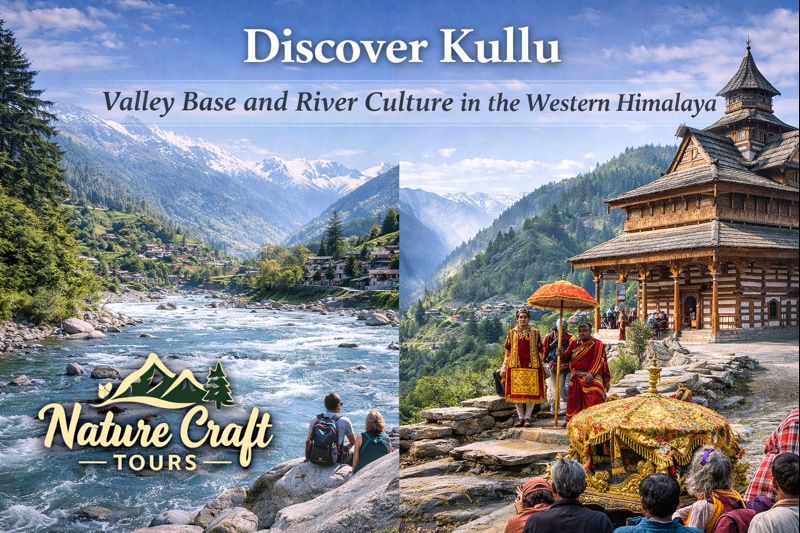
Cradled at the broad base of a Himalayan valley, Kullu is not a destination that rises toward the sky; it settles into the land. Unlike ridge-top towns shaped by altitude and isolation, Kullu grows outward along the riverbanks, shaped by water, soil, and seasonal flow. The Beas River is not a scenic accessory here—it is the organizing force around which settlement, agriculture, ritual, and movement have evolved for centuries.
Often approached as a gateway to higher mountain regions, Kullu is frequently passed through rather than understood. Yet the valley itself holds a distinctive cultural and ecological identity. This is a place where mountain life softens into agrarian rhythm, where forests give way to cultivated terraces, and where riverside towns function as cultural crossroads rather than remote outposts.
This article explores Kullu as a valley-base destination shaped by river culture. It examines geography, seasonal patterns, traditions, and practical travel realities, offering a field-informed perspective for travelers who wish to understand the valley rather than merely transit through it.
Destination Overview: Understanding Kullu Valley
Kullu is located in Himachal Pradesh along the middle course of the Beas River, at an average elevation of approximately 1,200 meters above sea level. The valley is broad and fertile compared to the surrounding mountains, allowing for permanent settlement, agriculture, and trade. This geography distinguishes Kullu sharply from higher Himalayan towns that rely on seasonal habitation or tourism-driven economies.
The Kullu Valley stretches longitudinally, framed by forested slopes and distant snow-fed ridges. Its openness allows sunlight to reach valley floors for long hours, supporting diverse crops and dense habitation. Historically, this made Kullu a natural center for governance, exchange, and cultural gathering within the region.
Unlike compact hill stations, Kullu spreads organically along the river and road corridors. Markets, temples, fields, and residential zones intermingle, creating a lived-in landscape rather than a curated one.
A Valley Shaped by Water, Not Height
Where many Himalayan destinations emphasize altitude, Kullu emphasizes flow. The Beas River defines movement, orientation, and livelihood. Roads follow its course, settlements align with its banks, and festivals are timed to its seasonal behavior. Understanding Kullu begins with understanding the river.
The Beas River: Cultural and Ecological Spine
The Beas River originates in the high Himalaya and descends into the Kullu Valley, carrying glacial melt, monsoon rain, and centuries of cultural meaning. In Kullu, the river widens and slows, becoming accessible rather than forbidding. This accessibility has shaped both ecology and human interaction.
River as Livelihood
Agriculture in the valley depends heavily on the Beas and its tributaries. Irrigation channels extend from the river into fields, sustaining crops such as maize, wheat, vegetables, and orchards. Seasonal floods replenish soil nutrients, reinforcing the valley’s fertility.
Fishing, riverbank grazing, and small-scale trade historically relied on predictable river behavior. Even today, daily life in many neighborhoods follows the rhythm of water flow.
River as Sacred Presence
The Beas is also a sacred entity. Temples line its banks, and rituals often involve water offerings, purification practices, and seasonal ceremonies. The river is treated as a living presence rather than a passive resource, reflecting an older Himalayan worldview where nature and belief are inseparable.
Cultural Identity of Kullu: Traditions of the Valley
Kullu’s cultural life reflects its position as a valley crossroads. Influences from upper Himalayan regions blend with plains-oriented traditions, producing a layered social fabric.
Village Networks and Deity Culture
The Kullu Valley is renowned for its local deity traditions. Each village maintains its own deity, often represented through palanquins and ritual movement. These deities are not abstract figures but active participants in community decision-making and festivals.
This decentralized spiritual system reflects the valley’s geography: numerous settlements connected by river and road, each maintaining identity while remaining part of a larger cultural network.
Kullu Dussehra: A Valley-Wide Gathering
The annual Dussehra festival in Kullu is one of the most distinctive cultural events in the Himalaya. Unlike elsewhere, where Dussehra marks the end of festivities, in Kullu it marks the beginning. Deities from across the valley converge, transforming the town into a ritual center.
This gathering underscores Kullu’s role as a unifying base for surrounding regions—a function shaped directly by its valley geography.
Ecological Character: Forests, Fields, and Riverbanks
Kullu’s ecology is defined by transition. The valley floor supports agriculture, while surrounding slopes host mixed forests of pine, deodar, and broadleaf species. Higher elevations retain alpine characteristics.
Agricultural Landscapes
Terraced fields dominate lower slopes and flat valley sections. These terraces represent generations of soil management and water control. Seasonal color changes—green in summer, golden in autumn—define the valley’s visual rhythm.
Forest Edges and Biodiversity
Forests bordering the valley support birdlife and small mammals. These zones act as ecological buffers, protecting fields from erosion and moderating climate extremes. Respecting forest boundaries is crucial for maintaining balance.
Best Time and Season to Visit Kullu
Spring (March to May)
Spring is one of the most pleasant times to visit Kullu. Snow melts from higher slopes, fields turn green, and river levels stabilize. This season is ideal for walking, cultural observation, and valley exploration.
Summer (June to September)
Summer brings warmth and agricultural activity. Monsoon rains arrive intermittently, enhancing greenery but occasionally affecting road conditions. The river runs full, reinforcing its visual and cultural presence.
Autumn (October to November)
Autumn offers clarity and festival energy. Harvest season coincides with major cultural events, making this a particularly rich period for understanding valley life.
Winter (December to February)
Winters are cooler but generally manageable compared to higher regions. Snow remains limited to upper slopes, allowing valley life to continue with relative stability.
Ideal Travel Duration
To experience Kullu beyond a transit stop, a minimum of three days is recommended. This allows time to observe both river culture and surrounding landscapes.
Suggested Duration
- Day 1: Riverside walks, town markets, cultural orientation
- Day 2: Village visits, agricultural landscapes, temple exploration
- Day 3: Forest-edge walks, higher valley viewpoints, reflection
Route and Accessibility
Kullu is well connected by road to major Himachal towns. The valley’s accessibility reflects its historical role as a regional hub.
Approach Routes
Roads into Kullu follow river corridors, offering gradual transitions rather than abrupt ascents. This makes travel less strenuous than high-altitude routes.
Movement Within the Valley
Local movement is best managed through a combination of walking and short drives. Many of Kullu’s insights emerge through slow exploration rather than rapid sightseeing.
Key Attractions and Highlights
Riverfront Zones
Quiet stretches along the Beas offer opportunities to observe daily life—washing, rituals, farming, and simple leisure. These moments reveal more about Kullu than formal landmarks.
Village Settlements
Villages surrounding Kullu town preserve traditional architecture and community practices. Visiting these areas provides context to valley-based living.
Forest and Hill Transitions
Short ascents from the valley floor reveal changing vegetation and perspectives, reinforcing the relationship between altitude and livelihood.
Kullu in the Wider Indian Landscape Context
Kullu’s river-based culture contrasts strongly with other Indian ecosystems. While Himalayan valleys depend on glacial rivers and seasonal snowmelt, deltaic regions adapt to tides and mangroves. Travelers who experience both often gain deeper geographical literacy.
For example, journeys that include river-dominated landscapes such as the Kullu Valley alongside mangrove environments explored on a Sundarban Trip highlight how water shapes culture in radically different ways across India.
Practical Insights for Travelers
Clothing and Preparation
Layered clothing is advisable year-round. Valley temperatures vary between day and night, especially near the river.
Respecting Local Life
Kullu is a living valley, not a resort enclave. Travelers should dress modestly near temples, seek permission before photographing people, and remain mindful of agricultural activity.
Environmental Responsibility
Avoid littering riverbanks, minimize noise, and respect forest boundaries. River systems are particularly vulnerable to pollution.
Integrating Kullu into Broader Travel Plans
Kullu pairs well with both higher mountain regions and lowland ecosystems. Structured itineraries such as a Best Sundarban Tour Package demonstrate how contrasting environments—valleys, deltas, and forests—offer complementary insights into India’s geography.
A Thoughtful Three-Day Plan for Kullu
Day One: River Orientation
Begin with riverside exploration. Walk along quieter banks, observe daily activity, and visit nearby temples to understand spiritual connections.
Day Two: Village and Field Exploration
Spend time in surrounding villages and agricultural zones. Observe terrace farming and community interactions.
Day Three: Forest and Perspective
Move toward forest edges or higher ground for broader views of the valley. Reflect on how geography shapes life below.
Kullu as a Living Valley
Kullu is not defined by height or isolation but by connection—between river and land, village and valley, culture and ecology. Its strength lies in continuity rather than spectacle.
For travelers willing to slow down, Kullu offers a deep understanding of Himalayan valley life. It demonstrates that mountains are not only climbed; they are lived in, farmed, and worshipped—quietly, along the river’s edge.