Madhya Pradesh Heritage Circuit – 7 Days
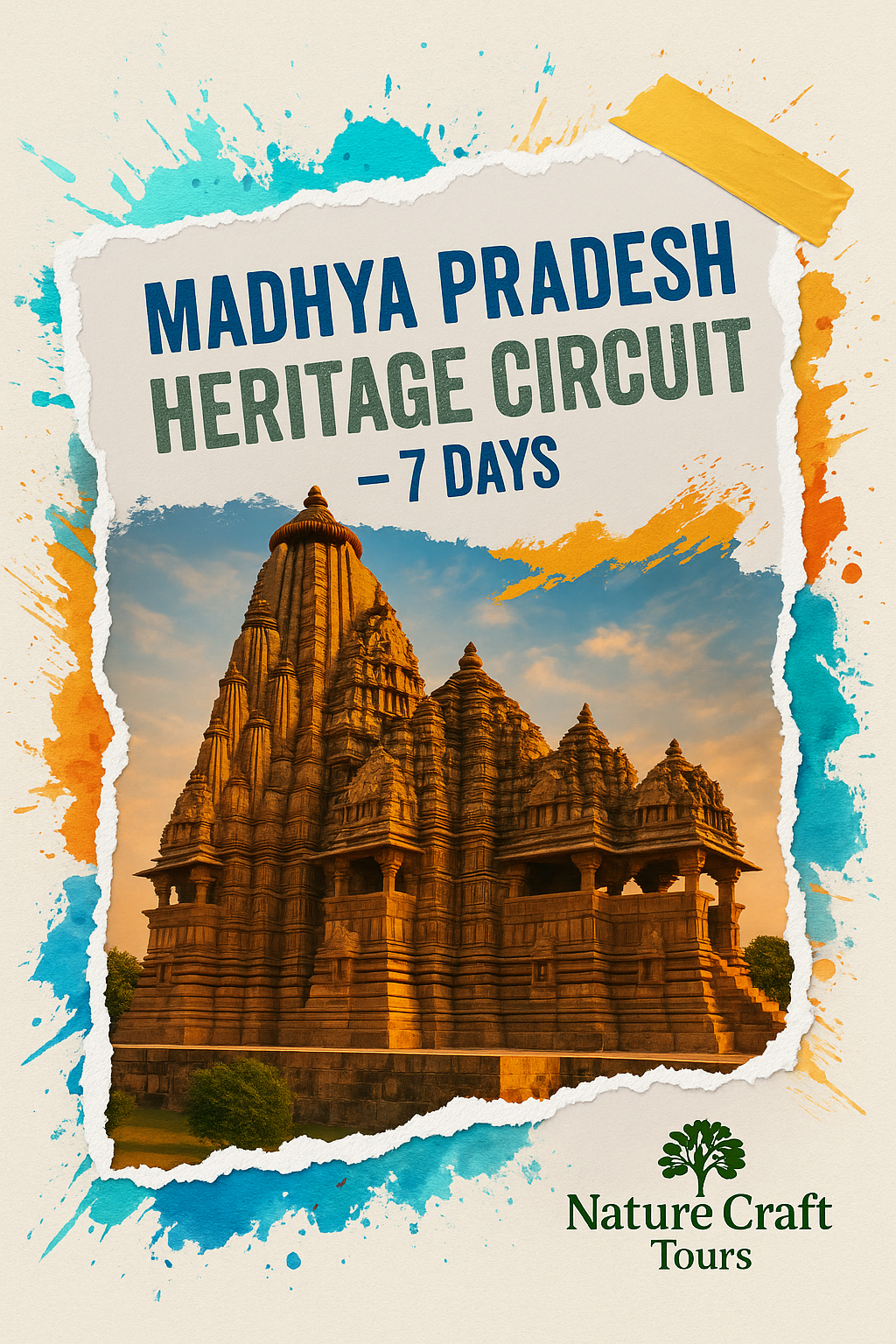
The heart of India, Madhya Pradesh, is a land where history breathes through its magnificent forts, temples, palaces, and caves. Known as the cultural core of the nation, this central Indian state offers a fascinating journey into the past — from the ancient rock shelters of Bhimbetka to the medieval temples of Khajuraho, the majestic forts of Gwalior, and the regal heritage of Orchha. Each destination tells a story of dynasties, devotion, and artistry that shaped Indian civilization.
This 7-Day Madhya Pradesh Heritage Circuit Tour is crafted to take travelers through the most iconic historical and architectural marvels of the state, offering an immersive experience of its rich legacy, scenic landscapes, and cultural traditions. Ideal for history lovers, photographers, and explorers, this route unravels the timeless beauty of India’s heritage.
Overview of the Heritage Circuit
The Madhya Pradesh Heritage Circuit connects some of the state’s most significant historical destinations — Gwalior, Orchha, Khajuraho, Sanchi, Bhimbetka, and Bhopal. Each site is distinct in its character — from Rajput fortresses and Mughal influences to ancient Buddhist stupas and erotic temple carvings of the Chandela dynasty. This journey captures the architectural grandeur, artistry, and spiritual depth that define the essence of Madhya Pradesh.
Throughout the route, travelers witness a blend of UNESCO World Heritage Sites, medieval citadels, serene riverside towns, and cultural hubs that celebrate the glorious past of Central India.
Day-wise Itinerary – Madhya Pradesh Heritage Circuit (7 Days / 6 Nights)
Day 1: Arrival in Gwalior – The Royal Citadel of Central India
Arrive in Gwalior, one of India’s most majestic cities, known for its grand forts and rich musical legacy. After check-in, begin exploring the city’s historical treasures.
- Gwalior Fort: Often called the “Gibraltar of India,” this colossal fort rises dramatically above the city. Inside, visit Sas-Bahu Temple, Man Singh Palace, Gujari Mahal, and the Teli ka Mandir with its stunning Dravidian-style architecture.
- Jai Vilas Palace: A magnificent 19th-century palace blending European and Indian designs. The Durbar Hall features one of the world’s largest chandeliers.
- Tomb of Tansen: Visit the resting place of the legendary musician Tansen, one of Akbar’s Navratnas. The annual Tansen Music Festival held here attracts artists from across the globe.
Evening: Enjoy the Sound and Light Show at Gwalior Fort, depicting the city’s glorious past. Overnight stay in Gwalior.
Day 2: Gwalior to Orchha (Distance: 120 km / 3 hours)
After breakfast, drive towards Orchha, a riverside medieval town that seems frozen in time. Located on the banks of the Betwa River, Orchha was the capital of the Bundela kings and is renowned for its palaces, cenotaphs, and temples.
- Orchha Fort Complex: Explore the stunning architectural ensemble comprising Jehangir Mahal, Raja Mahal, and Sheesh Mahal. The murals inside depict mythological tales and royal grandeur.
- Chaturbhuj Temple: An imposing structure built to honor Lord Vishnu, offering panoramic views of the town from its upper terraces.
- Ram Raja Temple: Unique as the only temple where Lord Rama is worshipped as a king. The temple has a vibrant spiritual atmosphere, especially during evening aarti.
- Cenotaphs (Chhatris): Along the Betwa River, the royal cenotaphs are a photographer’s delight, reflecting beautifully in the river waters at sunset.
Evening at leisure for riverside walks or exploring local handicraft markets. Overnight stay in Orchha.
Day 3: Orchha to Khajuraho (Distance: 180 km / 4 hours)
Drive to Khajuraho, one of India’s most iconic UNESCO World Heritage Sites. Famous for its exquisite temples built by the Chandela dynasty between the 9th and 12th centuries, Khajuraho epitomizes the zenith of Indian temple art and architecture.
- Western Group of Temples: Explore the most celebrated temples including Kandariya Mahadeva, Lakshmana Temple, and Vishwanath Temple. The carvings here represent the finest artistic expressions of human life and divinity.
- Eastern Group of Temples: Visit the Parsvanatha Jain Temple and Adinatha Temple, showcasing intricate carvings and spirituality of Jain architecture.
- Light and Sound Show: In the evening, attend the show at the temple complex narrating the history of the Chandela rulers and the artistic glory of Khajuraho.
Overnight stay in Khajuraho.
Day 4: Khajuraho – Panna National Park Excursion
Morning excursion to Panna National Park (25 km from Khajuraho), one of Central India’s pristine tiger reserves. The park is home to tigers, leopards, gharials, and a wide variety of birds.
- Morning Safari: Enjoy a jeep safari through the lush forests, river valleys, and plateaus.
- Pandav Falls: A picturesque waterfall within the park, associated with the Pandavas from the Mahabharata.
- Ken River Boat Ride: Experience the scenic beauty and tranquility of the Ken River with marble gorges and crystal-clear waters.
Return to Khajuraho in the evening and relax at your hotel.
Day 5: Khajuraho to Sanchi via Bhopal (Distance: 380 km / 7–8 hours)
After breakfast, drive towards Sanchi, the cradle of Buddhist heritage in India. En route, pass through Bhopal, the capital of Madhya Pradesh, known for its lakes and contrasting old and new city charm.
Arrive in Sanchi and check in to your hotel. Evening free for leisure. Overnight stay near Sanchi or in Bhopal.
Day 6: Sanchi & Bhimbetka – Ancient Footsteps of Civilization
After breakfast, explore the two UNESCO World Heritage Sites — Sanchi Stupa and Bhimbetka Rock Shelters.
- Sanchi Stupa: Built by Emperor Ashoka in the 3rd century BCE, this is one of the oldest stone structures in India. The Great Stupa, with its intricately carved gateways (toranas), depicts scenes from the life of Buddha and Buddhist teachings.
- Archaeological Museum: Displays relics, sculptures, and inscriptions dating back to the Mauryan and Gupta periods.
- Bhimbetka Rock Shelters: Located 45 km from Bhopal, these prehistoric caves contain rock paintings dating back over 10,000 years. The paintings depict scenes of hunting, dancing, and rituals — an incredible window into early human life.
Return to Bhopal for the night.
Day 7: Bhopal Sightseeing & Departure
Spend your final day exploring the cultural capital of Madhya Pradesh.
- Taj-ul-Masajid: One of India’s largest mosques with impressive Mughal-style architecture.
- Upper Lake and Lower Lake: Enjoy a peaceful boat ride across these twin lakes, collectively known as “Bhojtal.”
- Tribal Museum: A beautifully curated museum showcasing the culture, art, and lifestyle of Madhya Pradesh’s tribal communities.
- Birla Mandir & Van Vihar National Park: Visit the scenic temple overlooking the city and the lakeside wildlife sanctuary for a relaxed finale to your heritage journey.
After sightseeing, transfer to the airport or railway station for onward travel. The heritage circuit ends with unforgettable memories of Madhya Pradesh’s timeless grandeur.
Major Attractions to See
- Gwalior Fort & Jai Vilas Palace
- Orchha Fort, Ram Raja Temple, and Cenotaphs
- Khajuraho Temples
- Panna National Park
- Sanchi Stupa and Buddhist Monuments
- Bhimbetka Rock Shelters
- Bhopal’s Tribal Museum and Upper Lake
Major Distances in the Circuit
- Gwalior to Orchha – 120 km (3 hours)
- Orchha to Khajuraho – 180 km (4 hours)
- Khajuraho to Panna – 25 km (45 minutes)
- Khajuraho to Bhopal – 380 km (7–8 hours)
- Bhopal to Sanchi – 46 km (1 hour)
- Bhopal to Bhimbetka – 45 km (1 hour)
How to Reach
By Air: The best entry points for this heritage circuit are Gwalior Airport (for the starting point) and Bhopal Airport (for departure). Both are well connected with Delhi, Mumbai, and other major cities.
By Train: Gwalior, Bhopal, and Khajuraho are major railway stations connected to the Indian Railways network.
By Road: National Highways NH-44, NH-27, and NH-39 link all the heritage sites with smooth road connectivity. Taxis and buses are available for intercity travel.
Accommodation Options – Where to Stay
The Madhya Pradesh Heritage Circuit offers a range of accommodations, from luxury heritage properties to eco-lodges and mid-range hotels. Each destination has options suited to different budgets and preferences.
- Gwalior: Usha Kiran Palace (heritage property), Hotel Tansen Residency, Radisson Gwalior.
- Orchha: Amar Mahal, Orchha Palace Resort, MP Tourism’s Betwa Retreat (riverfront views).
- Khajuraho: The Lalit Temple View, Radisson Jass Hotel, MP Tourism Payal Resort.
- Bhopal / Sanchi: Jehan Numa Palace (Bhopal), Courtyard by Marriott, Gateway Retreat (Sanchi).
Best Time to Visit Madhya Pradesh Heritage Circuit
The best time to explore Madhya Pradesh’s heritage destinations is between October and March, when the weather remains cool and pleasant. The summer months (April–June) can be warm but suitable for off-season travelers. Monsoon (July–September) brings lush greenery and enhances the natural beauty, though travel time between destinations may increase due to rains.
- Winter (October–February): Ideal for sightseeing and photography.
- Summer (March–June): Hot but less crowded; early morning and late evening visits recommended.
- Monsoon (July–September): Refreshing greenery and romantic atmosphere, especially around Orchha and Khajuraho.
Travel Tips
- Carry light cotton clothes in summer and warm layers during winter.
- Book accommodations and safaris (for Panna) in advance, especially during peak season.
- Wear comfortable walking shoes for temple and fort visits.
- Always carry bottled water and sunscreen while exploring open heritage sites.
- Respect the sanctity of religious places — remove footwear where required.
- Photography may be restricted in certain areas; check signboards or guides.
- Try local cuisines like poha, bhutte ka kees, and malpua in roadside eateries.
Nearby Extensions
- Kanha National Park (from Jabalpur): Combine wildlife with heritage for a balanced itinerary.
- Indore & Mandu: Add 2–3 days to explore the Islamic architecture of Mandu and the vibrant food scene of Indore.
- Ujjain & Omkareshwar: For a spiritual add-on, visit these ancient Jyotirlinga shrines on the banks of sacred rivers.
Conclusion
The Madhya Pradesh Heritage Circuit is not just a journey across cities — it is a passage through time. From the grandeur of Gwalior’s forts to the divine carvings of Khajuraho, from the serene stupas of Sanchi to the prehistoric caves of Bhimbetka, every corner of this route reflects India’s evolving art, faith, and civilization.
For travelers who seek more than just destinations, this circuit offers stories etched in stone, spirituality woven in silence, and beauty sculpted by centuries. Whether you’re a history enthusiast or a seeker of soulful travel, this 7-day odyssey will redefine your perception of India’s timeless heritage.
Embark on your heritage discovery with Nature Craft Tours – where every step connects you to the living history of Madhya Pradesh.