Manebhanjan & Singalila Ridge
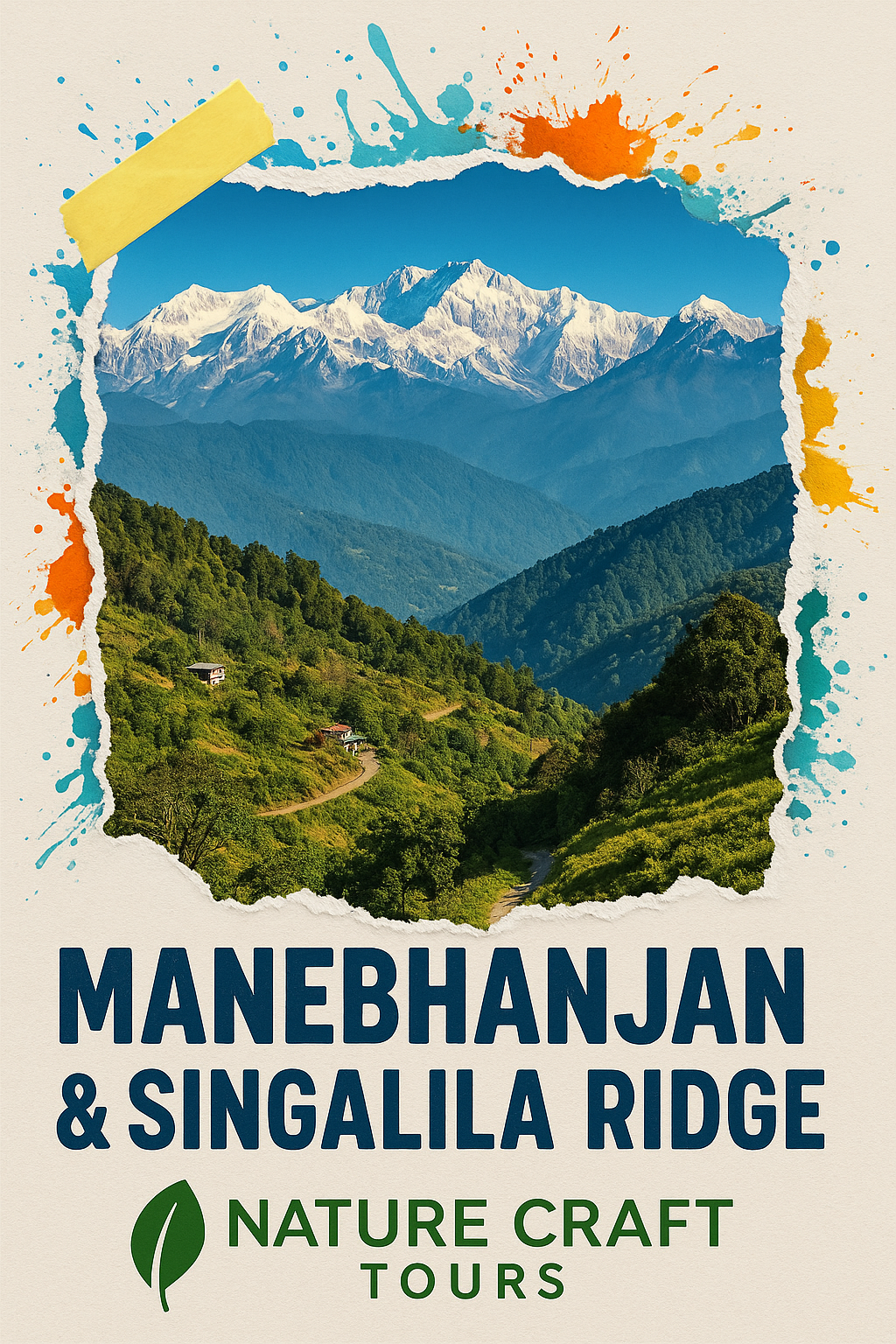
– A Complete Travel Guide to the Gateway of the Eastern Himalayas
Manebhanjan, a small yet extremely significant Himalayan settlement, serves as the principal gateway to one of the most spectacular trekking corridors in India—the Singalila Ridge. Located at the border of India and Nepal, this region is a treasure house of panoramic mountain views, dense forests, rhododendron trails, and rich biodiversity. Its terrain, climate, and cultural environment form the backbone of the legendary Sandakphu–Phalut trekking circuit, which attracts trekkers and naturalists from India and across the world.
This comprehensive guide presents a research-driven overview of Manebhanjan, Singalila National Park, and the majestic Singalila Ridge—covering distances, routes, points of interest, accommodation categories, ecological features, cultural heritage, and the best time to visit. Formatted for online publication, the content follows formal, detailed, and descriptive writing standards suitable for travel blogs, tourism websites, and professional articles.
Introduction to Manebhanjan & the Singalila Ridge
Situated at an altitude of approximately 7,000 feet, Manebhanjan is the last major settlement before entering the higher reaches of Singalila National Park. Located near the India–Nepal border in Darjeeling district, it is known for its rugged terrain, traditional hill culture, and its rare fleet of old 4×4 Land Rovers—iconic vehicles that carry travellers and trekkers along the steep trails leading to Sandakphu and Phalut.
The Singalila Ridge forms a long, high-altitude mountain ridge stretching along Nepal’s eastern border. It is renowned for offering one of the rarest panoramic Himalayan views, including:
- Mount Everest
- Mount Kanchenjunga
- Lhotse
- Makalu
Together, Manebhanjan and the ridge form a gateway to adventure, offering unmatched natural beauty, biodiversity, and cultural exploration.
Geographical Setting of Manebhanjan
Manebhanjan sits at the foothills of Singalila National Park, surrounded by tall pine forests and terraced hill settlements. The town derives its name from two Nepali words:
“mane”, meaning religious prayer wheel, and “bhanjan”, meaning a valley or junction. Thus, the town represents a place where spiritual influences meet the mountain terrain.
Its strategic location makes it a gathering spot for trekkers, porters, guides, and cross-border communities moving between India and Nepal. The town also serves as an official entry point for all trekking and vehicle permits to Singalila Ridge and National Park.
Highlights of Singalila Ridge
The Singalila Ridge is celebrated for its dramatic elevation profile, unspoiled alpine forests, and uninterrupted views of the Himalayan skyline. The ridge forms a natural boundary between India and Nepal, offering trekkers the unique experience of walking between two nations along a single mountain trail.
1. Sandakphu – The Highest Point of West Bengal
Standing at 11,930 feet, Sandakphu is the highest peak in West Bengal and the most famous viewpoint of the entire trekking route. Clear mornings offer a 360-degree view of the greatest mountain giants of the world. The “Sleeping Buddha” formation of the Kanchenjunga range is beautifully visible from this point.
2. Phalut – The Majestic Plateau
Phalut, located at 11,811 feet, is one of the oldest trekking points in the Himalayas. Its plateau-like summit offers an astonishing view of Kanchenjunga at an unbelievably close proximity. The region is inhabited by the Lepcha, Sherpa, and Nepalese communities who have maintained ancient traditions for generations.
3. Gairibas
Situated at about 8,600 feet, Gairibas is a zone known for its thick bamboo forest, making it an ideal habitat for the endangered Red Panda. This is one of the most biologically sensitive areas within the national park.
4. Kalipokhri Lake
The holy lake of Kalipokhri, surrounded by small monasteries and colourful prayer flags, lies at around 10,400 feet. The water of the lake appears mysteriously dark due to mineral content and lack of sun penetration, giving the place its distinctive name.
5. Tumling
Tumling is a charming village situated partly in India and partly in Nepal. The view from Tumling offers one of the earliest sunrise glimpses of the Kanchenjunga range. Many trekkers choose to halt here for acclimatization.
6. Bikeybhanjan
Known for its steep inclines and rugged terrain, Bikeybhanjan is the most challenging segment of the trail for both trekkers and Land Rovers. The dramatic landscapes and rocky corridors create a thrilling experience.
Singalila National Park – Biodiversity & Ecological Importance
The Singalila National Park spans a large high-altitude zone covered with dense forests of oak, rhododendron, magnolia, fir, and bamboo. Its ecological significance is extremely high due to:
- Presence of endangered Himalayan species
- Unique alpine vegetation
- Migration zone for high-altitude birds
- Red Panda conservation programs
Flora
- Rhododendrons blooming across dozens of varieties
- Himalayan birch and silver fir
- Rare orchids
- Bamboo forests
Fauna
- Red Panda
- Himalayan black bear
- Leopard
- Himalayan serow
- Blood pheasant
- Satyr tragopan
During spring and early monsoon, the park bursts into colour when rhododendrons and magnolias bloom across the ridge.
Major Distances & Altitude Chart
Below are approximate distances relevant to travellers heading to Singalila Ridge from Manebhanjan:
- Manebhanjan to Tumling: 11 km
- Manebhanjan to Gairibas: 18 km
- Manebhanjan to Kalipokhri: 25 km
- Manebhanjan to Sandakphu: 32 km
- Sandakphu to Phalut: 22 km
- Darjeeling to Manebhanjan: 25–27 km
- NJP to Manebhanjan: 90–95 km
- Bagdogra Airport to Manebhanjan: 85–90 km
Altitude chart for trekkers:
- Manebhanjan: ~7,000 feet
- Tumling: ~9,600 feet
- Kalipokhri: ~10,400 feet
- Sandakphu: ~11,930 feet
- Phalut: ~11,811 feet
How to Reach Manebhanjan
Reaching Manebhanjan is convenient from Darjeeling, Siliguri, or the airport/railway station hubs.
By Air
The nearest airport is Bagdogra Airport, from where travellers can hire a private vehicle to reach Manebhanjan within 3 to 3.5 hours.
By Train
The closest major railway terminal is New Jalpaiguri (NJP). From NJP, travellers can hire a direct car to Manebhanjan or travel via Darjeeling.
By Road
Common driving routes include:
- Darjeeling → Ghoom → Sukhia Pokhri → Manebhanjan
- Siliguri → Mirik → Sukhiapokhri → Manebhanjan
These roads offer panoramic views, pine forests, tea gardens, and high-altitude hamlets along the way.
Stay Options Around Manebhanjan & Singalila Ridge
Accommodation varies from homestays to mountain lodges. Though contact numbers are not included, below are common categories.
1. Homestays in Manebhanjan
These provide comfortable rooms, hot meals, local hospitality, and guidance for trekking. Ideal for acclimatization before entering higher altitudes.
2. Lodges at Tumling & Gairibas
Wooden lodges offer basic yet warm accommodation with scenic sunrise views and easy access to trekking routes.
3. Kalipokhri & Sandakphu Stays
Accommodation at higher altitudes includes mountain huts, trekkers’ shelters, and tea-house style stays. These offer spectacular night skies and panoramic views from doorsteps.
4. Phalut Trekkers’ Hut
Located at one of the closest vantage points to Kanchenjunga, this stay offers a unique experience with extremely simple facilities but unparalleled scenery.
Local Culture & Communities
Manebhanjan and the Singalila belt are culturally rich, with influences from:
- Lepcha traditions
- Sherpa heritage
- Nepali customs
- Tibetan Buddhist rituals
Many families here are directly involved in trekking support, guiding, or agricultural livelihoods. Warm hospitality is a characteristic feature of the community.
Cuisine of the Region
The cuisine offered at homestays and lodges is simple, wholesome, and suitable for trekkers. Popular items include:
- Momos and thukpa
- Local chicken curry
- Vegetable soups
- Rice and lentils
- Gundruk and fermented dishes
Tea lovers can enjoy fresh Darjeeling tea at various locations along the route.
Best Time to Visit Manebhanjan & Singalila Ridge
The region offers distinct seasonal experiences, each beautiful in its own way.
Spring (March–April)
This is one of the best times to visit. Rhododendrons bloom across the entire ridge, painting the landscape in red, pink, and white colours.
Autumn (October–November)
Clear skies and stable weather conditions make autumn the best season for excellent Himalayan views, including Everest and Kanchenjunga.
Winter (December–February)
Snowfall is common at Sandakphu and Phalut. Trekkers seeking winter adventure will find this period magical though much colder.
Monsoon (June–September)
Though lush and green, the monsoon season is not recommended for ridge trekking due to slippery trails and leech-prone conditions.
Why Visit Manebhanjan & Singalila Ridge?
These destinations appeal to travellers because they offer:
- One of the world’s finest Himalayan viewpoints
- The rare experience of trekking between India and Nepal
- Rich biodiversity including the endangered Red Panda
- Unspoiled landscapes and high-altitude forests
- Unique cultural and mountain heritage
From serene valleys to rugged peaks, from ancient monasteries to deep forests, the region promises a journey that stays etched in memory forever.
Conclusion
Manebhanjan and the Singalila Ridge represent the gateway to some of the most breathtaking Himalayan landscapes. With its panoramic viewpoints, biodiverse forests, charming high-altitude villages, and culturally rich communities, the region offers a perfect blend of adventure, tranquillity, and heritage. Whether you trek to Sandakphu, enjoy a Land Rover ride to Phalut, or simply explore the peaceful foothills, the experience remains unforgettable for all who undertake the journey.
For travellers seeking authenticity, adventure, and natural beauty, Manebhanjan and Singalila Ridge stand unmatched as jewels of the Eastern Himalayan world.