McLeod Ganj:
Monastery Zone and Himalayan Streets at the Edge of the Dhauladhar
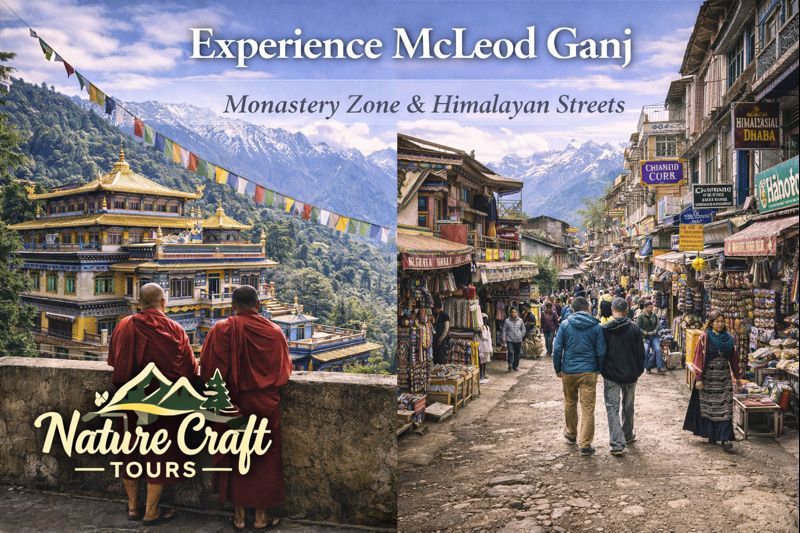
McLeod Ganj is not merely a hill settlement perched above Dharamshala; it is a cultural altitude as much as a geographical one. Rising into cooler air and sharper light, McLeod Ganj unfolds as a rare Himalayan town where monastery courtyards and everyday streets exist side by side, shaping a landscape of reflection, learning, and lived routine. Prayer wheels turn within arm’s reach of cafés, monks move through crowded lanes with unhurried calm, and the Dhauladhar mountains loom so close that weather, faith, and daily life appear inseparable.
The town is often described through its spiritual identity, yet that alone does not capture its complexity. McLeod Ganj is also a functioning settlement, shaped by exile history, migration, trade, and continuous human movement. Its streets are narrow and layered, built not for spectacle but for persistence on steep terrain. To understand McLeod Ganj fully, one must move between its monastery zones and its Himalayan streets, reading how belief systems and geography cohabit the same limited space.
This article approaches McLeod Ganj as a lived mountain environment. It examines how monasteries anchor cultural meaning, how streets sustain daily life, and how altitude and history together create a town that is contemplative without being static, international without losing its Himalayan character.
Destination Overview: Locating McLeod Ganj in the Himalayan Context
McLeod Ganj is situated in the upper reaches of Dharamshala, within the Kangra district of Himachal Pradesh, at an elevation of approximately 2,100 meters above sea level. It rests on a series of ridges and slopes at the base of the Dhauladhar range, with steep forested drops toward the Kangra Valley below and abrupt mountain walls rising behind.
Unlike lower hill towns that spread outward, McLeod Ganj grows vertically and inward. Space is constrained by slope, forest, and climate, resulting in a dense, walkable settlement where most movement occurs on foot. Streets double as social corridors, commercial zones, and cultural meeting points.
Geographically, McLeod Ganj occupies a transitional band—above the warmer, administrative zones of lower Dharamshala and below the alpine wilderness of the upper Dhauladhar slopes. This intermediate position shapes both its climate and its cultural openness.
A Town Defined by Slope and View
Every direction in McLeod Ganj reveals elevation change. Streets rise and fall sharply, opening sudden views toward the valley or the mountains. This constant negotiation with terrain shapes daily rhythms and reinforces awareness of place.
Historical Foundations: Colonial Origins and Tibetan Exile
McLeod Ganj’s contemporary identity is inseparable from two historical layers: its colonial-era establishment and its role as the center of the Tibetan exile community.
Colonial Beginnings
Originally developed during the British period as a hill station and administrative outpost, McLeod Ganj inherited basic infrastructure—roads, bungalows, and civic layouts—designed to cope with steep terrain and heavy rainfall. These early structures set the foundation for later expansion.
Arrival of the Tibetan Community
The most defining chapter in McLeod Ganj’s history began in the late 1950s, when it became the residence of the Tibetan spiritual leadership and a refuge for thousands of Tibetans in exile. This transformed the town from a quiet colonial remnant into a global center of Tibetan culture, learning, and governance.
Institutions, monasteries, schools, and cultural centers emerged organically, adapting existing spaces and creating new ones. This development was not imposed through grand planning but evolved gradually, shaping the town’s present form.
The Monastery Zone: Spiritual Architecture and Daily Practice
The monastery zone of McLeod Ganj forms its spiritual and symbolic core. These spaces are not isolated monuments; they are active centers of education, ritual, and community life.
Monasteries as Living Institutions
Monasteries in McLeod Ganj function as places of study and discipline. Monks and nuns follow structured daily schedules involving prayer, debate, and teaching. Visitors may observe rituals, but the primary purpose of these spaces remains inward-facing and communal.
Architecture reflects this function: courtyards for gathering, prayer halls oriented toward symbolic directions, and surrounding quarters designed for long-term residence rather than tourism.
Ritual Movement and Soundscape
The monastery zone is characterized by a distinctive soundscape—low chanting, the rhythmic turning of prayer wheels, and the soft hum of conversation. These sounds extend into surrounding streets, subtly influencing the town’s overall atmosphere.
Himalayan Streets: Commerce, Conversation, and Continuity
Beyond the monastery walls, McLeod Ganj’s streets form a dense, dynamic network. These Himalayan streets are not broad avenues but narrow corridors shaped by necessity, slope, and long use.
Street Form and Walkability
Streets in McLeod Ganj are designed for feet rather than vehicles. Steep gradients, steps, and sharp turns slow movement naturally, encouraging pauses and interaction. Shops, cafés, bookstores, and small businesses line these paths, creating a continuous human presence.
Cultural Exchange in Everyday Spaces
Languages shift from one corner to the next—local Himachali dialects, Tibetan, Hindi, and English blending seamlessly. Street life reflects McLeod Ganj’s role as a cultural crossroads rather than a homogeneous town.
Cultural Significance: Faith, Exile, and Global Presence
McLeod Ganj holds a unique position in the cultural geography of India. It is simultaneously a Himalayan town, a Tibetan cultural capital in exile, and a global center for spiritual inquiry.
Tibetan Cultural Preservation
Libraries, museums, and educational institutes work actively to preserve Tibetan language, philosophy, and history. These institutions are not symbolic displays but working archives and schools shaping future generations.
Interaction with Local Kangra Culture
Despite its international profile, McLeod Ganj remains embedded in the Kangra region. Local festivals, agricultural practices in surrounding villages, and regional cuisine continue alongside Tibetan traditions, creating a layered cultural landscape.
Ecological Setting: Forests, Rain, and Mountain Climate
McLeod Ganj lies within a rich ecological zone influenced heavily by the Dhauladhar range. Climate, vegetation, and wildlife are shaped by altitude and high annual rainfall.
Forest Cover and Biodiversity
Dense deodar, pine, and oak forests surround the town, stabilizing slopes and regulating temperature. These forests create shaded walking routes and act as ecological buffers between settlement and wilderness.
Rainfall and Seasonal Change
McLeod Ganj experiences heavy monsoon rains, often accompanied by mist and cloud cover that can envelop the town for days. These conditions enhance greenery but demand respect for terrain and drainage.
Key Attractions and Highlights
Monastery Courtyards and Prayer Paths
Open courtyards within monastery zones allow observation of daily rituals and debates, offering insight into living spiritual traditions.
Street-Level Bookshops and Cafés
Small bookstores and cafés serve as informal meeting spaces for students, monks, and travelers, extending dialogue beyond formal institutions.
Viewpoints and Ridge Walks
Short walks lead to viewpoints overlooking the Kangra Valley, reinforcing McLeod Ganj’s vertical identity.
Best Time and Season to Visit
Spring (March to May)
Spring offers clear views, moderate temperatures, and active cultural life. Forests are fresh, and walking conditions are ideal.
Summer (June to September)
Summer provides relief from plains heat. Monsoon rains peak mid-season, adding atmospheric depth but limiting long outdoor movement on some days.
Autumn (October to November)
Autumn is one of the best seasons for visibility and calm exploration, with reduced rainfall and crisp air.
Winter (December to February)
Winters are cold, with occasional snowfall. The town becomes quieter, favoring study, reflection, and long stays.
Ideal Travel Duration
McLeod Ganj rewards time. A stay of four to five days allows immersion without rush.
Suggested Duration
- Day 1: Orientation walk through main streets
- Day 2: Monastery zone exploration
- Day 3: Forest and ridge walks
- Day 4: Cultural institutions and reflection
- Day 5 (optional): Slow observation or writing
Route and Accessibility
McLeod Ganj is accessed via Dharamshala, which connects by road to major towns in Himachal Pradesh and neighboring states. The final ascent involves winding mountain roads.
Internal Movement
Walking is the most effective way to experience McLeod Ganj. Vehicles are limited by narrow streets and steep gradients.
McLeod Ganj in a Broader Geographic Perspective
McLeod Ganj’s identity is shaped by altitude and spiritual migration. In contrast, other regions of India are shaped by river deltas and tidal systems.
Travelers who balance Himalayan journeys with lowland explorations—such as those undertaken through Sundarban Trip experiences—often gain a deeper understanding of how geography directs culture and belief in different environments.
Practical Insights for Travelers
Respecting Sacred Spaces
Monasteries are active religious institutions. Quiet behavior and appropriate dress are essential.
Physical Preparedness
Steep walking requires good footwear and moderate fitness.
Environmental Responsibility
High rainfall and fragile slopes make waste management critical. Responsible behavior protects both town and forest.
Integrating McLeod Ganj into Wider Travel Plans
McLeod Ganj complements journeys across contrasting Indian landscapes. It pairs meaningfully with structured experiences such as a Best Sundarban Tour Package, highlighting how human settlement adapts from mountains to deltas.
A Thoughtful Four-Day Plan
Day One: Street-Level Immersion
Walk through central streets, observing daily rhythms.
Day Two: Monastery and Study Spaces
Spend time in monastery zones and cultural institutions.
Day Three: Forest and Ridge Paths
Explore surrounding forest trails and viewpoints.
Day Four: Reflection and Integration
Revisit meaningful spaces and prepare for departure.
McLeod Ganj as a Himalayan Cultural Threshold
McLeod Ganj exists at the intersection of belief, geography, and daily life. Its monastery zones anchor spiritual continuity, while its Himalayan streets sustain movement, exchange, and adaptation.
For travelers willing to walk slowly, observe quietly, and engage respectfully, McLeod Ganj offers more than scenery. It offers perspective—on exile and belonging, on altitude and effort, and on how culture can root itself deeply even in the most fragile mountain terrain.