Mirik Offbeat Belt
– A Detailed Travel Guide to Maipokhari, Rangbang Valley, Thurbo Tea Garden, and Tingling Viewpoint
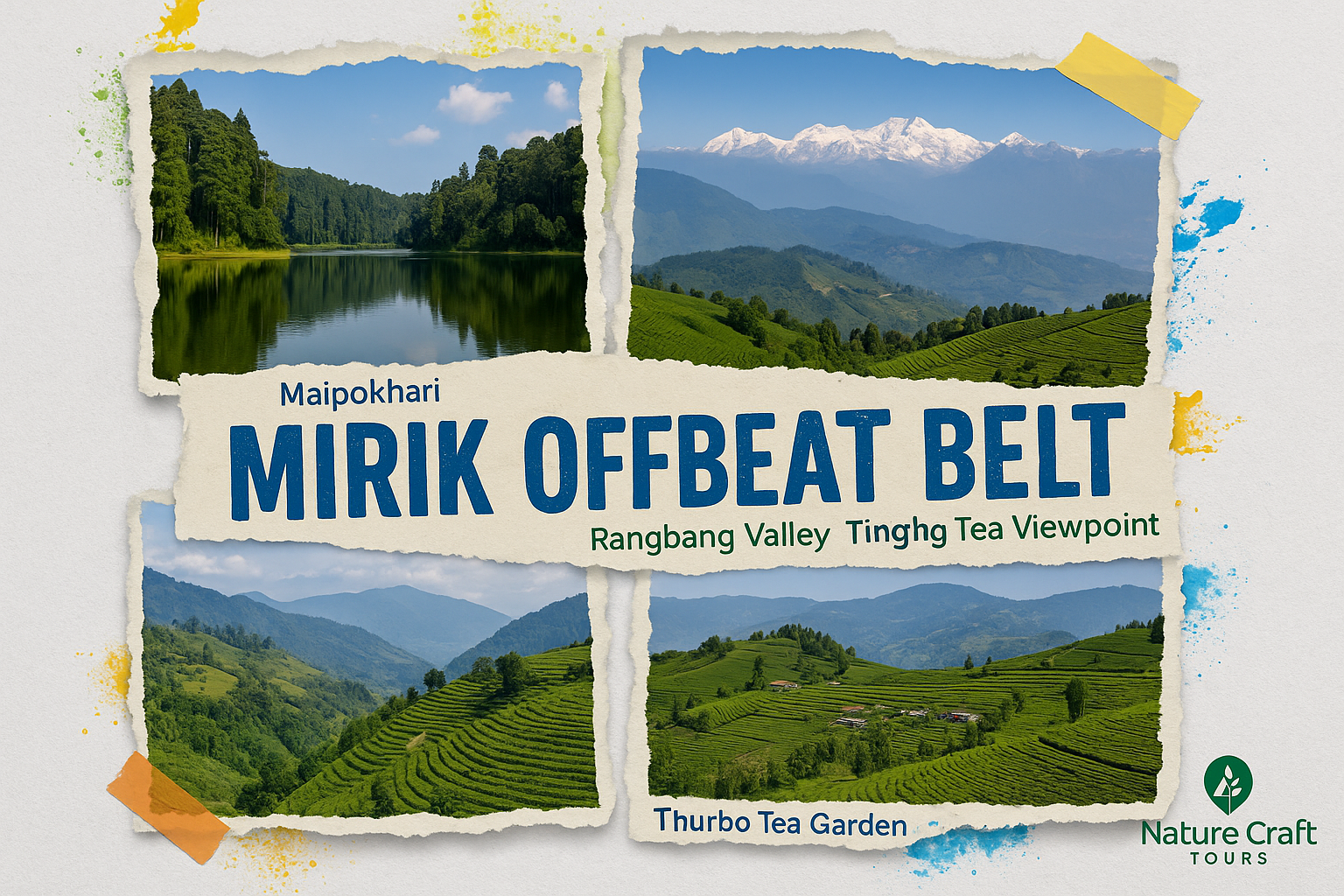
The Mirik region of Darjeeling district is often celebrated for its lakeside charm and pine forests, yet very few travellers explore the enchanting offbeat belt that surrounds it. This serene Himalayan zone, stretching across Maipokhari, the Rangbang Valley, Thurbo Tea Garden, and the picturesque Tingling Viewpoint, offers some of North Bengal’s most pristine landscapes. With its harmonious blend of mountain ecology, tea garden heritage, spiritual sites, and untouched river valleys, the Mirik offbeat belt is a paradise for those seeking slow travel and nature immersion.
This comprehensive guide provides an in-depth, research-based overview of these destinations—covering sightseeing points, routes, distances, accommodation choices, travel tips, and the best times to visit. Designed for travellers, bloggers, and tour planners, the content presents a complete exploration of Mirik’s hidden gems beyond the well-trodden circuits.
Introduction to the Mirik Offbeat Belt
Mirik, located at an altitude of approximately 5,000 feet, is a peaceful hill destination situated between Siliguri and Darjeeling. While the Mirik Lake area attracts most visitors, the offbeat belt surrounding the town remains remarkably unexplored. The region is characterized by deep valleys, terraced tea gardens, evergreen forests, bird habitats, lakes of spiritual significance, and panoramic viewpoints.
In particular, the four major locations—Maipokhari, Rangbang Valley, Thurbo Tea Garden, and Tingling Viewpoint—form a scenic circuit that showcases the ecological and cultural richness of the Eastern Himalayas.
Maipokhari: A Sacred Himalayan Wetland
Maipokhari, located around 18 km from Mirik town, is a tranquil, high-altitude lake surrounded by dense forestation. It is recognized as a Ramsar Site, highlighting its ecological significance as a protected wetland of international importance. The lake is worshipped by local communities, especially those following Hindu and Buddhist traditions.
Ecological Significance of Maipokhari
The wetland ecosystem of Maipokhari sustains a unique range of flora and fauna. Surrounded by evergreen forest patches, the area is home to:
- Himalayan herons
- Spotted doves
- Rhododendron varieties
- Magnolia species
- Medicinal plants used by local communities
The lake’s still water reflects the surrounding greenery, creating a mirror-like visual effect that makes the destination ideal for photography, meditation, and nature walks.
Spiritual and Cultural Importance
Maipokhari is considered sacred by locals who believe the lake to be blessed by deities. Several small shrines dot the periphery, representing Hindu and Buddhist cultural influences. During festive months, the area becomes active with rituals and prayers.
Activities in Maipokhari
- Forest walking trails
- Nature photography
- Birdwatching
- Peaceful lakeside meditation
Rangbang Valley: A Hidden Gem of Mirik
The Rangbang Valley, located below Mirik town, is a pristine river valley region surrounded by tea gardens and small villages. The valley is carved by the Rangbang River, a clear Himalayan stream that flows between lush green slopes. Its unspoiled environment, fresh air, and soothing soundscape make it a perfect escape for travellers seeking solitude.
Landscape and Natural Beauty
The valley is dominated by steep slopes covered with tea bushes, small wooden bridges across the river, bamboo groves, and rich biodiversity. Early mornings are particularly magical, with mist rising gently from the river while sunlight touches the terraces of tea gardens.
Local Life and Community Interaction
The Rangbang Valley is inhabited by Gorkha, Lepcha, and Limbu communities, whose traditional lifestyles add cultural depth to the region. Travellers may observe:
- Organic farming practices
- Local Nepali cuisine
- Traditional hill architecture
- Village trails connecting hamlets
This region is also popular among birdwatchers, as the diverse ecosystem supports several Himalayan species.
Rangbang River
The Rangbang River flows gently through the valley, offering picturesque spots for picnics, photography, and riverside leisure. During winters, crystal-clear reflections create dramatic visuals ideal for landscape photography.
Thurbo Tea Garden: A Heritage Tea Estate
The Thurbo Tea Garden is one of Darjeeling’s most celebrated estates and forms an important part of the Mirik offbeat belt. Established during the colonial era, it remains known worldwide for its premium tea produced using traditional and scientific methods.
Historical Background
Thurbo Tea Garden was founded by British planters and is spread across several hillsides near Mirik. The estate earned popularity for its unique microclimate and soil composition, producing flavourful teas that are exported globally.
Landscape and Tea Cultivation
Terraced slopes carpeted with vibrant green tea bushes create a visually striking landscape. The estate’s altitude range, high humidity, and cool winds contribute to the characteristic flavour of the Thurbo tea leaves.
Visitors can walk along the pathways that wind through the tea gardens and enjoy panoramic views of Mirik and its surrounding valleys.
What to Do in Thurbo Tea Garden
- Tea garden walks
- Photography sessions
- Tea-tasting experiences
- Interaction with garden workers
The tea garden also overlooks several scenic points, making it a captivating experience for travellers who appreciate mountain tea culture.
Tingling Viewpoint: A Panorama of Himalayan Grandeur
Located close to Mirik, Tingling Viewpoint is among the most breathtaking viewpoints in the Darjeeling hills. It provides vast, sweeping views of tea estates, deep valleys, and layers of Himalayan ridges fading into the distance.
Spectacular Views of Tea Gardens
The viewpoint offers a bird’s-eye perspective of the Tingling Tea Garden—a mosaic of perfectly aligned tea bushes spread across undulating hills. The symmetry, colour grading, and natural patterns are extraordinary, especially during sunrise and sunset.
Photographers often spend extended periods here capturing:
- Misty layers of hills
- Golden sunrise light
- Terraced plantations
- Cloud movement patterns
Winter and Monsoon Charm
During winter, visibility is excellent and the sky remains crystal clear. Monsoon, on the other hand, transforms Tingling into a fantasy-like world where clouds float close to the ground, wrapping tea slopes in dreamy mist.
Distances Between Major Points in the Offbeat Belt
Below are approximate distances to help travellers plan an efficient itinerary:
- Mirik to Maipokhari: 15–18 km
- Mirik to Rangbang Valley: 7–10 km
- Mirik to Thurbo Tea Garden: 5–7 km
- Mirik to Tingling Viewpoint: 4–5 km
- Mirik to Darjeeling: 35–38 km
- Mirik to Siliguri: 50–55 km
Travel time varies depending on weather conditions, road gradients, and local traffic patterns.
How to Reach the Mirik Offbeat Belt
The offbeat belt is accessible from Siliguri, Darjeeling, Kurseong, and even Nepal border zones. Travel options are detailed below.
By Air
Travellers can reach the region via Bagdogra Airport, located approximately 55–60 km from Mirik. Cars are readily available outside the airport to connect directly to Mirik or nearby destinations such as Rangbang Valley or Thurbo Tea Garden.
By Train
The nearest major station is New Jalpaiguri (NJP), which is well connected by long-distance trains. From NJP, one may hire a private vehicle to reach Mirik within 2.5 hours.
By Road
Travellers may take any of the following scenic routes:
- Siliguri → Mirik → Thurbo → Tingling
- NJP → Mirik → Rangbang Valley
- Darjeeling → Ghoom → Sukhiapokhri → Mirik
These routes provide panoramic terrain, forested patches, waterfall stretches, and traditional villages along the way.
Staying Options Near the Mirik Offbeat Belt
The region offers several accommodation styles suitable for every category of traveller. Though contact numbers are not provided as instructed, the most common types of stays include:
1. Tea Garden Homestays
Located near areas like Thurbo, Tingling, and Sukhiapokhri, these homestays offer panoramic tea garden views, local cuisine, personalised attention, and peaceful surroundings.
2. Riverside Retreats in Rangbang Valley
Properties situated close to the Rangbang River provide soothing soundscapes, mist-filled mornings, and direct access to valley trails. Ideal for nature enthusiasts and birdwatchers.
3. Village Eco-Stays Near Maipokhari
These stays are located within forested patches and offer an immersive rural experience. Guests enjoy organic food, traditional hospitality, and proximity to the sacred Maipokhari Lake.
4. Boutique Hill Lodges Near Mirik Town
These properties provide access to the offbeat belt while offering modern amenities. They are suited for families who want comfort while exploring remote destinations.
Local Cuisine in the Mirik Region
The culinary offerings reflect a blend of Nepali, Himalayan, and Bengali influences. Common dishes include:
- Handmade momos
- Local chicken curry
- Gundruk-based dishes
- Organic vegetable platters
- Dalle khursani chutney
- Steamed rice and dal cooked in traditional style
Tea lovers will particularly enjoy fresh, aromatic teas sourced directly from Thurbo, Tingling, and Okayti estates.
Best Time to Visit the Mirik Offbeat Belt
The weather in Mirik stays fairly pleasant throughout the year, yet the best seasons depend on traveller preferences.
Winter (November–February)
Winter offers clear skies, crisp air, and majestic views of valleys and tea slopes. Excellent for photography, trekking, and tea garden visits.
Spring (March–April)
Spring brings blooming flowers, mild temperatures, and pleasant weather ideal for lakeside walks, birdwatching, and sunrise photography.
Monsoon (June–September)
Lush greenery dominates the landscape. Mist-covered tea gardens and cloud-layered valleys offer magical views, though occasional roadblocks may occur.
Autumn (October)
Autumn provides the perfect blend of clear skies, vibrant landscapes, and festive atmosphere. Visibility is excellent, making it the ideal time for sightseeing.
Why Choose the Mirik Offbeat Belt?
This region remains one of the most underrated Himalayan zones. Unlike mainstream hill stations, it offers:
- Untouched natural beauty
- Zero crowding
- Authentic cultural experiences
- Tea heritage exploration
- Ideal conditions for photography, meditation, and leisure
- Scenic diversity—from lakes and forests to deep valleys
Whether it is a weekend getaway or a long nature retreat, the Mirik offbeat belt promises rejuvenation, originality, and an unparalleled Himalayan charm.
Conclusion
The offbeat circuit surrounding Mirik—featuring Maipokhari, Rangbang Valley, Thurbo Tea Garden, and Tingling Viewpoint—represents one of the most extraordinary landscapes of the Eastern Himalayas. With its sacred wetlands, serene river valleys, heritage tea gardens, and expansive viewpoints, the region offers a wholesome travel experience enriched with nature, culture, and tranquillity. It stands as an ideal destination for slow travellers, photographers, families, couples, and explorers seeking peaceful escapes away from crowded tourist hubs.
Each corner of the Mirik offbeat belt unveils a new perspective of Himalayan life, inviting travellers to discover its timeless beauty and harmonious connection with nature.