Raghurajpur Heritage Village
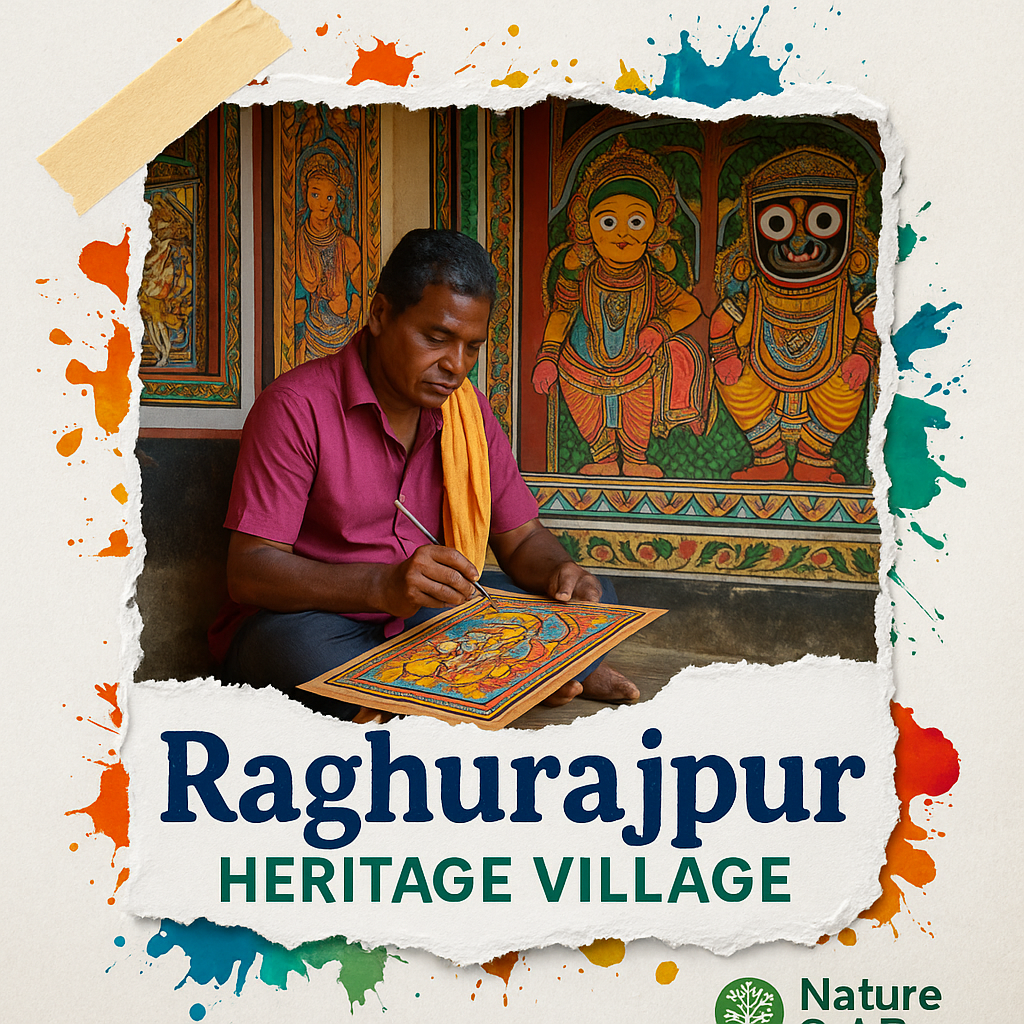
– Odisha’s Living Canvas of Art, Culture and Timeless Craftsmanship
Nestled along the palm-lined banks of the Bhargavi River, not far from the sacred town of Puri, lies one of India’s most celebrated craft villages—Raghurajpur Heritage Village. A place where every home is an art studio, where walls narrate stories in brilliant colours, and where centuries-old traditions are preserved with devotion, Raghurajpur represents the soul of Odisha’s artistic heritage.
Renowned globally for its Pattachitra paintings—an ancient scroll-painting tradition depicting mythological tales—the village is also home to master craftsmen skilled in palm-leaf engraving, tussar painting, papier-mâché toys, stone carving, cow-dung art, wooden idols and the classical dance form Gotipua. The entire settlement functions as a cultural ecosystem, where art is not an occupation but a way of life.
Declared a “Heritage Crafts Village” by INTACH, Raghurajpur stands today as a shining example of living cultural heritage, offering a rare opportunity for travellers to witness art being created at doorstep level, interact with artisans, learn techniques, and support sustainable creative livelihoods. This comprehensive guide presents an in-depth understanding of the village’s history, key attractions, distances, travel routes, stay options, and ideal visiting seasons—a complete resource for culture enthusiasts and travellers alike.
Historical and Cultural Background of Raghurajpur
Raghurajpur’s artistic roots trace back over 800 years, with documented associations to the Pattachitra tradition, an art form deeply linked to the Jagannath Culture of Puri. For generations, artisans here have painted stylised, talismanic and narrative depictions of deities—particularly Lord Jagannath, Subhadra, and Balabhadra—on cloth and palm leaves. The art originally served ritualistic needs of the Jagannath Temple, gradually spreading beyond temple walls into households, festivals and pilgrimages.
The village is also the birthplace of Guru Kelucharan Mohapatra, the legendary Odissi dancer who revolutionised classical dance in India. His presence enriched the village’s cultural identity, intertwining visual and performing arts within a shared heritage network.
In 2000, the Indian National Trust for Art & Cultural Heritage (INTACH) adopted and revived Raghurajpur, restoring murals, improving infrastructure, and promoting it as a craft tourism destination. Today, the village stands as one of India’s premier rural cultural experiences—where artistry, tradition and community life converge harmoniously.
Why Raghurajpur Is Unique
Unlike typical craft markets or commercial hubs, Raghurajpur is immersive—its narrow lanes are filled with murals, its homes double as studios, and its people are custodians of ancient artistic wisdom. Every family engages in one or more artforms, creating a living museum where traditions are practiced daily rather than preserved behind glass.
A Village Where Every House Paints
The most striking feature of Raghurajpur is that nearly every household is involved in creative production. Men sketch outlines, women fill intricate colours, elders engrave palm leaves, and children learn techniques from a young age. This familial participation ensures that skills remain alive and evolve with each generation.
Art as Ritual, Identity and Livelihood
For the artisans, painting is not merely a profession—it is devotion. Many Pattachitra works are used in Jagannath temple rituals, particularly during Anasara, when the deities fall ill and their painted forms replace them for public view. This spiritual connection gives the art a sacred dimension.
Preservation of Rare Art Forms
Raghurajpur is one of the few Indian villages where multiple traditional arts flourish simultaneously:
- Pattachitra paintings on cloth and tussar silk
- Palm-leaf talapatra etchings
- Gotipua dance traditions
- Stone and wood carving
- Decorative masks made of papier-mâché
- Traditional cow-dung toys and mural art
This cluster of diverse art practices creates a multi-layered cultural identity rarely found in a single settlement.
What to See in Raghurajpur – A Detailed Tour
A visit to Raghurajpur is visual, emotional, and sensory. The village is compact—easily explored on foot—but every few steps reveal new experiences.
1. The Painted Village Streets
The first impression of Raghurajpur comes from its beautifully decorated houses. Walls depict motifs of lotus flowers, elephants, peacocks, conch shells, and mythological stories in bold colours. These murals serve both as artistic identity and as an open-air gallery introducing visitors to the village’s visuals.
2. Pattachitra Workshops Inside Homes
Every home opens into a workspace where artists sit cross-legged on floor mats, brushes and pigments spread neatly beside them. Visitors can observe:
- Preparation of tamarind-seed gum
- Polishing of cloth with chalk and stone
- Sketching with natural brushes
- Colour filling using stone pigments and vegetable dyes
- Finishing with lacquer for lustre and protection
Many artisans also demonstrate palm-leaf engraving—a meticulous process involving etching, blackening and polishing.
3. Palm-Leaf Manuscripts (Talapatra Chitra)
Among the village’s most revered artforms are palm-leaf manuscripts etched with mythological scenes, tantric symbols, and scripts. These works require extraordinary precision and are prized by collectors globally for their rarity and craftsmanship.
4. The Gotipua Gurukul
One of the village’s cultural jewels is its Gotipua dance school. Young boys dressed as feminine dancers perform graceful movements inspired by Odissi. Their training includes:
- Rhythmic footwork
- Flexible acrobatics
- Facial expressions
- Use of anklets and traditional music
Watching a Gotipua performance is both emotional and uplifting—a reminder of the cultural depth embedded in the village.
5. Cow-Dung Toys and Rural Artifacts
Raghurajpur preserves ancient traditional crafts such as cow-dung toys, which are shaped, sun-dried, painted and decorated by local families. These rustic artworks carry deep cultural symbolism and are often used during festivals.
6. The Bhargavi River & Coconut Groves
A short walk behind the village leads to the tranquil Bhargavi River, surrounded by thick coconut groves and paddy fields. This serene landscape offers a perfect resting point for nature lovers.
7. Sri Raghunath Temple
At the entrance of the village stands a historic temple dedicated to Lord Raghunath. The temple forms the spiritual nucleus of the settlement and is central to many rituals performed by villagers. Its carvings, quiet ambience and traditional architecture add depth to the cultural experience.
Major Distances from Key Locations
- Puri to Raghurajpur: approx. 10–12 km
- Bhubaneswar to Raghurajpur: approx. 50–55 km
- Bhubaneswar Airport: approx. 50–52 km
- Puri Railway Station: approx. 12–14 km
- Chilika Lake (Satapada): approx. 40–45 km
These short distances make the village an ideal half-day or full-day excursion from both Puri and Bhubaneswar.
How to Reach Raghurajpur Heritage Village
By Road
Raghurajpur is accessible via a branch road that connects directly from the Puri–Bhubaneswar highway. Visitors typically take cars, autos or rented taxis to reach the village. The final stretch travels through coconut groves and paddy fields, offering a scenic rural drive.
By Rail
The nearest railhead is Puri Railway Station. From the station, autos, taxis and private cabs are easily available. The journey takes about 25–30 minutes.
By Air
Biju Patnaik International Airport in Bhubaneswar serves as the nearest airport. Travellers can hire taxis from the airport for a direct journey to the village, taking approximately 1.5 hours depending on traffic conditions.
Staying Options Around Raghurajpur
The village itself focuses primarily on preserving its artistic environment; therefore, accommodations are mainly located in nearby Puri and Bhubaneswar.
1. Resorts and Hotels in Puri
Puri, being a major pilgrimage and beach destination, offers numerous resorts, mid-range hotels, and boutique properties suitable for families, solo travellers and cultural tourists. Many visitors prefer to stay by the sea and visit the village as a day trip.
2. Cultural Homestays and Craft-Themed Stays
Some homestays in the region focus on providing cultural immersion experiences through art workshops, rural activities and traditional Odia meals. These offer travellers a deeper connection with local traditions.
3. Mid-Range City Hotels in Bhubaneswar
Bhubaneswar offers comfortable modern hotels with quick access to the airport, rail connections and sightseeing spots. These stays suit travellers planning a broader cultural tour of Odisha.
4. Budget Lodges
Backpackers and students can choose budget accommodations throughout Puri and Bhubaneswar, offering basic facilities and affordable tariffs.
Best Time to Visit Raghurajpur Heritage Village
Although open throughout the year, certain seasons enhance the experience of exploring the village.
Winter (November to February)
This is considered the most pleasant period. Cool weather, clear skies and gentle sunlight make it ideal for strolling through the village lanes, watching demonstrations and interacting with artisans.
Post-Monsoon (September to October)
The landscape surrounding the village becomes lush and vibrant after the rains, offering a refreshing backdrop for photography and cultural walks.
Summer (March to June)
Summers can be warm, though early mornings and late afternoons remain comfortable for visits. Artists continue working indoors, making it easy to observe workshop processes.
Monsoon (June to August)
Monsoon showers lend a mystical beauty to the region, though rural pathways may become slippery. Visitors must plan footwear and timing accordingly.
Suggested Itinerary for an Enriching Visit
- Start in the early morning from Puri or Bhubaneswar.
- Walk through the painted village streets.
- Visit multiple Pattachitra studios and observe live demonstrations.
- Watch palm-leaf engraving and cow-dung art processes.
- Attend or inquire about a Gotipua dance performance.
- Explore the riverfront and coconut groves.
- Shop directly from artisans to support traditional livelihoods.
- Return to Puri or explore nearby craft villages.
Travel Tips for Visitors
- Always buy authentic artworks directly from artisans—this supports the craft ecosystem.
- Respect workshop spaces and avoid touching artworks in progress.
- Carry cash, as some shops may have limited digital payment options.
- Wear comfortable footwear suitable for walking through narrow village paths.
- Photography is welcome, but always ask permission from the artists first.
- Plan at least 2–3 hours to enjoy a meaningful experience.
- Avoid visiting during late afternoon in peak summer due to heat.
Conclusion – A Living Canvas of Odisha’s Soul
Raghurajpur Heritage Village is not merely a location—it is an experience, a journey through colours, devotion, heritage and human creativity. Every brushstroke, every engraved line and every mural tells a story of centuries-old tradition kept alive by dedicated families. The village stands as a rare cultural jewel where ancient art practices are lived and breathed each day.
For travellers seeking authenticity, craftsmanship and cultural immersion, Raghurajpur is an unforgettable destination. It offers more than souvenirs—it offers a glimpse into the heart of Odisha’s artistic identity. Visiting this village means supporting artisans, understanding heritage, and becoming part of a timeless story painted by the hands of generations.