Rimbick, Lodhoma & Pokhriabong
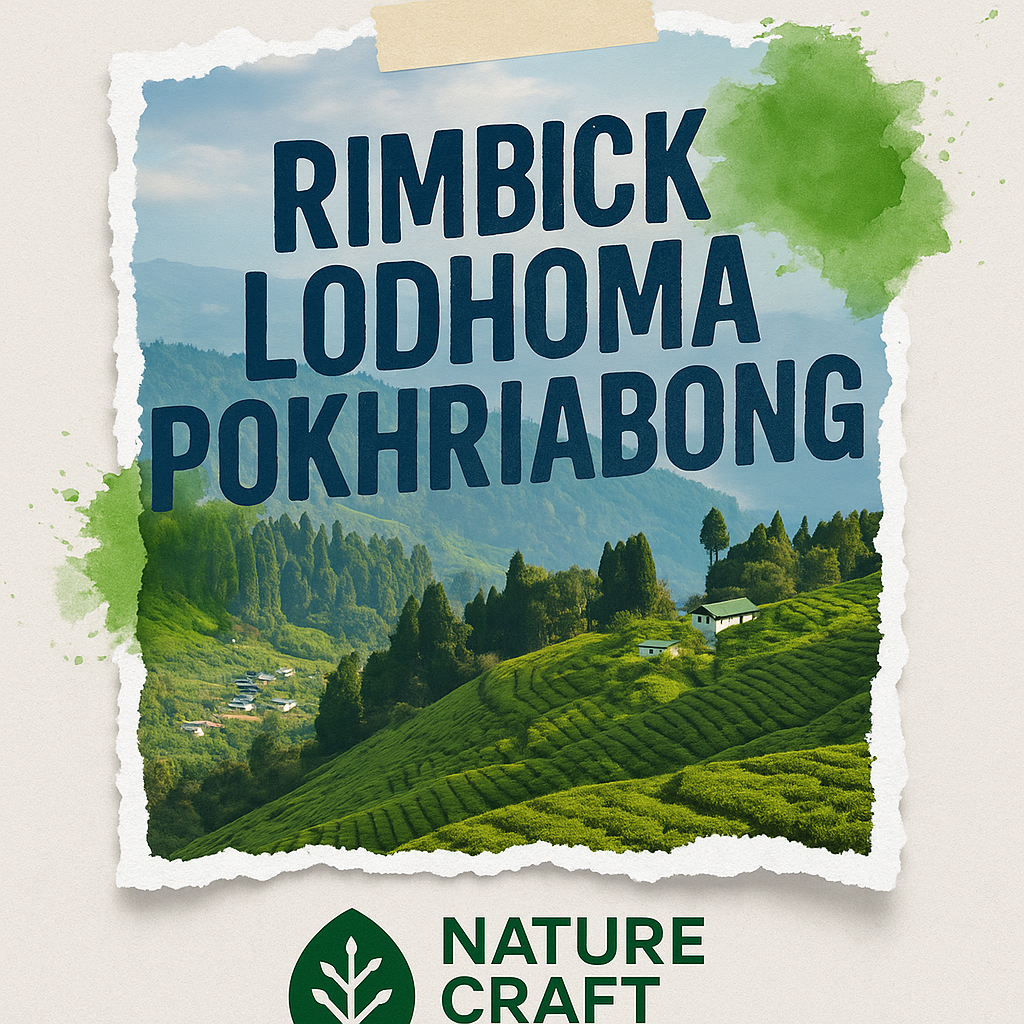
– A Complete Himalayan Travel Guide
Nestled deep within the western fringes of the Darjeeling Himalayas, the serene triad of Rimbick, Lodhoma and Pokhriabong forms one of the most untouched mountain corridors in Eastern India. Far from crowded tourist belts, these highland villages preserve their age-old charm, vibrant Rai–Lepcha culture, terraced farmlands, forested ridges, and pristine Himalayan springs. Over the past decade, this region has quietly risen as one of the finest destinations for travellers seeking tranquillity, photography, birdwatching, soft trekking, and authentic rural Himalayan experiences.
This research-based guide presents a complete overview of places to see, distances, access routes, climate, accommodation options, geography, biodiversity, and travel essentials—designed to help visitors understand the cultural as well as ecological richness of this hidden Himalayan circuit.
Introduction to the Rimbick–Lodhoma–Pokhriabong Circuit
The three destinations lie across the Singalila foothills, forming a compact yet diverse travel zone that stretches between 1,200 and 2,100 metres above sea level. Together, they create a triangular scenic route:
- Rimbick – A high-altitude village on the Nepal border, known for the Rammam River valley, trekking routes, and panoramic views.
- Lodhoma – A fertile green valley famous for step-farms, mountain streams, and rare bird population.
- Pokhriabong – One of the oldest tea-growing belts in Darjeeling district, encircled by a ring of lush forests and misty hills.
Together, they offer a relaxing Himalayan holiday with soft hikes, cultural walks, scenic drives and peaceful stays.
Geography and Landscape
The region lies along the lower slopes of the Singalila ridge, enriched by the Rammam River and numerous tributaries. The landscape is woven with deep valleys, pine forests, rhododendron clusters, bamboo groves, waterfalls, and terraced agricultural lands. This unique topography makes the area ideal for settlement of various indigenous communities who depend on forest produce, small tea gardens, and horticulture.
Beyond the hills, the backdrop often reveals snow peaks such as Kabru, Kokthang and Kumbhakarna, especially during clear winter mornings. The topographical gradient also generates rich biodiversity, making this circuit a haven for birdwatchers.
How to Reach Rimbick, Lodhoma & Pokhriabong
Nearest Major Transport Hubs
- NJP Railway Station → 100–120 km (4.5–5.5 hours)
- Bagdogra Airport → 95–115 km (4–5 hours)
- Darjeeling Town → 45–55 km (2–3 hours)
- Ghoom / Sukhiapokhri → 25–35 km (1.5–2 hours)
Route Options
From Siliguri / NJP / Bagdogra:
- Route 1 (Most Common): Siliguri → Mirik → Sukhiapokhri → Maneybhanjan → Rimbick/Lodhoma/Pokhriabong
- Route 2: Siliguri → Kurseong → Ghoom → Sukhiapokhri → Maneybhanjan → Rimbick belt
Both routes are scenic, passing through forests, tea gardens and high ridges. Travellers often choose Route 1 for smoother roads and panoramic viewpoints.
Local Transport
Shared vehicles operate up to Maneybhanjan, Sukhiapokhri and Rimbick. For explorations deeper into the valleys, a pre-booked private vehicle is recommended due to limited public transport in remote areas.
Major Distances Between Points
- Darjeeling → Rimbick: 55 km
- Darjeeling → Pokhriabong: 45 km
- Darjeeling → Lodhoma: 48–52 km
- Rimbick → Lodhoma: 12–15 km
- Rimbick → Pokhriabong: 18–22 km
- Pokhriabong → Lodhoma: 10–12 km
History and Culture
The region is historically inhabited by Lepcha, Rai, Limbu, Tamang and Gurung communities. Traditional bamboo houses, stone-paved steps, vibrant local culture, folk music and age-old festivals like Sonam Losar and Sakela are still celebrated with enthusiasm.
The tea plantations of Pokhriabong trace their origins to the late 19th century when the British introduced organised tea cultivation in lower Darjeeling hills. Over time, the area prospered into a rural trade centre due to its location between Darjeeling and Nepal.
Important Places to See in Rimbick
Rammam River Valley
A picturesque river valley known for crystal-clear water, rocky riverbeds and serene picnic locations. The river originates near the Singalila region and flows down towards Lodhoma.
Hilley Village & Samanden
These remote hamlets on the Nepal border offer pristine meadows, stone houses, organic farmlands and unforgettable Himalayan tranquillity. Samanden is often described as a “hidden European-style meadow” for its rolling green openness.
Srikhola
Located 6–8 km from Rimbick, Srikhola is one of the most scenic Himalayan riverside villages, famous for birdwatching, wooden bridges and trout-filled streamlets.
Barsey Rhododendron Zone (via Trek Routes)
Although primarily approached from Sikkim, certain trekking routes from Rimbick and Samanden allow access to rhododendron forests during spring.
Key Attractions in Lodhoma
Lodhoma Valley
A vibrant fertile belt, ideal for nature-walks, farming tours and village experiences. Terraced fields, orange orchards and cardamom plantations are common sights.
Hanging Bridges & Mountain Streams
The entire valley is crisscrossed with wooden and steel hanging bridges. These bridges offer excellent photography opportunities and are widely used by locals.
Birdwatching Trails
Lodhoma’s forest zones host rare birds such as the Grey-chinned Minivet, Rufous-necked Hornbill, Scarlet Finch, Himalayan Monal and Satyr Tragopan. Dawn walks around 5 AM offer the best sightings.
Major Attractions in Pokhriabong
Pokhriabong Bazaar
A heritage rural market and trade junction known for traditional local products, fresh organic vegetables, handmade bamboo craft and classic Nepali eateries.
Tea Gardens & Viewpoints
The tea gardens offer sublime views of distant snow peaks and undulating highlands. Sunrise is particularly dramatic during autumn and winter.
Pokhriabong Monastery
An old Buddhist monastery offering quiet meditation spaces and panoramic valley views.
Forest Trails to Rimbick & Lodhoma
Pokhriabong is crisscrossed by several forest tracks used by locals for decades. These trails are ideal for soft trekking and nature photography.
Nature, Flora & Fauna
The biodiversity is exceptionally rich. The forests around the region are home to:
- Himalayan Monal
- Satyr Tragopan
- Chestnut-headed Tesia
- Barking Deer
- Yellow-throated Marten
- Himalayan Salamander
- Red Panda (rare sightings in the upper zones)
Floral diversity includes rhododendron, magnolia, orchids, ferns, Himalayan walnut trees and medicinal herbs used by locals for centuries.
Things to Do
Village Walks & Cultural Interactions
Visitors can enjoy guided walks covering ancient houses, terraced farms, local schools, monasteries and cultural performances on request.
Soft Trekking Routes
- Rimbick → Samanden → Gurdung
- Lodhoma → Rammam Valley
- Pokhriabong → Rimbick forest trails
Bird Photography
The region is ideal for early-morning birding tours in spring and winter.
Tea Garden Experiences
Several small tea estates allow visitors to walk through fields and observe organic tea-production methods.
Riverbank Picnics
Srikhola and Rammam riverbanks are safe for family picnics and photography.
Where to Stay (Properties Only, No Contact Numbers)
The region offers homestays, village-stays and a few eco-resorts. Options include:
- Rimbick: Riverside homestays, hillside eco-cottages near Srikhola, traditional village stays at Samanden.
- Lodhoma: Valley-facing homestays, orange-farm stays, cottages with agricultural experiences.
- Pokhriabong: Tea-garden-view guest houses, rural lodges, forest cottages.
These accommodations provide basic amenities, local organic food, warm hospitality and immersive cultural interactions.
Climate & Best Time to Visit
Spring (March–April)
Rhododendron bloom, pleasant climate, excellent for photography.
Summer (May–June)
Cool weather, fresh greenery, clear village walks.
Autumn (October–November)
The best visibility for Himalayan peaks, vibrant forests and festivals.
Winter (December–February)
Cold but clear. Ideal for sunrise views and birding.
Monsoon (July–September) is scenic but not recommended due to heavy rain and occasional landslides.
Food & Local Cuisine
The region’s cuisine is dominated by organic produce—fresh vegetables, millet, bamboo shoot dishes, boiled rice, country chicken, fermented soybeans (kinema), homemade pickles and nettle soup. Many homestays serve traditional Nepali meals alongside warm millet beer (local tongba) during winter.
Suggested 3-Day Itinerary
Day 1: Arrival & Pokhriabong Exploration
- Arrive from Bagdogra/NJP via Mirik
- Check-in at Pokhriabong
- Tea garden walk
- Visit Pokhriabong Bazaar and monastery
- Sunset viewpoint
Day 2: Rimbick & Lodhoma Scenic Circuit
- Breakfast followed by transfer to Rimbick
- Visit Srikhola, Rammam Valley
- Lunch with a local family (subject to arrangement)
- Explore Lodhoma valley and orange orchards
- Return to Pokhriabong
Day 3: Forest Trails & Departure
- Morning forest walk
- Village interactions
- Return to Bagdogra/NJP
Travel Tips
- Carry warm clothes during winter and monsoon-proof gear during summer.
- Roads in interior regions may be narrow; a sturdy vehicle is recommended.
- Respect local culture while visiting rural settlements.
- Mountain weather changes quickly; plan accordingly.
- Avoid plastic waste and maintain the region’s ecological integrity.
Conclusion
Rimbick, Lodhoma and Pokhriabong together form an exquisite Himalayan triangle that remains largely untouched by mass tourism. The region’s peaceful lifestyle, rich biodiversity, traditional culture and dramatic landscapes create an unforgettable travel experience for nature enthusiasts and culturally inclined travellers. Whether one seeks forest trails, birdwatching, tea-garden mornings, or simple mountain serenity, this highland corridor offers a quiet refuge far removed from daily chaos.
The journey through these villages is not just a tour—it is a gentle immersion into a timeless Himalayan world where nature and culture coexist in perfect harmony.