Satapada Sector (Chilika) — Dolphin & Channel Views (Seasonal):
A Field Guide to Lagoon Crossings, Tidal Life, and Coastal Ecology
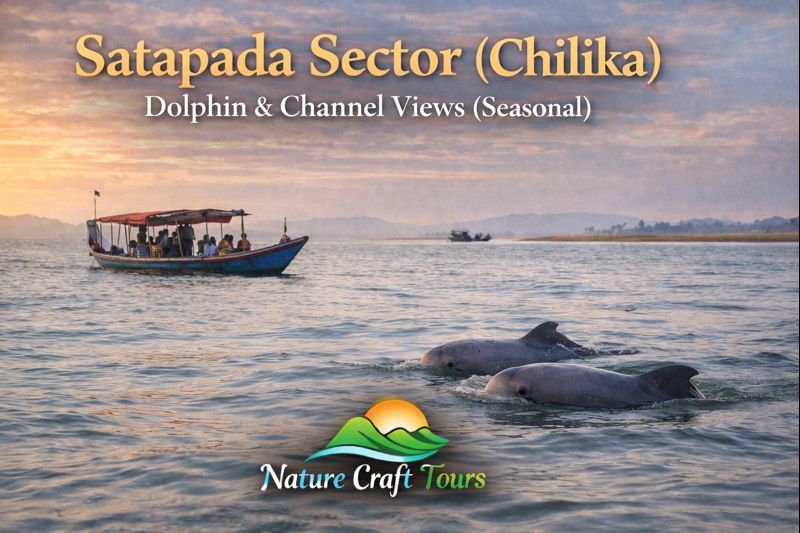
Satapada, positioned at the southern edge of Chilika Lake, represents one of the most dynamic and visually revealing sectors of India’s largest brackish water lagoon. Unlike the broader, bird-dominated expanses of northern and central Chilika, Satapada is defined by movement—of tides, channels, fish shoals, and the seasonal appearance of dolphins that draw global attention to this otherwise quiet fishing settlement. Here, the lagoon narrows and negotiates its final dialogue with the Bay of Bengal, creating a constantly shifting aquatic landscape that rewards patient observation.
This sector is not a fixed viewpoint destination. Satapada is best understood as a transition zone, where freshwater influence weakens, salinity increases, and lagoon life adapts to stronger tidal rhythms. For the traveler who approaches it as a living system rather than a sightseeing stop, Satapada offers rare insight into how hydrology, wildlife, and human livelihood intersect along one of India’s most sensitive coastal wetlands.
Destination Overview: Understanding Satapada’s Position within Chilika
Satapada lies at the southern extremity of Chilika Lake, close to the outer channel that connects the lagoon to the Bay of Bengal. This geographical position makes it fundamentally different from the northern sectors of Chilika, where freshwater inflow dominates and winter birdlife is the primary attraction. At Satapada, the lagoon is narrower, deeper in parts, and more directly influenced by sea tides.
The settlement itself has developed as a functional base for fishing and boat operations rather than as a resort town. The surrounding waters are characterized by winding channels, sandbars, and variable depths that change with seasons and tidal cycles. These physical features create ideal conditions for certain aquatic species, including the dolphins that appear here during specific months.
Hydrological Character: Channels, Tides, and Salinity Gradients
The Lagoon–Sea Interface
Satapada occupies a critical ecological threshold where Chilika’s brackish waters gradually transition toward marine conditions. Tidal exchange is more pronounced here than elsewhere in the lagoon, resulting in higher salinity levels, stronger currents, and increased water clarity during certain seasons. This environment supports a different assemblage of fish and plankton compared to inland sections of Chilika.
The channels near Satapada are not static waterways. Sand deposition, erosion, and tidal flow constantly reshape their course, requiring local boat operators to adapt routes frequently. This fluid geography is central to understanding why wildlife distribution here is highly seasonal and unpredictable.
Seasonal Water Behavior
During the monsoon, freshwater inflow expands the lagoon and reduces salinity, pushing marine species closer to the sea mouth. In winter and early summer, reduced inflow allows saline water to penetrate deeper into the lagoon, concentrating fish populations in channel zones near Satapada. These seasonal changes directly influence dolphin movement and visibility.
Dolphin Presence: Ecology, Seasonality, and Observation
Why Dolphins Appear at Satapada
Dolphins are drawn to Satapada primarily because of food availability and channel structure. The narrowing lagoon concentrates fish shoals, while tidal currents assist dolphins in herding prey. These conditions are most favorable during the cooler months, when water temperatures stabilize and fish movement increases.
It is important to understand that dolphin sightings here are seasonal and cannot be guaranteed. Their presence reflects ecological balance rather than human scheduling, making each encounter a matter of timing and environmental conditions.
Responsible Viewing Context
Observing dolphins in Satapada requires patience and restraint. Unlike enclosed wildlife zones, this is an open lagoon environment where animals move freely. Quiet navigation, maintaining distance, and avoiding pursuit are essential to minimize disturbance. Ethical observation enhances both conservation outcomes and the quality of the experience.
Travelers familiar with aquatic wildlife encounters in river–forest systems, such as those experienced during a Sundarban Tour, may appreciate the similarities here—wildlife encounters governed by natural rhythms rather than fixed itineraries.
Channel Views and Lagoon Navigation
Visual Character of the Channels
The channels around Satapada offer some of the most visually engaging lagoon landscapes in Chilika. Narrow waterways curve between sandbanks and shallow flats, reflecting the sky with remarkable clarity during calm conditions. Early mornings often reveal mirror-like surfaces broken only by ripples from fish movement or passing boats.
As sunlight changes angle, water color shifts from pale green to deeper blue-grey, revealing subtle depth variations. These visual cues are used instinctively by local boatmen to judge safe passage.
Boat-Based Exploration
Exploration of Satapada’s channels is entirely boat-dependent. Slow-paced navigation allows for careful observation of water behavior, bird activity, and fishing practices. Unlike fast-moving tourist circuits, meaningful exploration here depends on allowing the landscape to unfold gradually.
Human Life at Satapada: Fishing Communities and Adaptation
Livelihoods Shaped by Tides
Satapada’s residents rely primarily on fishing, with techniques adapted to seasonal salinity and fish migration. Nets, traps, and timing are adjusted according to tidal cycles rather than fixed calendars. This adaptive knowledge is passed through generations and reflects deep familiarity with lagoon behavior.
Fishing activity often peaks during early mornings and late afternoons, aligning with fish movement and favorable currents. Observing these routines offers insight into how human livelihoods remain closely tied to ecological cues.
Cultural Simplicity and Functional Settlements
Unlike pilgrimage centers or heritage towns, Satapada has developed with minimal architectural embellishment. Structures are functional, oriented toward water access and storage rather than aesthetics. This simplicity reinforces the sense that Satapada exists to serve the lagoon, not to dominate it.
Ecological Importance of the Satapada Sector
The Satapada sector plays a critical role in maintaining Chilika’s ecological balance. As the lagoon’s primary interaction zone with the sea, it regulates salinity exchange, supports fish recruitment, and influences nutrient flow across the system. Any disruption here can have cascading effects throughout the lagoon.
Conservation efforts in Chilika increasingly recognize the importance of protecting channel integrity and managing boat traffic to preserve these functions. Satapada serves as a practical example of how human use and ecological health must be carefully balanced.
Best Time to Visit Satapada
Seasonal Timing for Dolphin and Channel Views
The most suitable period to visit Satapada is between November and March. During these months, water conditions are relatively stable, visibility is good, and dolphin sightings are more likely due to favorable salinity and fish concentration. Winter mornings offer calm waters and comfortable temperatures.
Monsoon months bring expanded water coverage and dramatic skies but limit safe navigation. Summer months may reduce dolphin activity due to higher temperatures and changing fish distribution.
Ideal Travel Duration
Satapada itself can be explored within half a day, but a full day allows for relaxed observation of channels, fishing activity, and changing light conditions. When combined with other sectors of Chilika, a two-day itinerary provides a more complete understanding of the lagoon’s diversity.
Route and Accessibility
Reaching Satapada
Satapada is accessible by road from major towns in Odisha, including Puri and Bhubaneswar. The final approach passes through rural landscapes, gradually revealing the lagoon’s expanse as the terrain opens toward water.
Local Movement and Navigation
Movement within the Satapada sector is primarily by boat. Walking is limited to settlement edges and viewing points, while meaningful exploration requires entering the channels. Travelers should allow flexibility in timing, as conditions can change with tides.
Key Attractions and Highlights
- Seasonal dolphin sightings in open channels
- Narrow lagoon passages shaped by tidal flow
- Active fishing zones demonstrating traditional practices
- Visual transition from brackish lagoon to marine influence
Practical Insights for Thoughtful Travelers
Visitors should prioritize responsible observation and avoid pressuring boat operators to chase wildlife. Quiet behavior enhances the likelihood of natural sightings. Weather protection, hydration, and patience are essential for comfortable exploration.
Those planning extended journeys through eastern India’s water landscapes may find valuable ecological contrast by combining lagoon exploration at Satapada with deltaic forest systems through a Sundarban Tour Package, gaining insight into how different aquatic environments shape biodiversity and human adaptation.
Satapada as a Threshold Landscape
Satapada is not defined by spectacle alone. Its significance lies in transition—between lagoon and sea, freshwater and salt, human routine and wild movement. The seasonal appearance of dolphins and the constantly reshaped channels offer a living lesson in ecological fluidity.
For travelers willing to engage slowly and observe carefully, Satapada reveals Chilika at its most dynamic, reminding us that the most compelling landscapes are often those that resist permanence and invite adaptation.