Shaheed Dweep (Neil Island):
Gentle Lagoons & Relaxed Island Rhythm
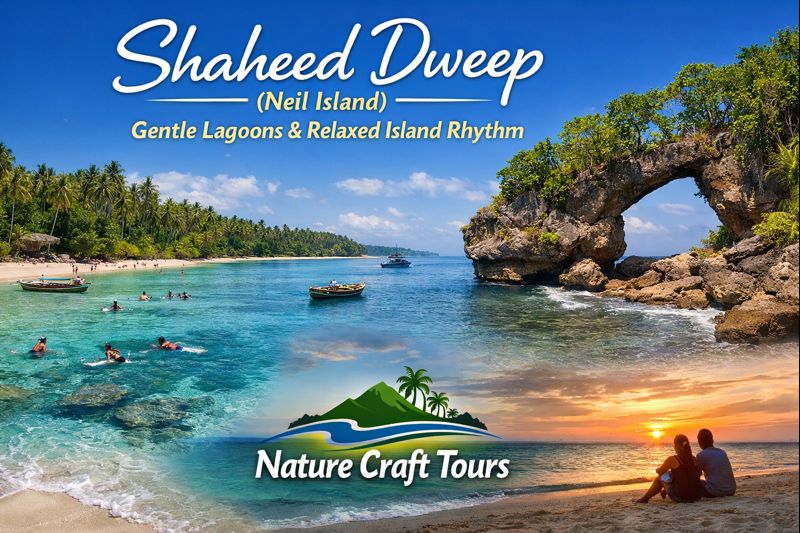
Shaheed Dweep (Neil Island): Gentle Lagoons & a Life That Moves with the Tides
In the eastern waters of the Bay of Bengal, away from hurried ports and crowded beaches, lies an island that seems to breathe at its own pace. Shaheed Dweep, historically known as Neil Island, is not a destination of dramatic extremes. Instead, it offers a rare harmony—gentle lagoons instead of roaring surf, short distances instead of long road journeys, and an island rhythm that quietly reshapes the traveler’s sense of time. For explorers who value depth over spectacle and serenity over excess, Shaheed Dweep is an essential chapter in the Andaman experience.
Understanding Shaheed Dweep: Location, Identity, and Island Character
Shaheed Dweep is located approximately 36 kilometers south-east of Port Blair, the capital of the Andaman and Nicobar Islands. As part of the Ritchie’s Archipelago, the island is modest in size but remarkably rich in ecological diversity. The renaming of Neil Island to Shaheed Dweep reflects India’s effort to honor freedom fighters, yet the island’s personality remains unchanged—quiet, community-oriented, and deeply connected to the surrounding sea.
The island is predominantly flat, with lush agricultural patches, coconut groves, and coastal vegetation defining its landscape. Unlike many tropical islands that rely heavily on commercial tourism, Shaheed Dweep has retained a semi-rural character. Small villages, friendly local markets, and low-rise structures dominate the skyline, allowing visitors to experience island life in its most authentic form.
Why Shaheed Dweep Feels Different from Other Islands
What distinguishes Shaheed Dweep from other Andaman destinations is not a single attraction but a cumulative experience. Distances between beaches are short, roads are quiet, and evenings are defined by sunsets rather than nightlife. The absence of aggressive commercialization allows the island’s natural rhythms—tides, light, and seasonal changes—to guide daily life. This makes Shaheed Dweep particularly appealing to slow travelers, nature photographers, and those seeking mental restoration.
Best Time to Visit Shaheed Dweep: Climate, Seasons, and Travel Windows
The climate of Shaheed Dweep is tropical maritime, with moderate temperature variations throughout the year. However, certain months are significantly more favorable for travel due to sea conditions and visibility.
October to May: The Ideal Exploration Season
The period from October to May is considered the best time to visit Shaheed Dweep. During these months, the sea remains relatively calm, ferry services operate regularly, and underwater visibility is excellent for snorkeling and scuba diving. Daytime temperatures typically range between 25°C and 32°C, making outdoor exploration comfortable.
June to September: Monsoon Mood and Limited Access
The southwest monsoon affects the Andaman region from June to September. While rainfall enhances the island’s greenery and offers a dramatic coastal atmosphere, ferry services may be irregular, and water-based activities are often restricted. This season is best suited for travelers who prioritize solitude and do not require a packed activity schedule.
How to Reach Shaheed Dweep: A Step-by-Step Travel Route
Reaching Shaheed Dweep involves a combination of air and sea travel, each stage contributing to the overall island experience.
Step 1: Arrival at Port Blair
Most travelers begin their journey by flying into Port Blair from major Indian cities. Veer Savarkar International Airport serves as the primary gateway to the Andaman Islands.
Step 2: Ferry from Port Blair to Shaheed Dweep
From Port Blair, travelers board government-operated or private ferries to Shaheed Dweep. The sea journey typically takes between 1.5 to 2.5 hours, depending on the vessel type and sea conditions. Advance booking is strongly recommended during peak travel months.
For travelers accustomed to nature-based journeys such as a Sundarban Tour, this ferry crossing offers a familiar sense of transition—from urban infrastructure to water-bound exploration.
Complete Tour Plan: A 3-Day Explorer’s Itinerary for Shaheed Dweep
Day 1: Arrival, Orientation, and Beachside Calm
Upon arrival at Shaheed Dweep Jetty, travelers immediately notice the slower pace of life. After check-in at your chosen accommodation, the day is best spent acclimatizing to the island’s rhythm.
Spend the afternoon at Bharatpur Beach, the island’s most accessible shoreline. Known for its shallow lagoon and clear waters, Bharatpur Beach is ideal for relaxed swimming and introductory snorkeling. The gentle gradient of the seabed makes it safe even for beginners.
As evening approaches, a quiet walk along the coast reveals the island’s subtle beauty—soft light reflecting on water, fishing boats returning home, and skies gradually transitioning into pastel hues.
Day 2: Natural Formations and Marine Exploration
The second day is dedicated to deeper exploration. Begin with an early visit to Natural Bridge, also known as Howrah Bridge. This limestone rock formation, sculpted by centuries of tidal action, is best viewed during low tide. Surrounding tidal pools often contain starfish, sea urchins, and small reef fish.
Later in the day, head to Laxmanpur Beach. Divided into two distinct sections, this coastline is renowned for its wide sandy stretch and exceptional sunset views. The open horizon and minimal crowd presence create an almost meditative atmosphere.
Those with prior interest in eco-sensitive destinations like the Sundarban Tour Package will appreciate Shaheed Dweep’s emphasis on natural balance and low-impact tourism.
Day 3: Village Walks and Cultural Observation
The final day is best spent away from beaches. A guided village walk introduces visitors to local agricultural practices, including paddy cultivation and coconut farming. Interaction with residents offers insight into island self-sufficiency and traditional lifestyles.
Before departure, revisit a favorite beach or simply sit by the shore, allowing the island’s calm to settle fully before returning to mainland schedules.
Special Attractions of Shaheed Dweep
Bharatpur Beach: Lagoon Ecology and Easy Access
Bharatpur Beach stands out for its lagoon-like structure, where coral patches coexist with sandy stretches. The controlled wave action supports a diverse yet fragile marine ecosystem.
Natural Bridge: Geological Storytelling
The Natural Bridge is not merely a visual attraction but a lesson in coastal geomorphology. The formation illustrates how persistent tidal forces can shape solid rock into elegant structures over time.
Laxmanpur Beach: Sunset Geography
Facing west, Laxmanpur Beach offers uninterrupted sunset views. The interplay of light, sand, and shallow water creates an ever-changing visual landscape, making it a favorite among photographers.
Responsible Travel and Environmental Awareness
Shaheed Dweep’s fragile ecosystems require conscious travel behavior. Visitors are encouraged to avoid plastic use, respect coral habitats, and follow local guidelines. The island’s long-term sustainability depends on preserving its natural simplicity.
Who Should Visit Shaheed Dweep?
This island is ideal for travelers who value quiet reflection, ecological awareness, and immersive experiences. It is particularly suited for couples, solo explorers, photographers, and travelers recovering from urban fatigue.
The Quiet Power of Shaheed Dweep
Shaheed Dweep does not overwhelm. It gently invites. Through calm lagoons, short roads, and unhurried days, it reminds travelers that exploration does not always require intensity. Sometimes, the most profound journeys are those that slow us down, allowing nature to speak in softer tones.
In a world increasingly defined by speed, Shaheed Dweep remains a place where time still listens to the tides.