Singtom & Makaibari Tea Estates
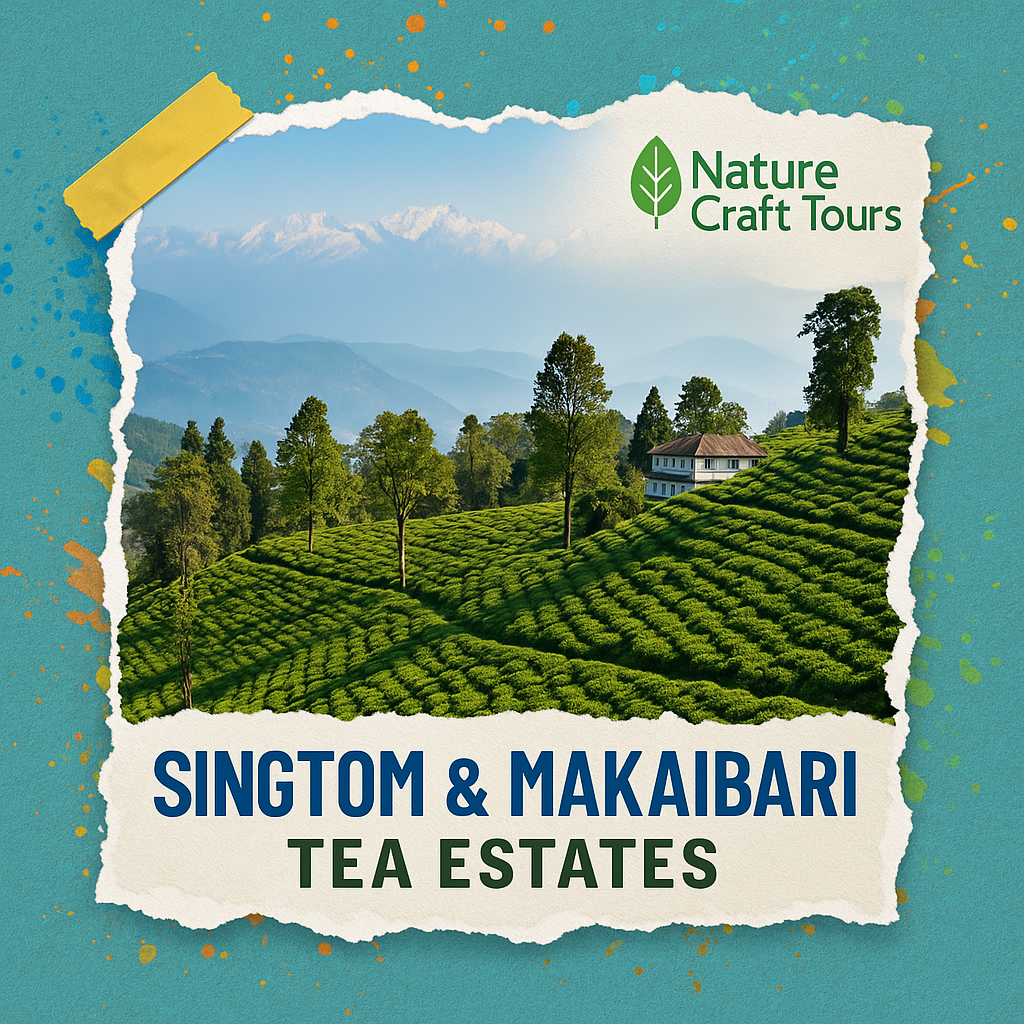
– A Detailed Travel Guide to Darjeeling’s Legendary Tea Heritage
Nestled in the heart of the Eastern Himalayas, the tea estates of Darjeeling stand as timeless symbols of elegance, heritage, and natural splendour. Among these globally recognised tea gardens, Singtom Tea Estate and Makaibari Tea Estate occupy a unique position for their historical legacy, sustainable tea cultivation, scenic landscapes, and immersive visitor experiences. Travellers exploring these estates encounter a world where nature meets culture, where rolling slopes of emerald tea bushes blend seamlessly with misty mountains and British-era plantation traditions.
This comprehensive travel guide offers a detailed, research-based exploration of both Singtom and Makaibari—covering their history, landscape character, sustainability practices, important viewpoints, local cultural ties, major distances, how to reach, accommodation categories, and the best seasons for a memorable visit. Designed for online publication, the content is structured for clarity and enriched with vivid descriptions.
Introduction to Darjeeling’s Tea Heritage
Darjeeling tea is often referred to as the “Champagne of Teas,” celebrated worldwide for its exquisite aroma, muscatel flavour, and delicate texture. The region’s unique climate, altitude, and soil composition make it one of the most distinguished tea-producing zones across the globe. Tea estates like Singtom and Makaibari not only contribute towards this legacy but also provide visitors with enriching experiences amidst scenic Himalayan landscapes.
Both estates belong to the older generation of Darjeeling plantations, established in the 19th century under British influence. Their estates continue to preserve traditional cultivation methods, blending age-old wisdom with modern sustainability principles.
Singtom Tea Estate – Timeless Beauty Near Darjeeling
Established in 1854, Singtom Tea Estate is among the oldest tea gardens in Darjeeling. Its proximity to Darjeeling town, dramatic mountain landscapes, colonial architecture, and tranquil gardens make it an ideal retreat for travellers looking to immerse themselves in tea culture.
Historical Background of Singtom
Singtom was founded during the peak of British plantation expansion in Darjeeling. Its name originates from local terms associated with abundance and mountain terrain. As one of India’s earliest tea estates, Singtom played an essential role in establishing the reputation of Darjeeling tea across international markets.
The estate once formed part of an integrated plantation network alongside Steinthal Tea Estate, and both continue to operate under a unified management. The tea garden’s colonial heritage is reflected in its architecture, tea production techniques, and well-planned slopes.
Geography and Landscape
Perched at an altitude ranging between 4,000 to 5,500 feet, Singtom Tea Estate is characterised by vast terraced slopes, vibrant green tea fields, winding trails, and sweeping Himalayan views. The estate offers uninterrupted vistas of:
- Kanchenjunga and the surrounding high Himalayan peaks
- Darjeeling town perched on neighbouring hills
- Distant forests and valleys of the Eastern Himalayas
Its location provides a harmonious blend of sunshine and mist, which directly influences the flavour and aroma of the tea produced here.
Tea Tourism Experiences at Singtom
Visitors can engage in immersive tea experiences, including:
- Tea garden walks through manicured slopes
- Tea tasting sessions to understand flavour profiles
- Factory visits where processing techniques are demonstrated
- Photography capturing the estate’s scenic glow
The estate also offers guided trails into forest patches and view towers that showcase panoramic mountain scenery.
Nearby Attractions from Singtom
- Tiger Hill – iconic sunrise viewpoint
- Darjeeling Mall – cafes, shops, and colonial charm
- Batasia Loop – a UNESCO heritage railway marvel
- Ghoom Monastery – a spiritual centre of Tibetan Buddhism
This proximity makes Singtom ideal for travellers who wish to combine nature with Darjeeling’s cultural and urban attractions.
Makaibari Tea Estate – The World’s First Organic Tea Garden
Makaibari Tea Estate, located near Kurseong, is one of the world’s most celebrated tea gardens. Established in 1859, it holds the distinction of being the first tea estate in the world to adopt organic and biodynamic farming. Its environmentally responsible practices, vibrant community culture, and historical legacy make it one of the most iconic destinations in the Indian tea landscape.
Historical Background of Makaibari
The estate was managed by the Banerjee family for generations, who brought international recognition to Makaibari’s innovative agricultural practices. They spearheaded Asia’s first “tea factory” concept, emphasising minimal mechanical interference and maximum natural harmony.
Makaibari’s teas have been served at international diplomatic meetings, royal events, and specialised auctions, making it one of the most prestigious tea brands globally.
Landscape Character of Makaibari
Spread across forested hills near Kurseong, Makaibari’s terrain blends organically with the Eastern Himalayan ecosystem. More than 70% of the estate is untouched forest, creating a biodiverse sanctuary home to:
- Rare orchids
- Butterfly species
- Leopard habitats
- Medicinal plants
- Exotic bird species
The estate’s tea bushes flow down undulating slopes like green waves, offering dramatic landscape photography opportunities.
Organic and Biodynamic Methods
Makaibari’s commitment to natural farming is reflected in its:
- Complete elimination of chemical fertilizers
- Use of cow-based compost, herbal sprays, and lunar cycles
- Forest-to-field integration
- Protection of indigenous species and wildlife
This adherence to biological harmony results in tea with remarkable flavour concentration and natural aromas.
Visitor Experiences in Makaibari
Visitors gain access to a meaningful combination of eco-tourism and cultural exchange. Popular activities include:
- Nature trails through the estate’s forests
- Tea-plucking experiences with guidance from estate workers
- Tasting premium teas under expert supervision
- Visiting tea factories to witness processing techniques
- Community interactions with local residents
The estate also houses century-old structures, making it a cultural treasure trove for history enthusiasts.
Distances and Connectivity
Understanding major distances helps travellers plan efficient itineraries. Below are approximate distances between these tea estates and major hubs:
- Darjeeling to Singtom: 8–10 km
- Darjeeling to Kurseong: 30–32 km
- Kurseong to Makaibari: 3–5 km
- NJP to Kurseong: 45–50 km
- Bagdogra Airport to Kurseong: 40–45 km
Travel time varies depending on road gradients and weather conditions, especially during monsoon and winter months.
How to Reach Singtom and Makaibari Tea Estates
Both estates are well connected through the network of hill roads linking Siliguri, Kurseong, and Darjeeling.
By Air
The nearest airport is Bagdogra Airport. From here, travellers may hire a private vehicle to reach:
- Singtom – approximately 2 to 2.5 hours
- Makaibari – approximately 1.5 to 2 hours
By Train
The closest major railway station is New Jalpaiguri (NJP). Cars and shared vehicles connect NJP with Kurseong and Darjeeling. From Kurseong, Makaibari is a short drive away, while Singtom lies closer to Darjeeling town.
By Road
Multiple scenic routes connect these tea estates:
- Siliguri → Kurseong → Makaibari
- Darjeeling → Singtom
- Sukna → Rohini → Kurseong → Makaibari
Roads wind through pine forests, waterfalls, colonial settlements, and vast stretches of tea gardens.
Staying Options near Singtom & Makaibari
The regions around Darjeeling and Kurseong provide several accommodation categories. While contact numbers are excluded as requested, the following types of stays are available:
1. Tea Estate Bungalows
These heritage bungalows offer colonial architecture, spacious rooms, gardens, and immersive tea experiences. Perfect for travellers seeking luxury and history.
2. Boutique Homestays
Several eco-homestays near Makaibari and Singtom offer organic cuisine, mountain views, and personalised hospitality.
3. Hilltop Lodges
These properties, located near Darjeeling or Kurseong, offer modern amenities with quick access to tea estate trails.
Local Cuisine & Tea Culture
Food forms an essential part of the Darjeeling tea estate experience. Travellers can enjoy:
- Traditional Nepali thali
- Handmade momos
- Local chicken curry
- Homemade pickles
- Organic vegetables sourced from villages
Freshly brewed Darjeeling tea—first flush, second flush, autumnal, and green tea varieties—is served across stays and tea lounges.
Best Time to Visit Singtom & Makaibari
Though both estates are accessible throughout the year, seasonal variations affect the overall experience.
Spring (March–April)
Bright sunshine, blooming flowers, and vibrant greenery make this period ideal for tea garden walks and photography.
Summer (May–June)
Pleasant temperatures and clear skies make summer a comfortable time to explore trails and forested sections.
Monsoon (July–September)
The monsoon transforms tea gardens into lush green carpets. Misty slopes create enchanting moods, though occasional roadblocks may occur.
Autumn (October)
Clear skies, festivals, and sharp visibility make autumn the best season for panoramic mountain photography.
Winter (November–February)
Cold weather with crystal-clear mornings offers breathtaking views of the Himalayas. Perfect for photographers seeking clarity and detail.
Why Visit Singtom & Makaibari?
Both tea estates form an extraordinary part of India’s mountain heritage due to their:
- Timeless colonial history
- Spectacular Himalayan landscapes
- Authentic tea culture and tasting experiences
- Organic, sustainable plantation practices
- Ideal environment for slow travel and cultural immersion
Whether one is a tea connoisseur, nature lover, photographer, or cultural enthusiast, these estates provide unforgettable experiences shaped by mountains, flavours, and history.
Conclusion
Singtom and Makaibari Tea Estates stand as guardians of Darjeeling’s tea heritage. While Singtom exudes classic colonial charm with panoramic Himalayan backdrops, Makaibari represents ecological wisdom and sustainable tea cultivation. Together, they form a compelling travel circuit that invites visitors to explore trails, interact with local communities, and immerse themselves in the timeless world of Darjeeling tea.
The serene slopes, the aroma of fresh tea, the gentle mountain winds, and the cultural richness of these estates ensure that every journey becomes a rejuvenating and memorable experience. For travellers seeking authenticity, heritage, and natural splendour, Singtom and Makaibari remain unmatched destinations in the Eastern Himalayas.