Sonapur Beach (Bahuda Mouth)
– A Detailed Travel Guide
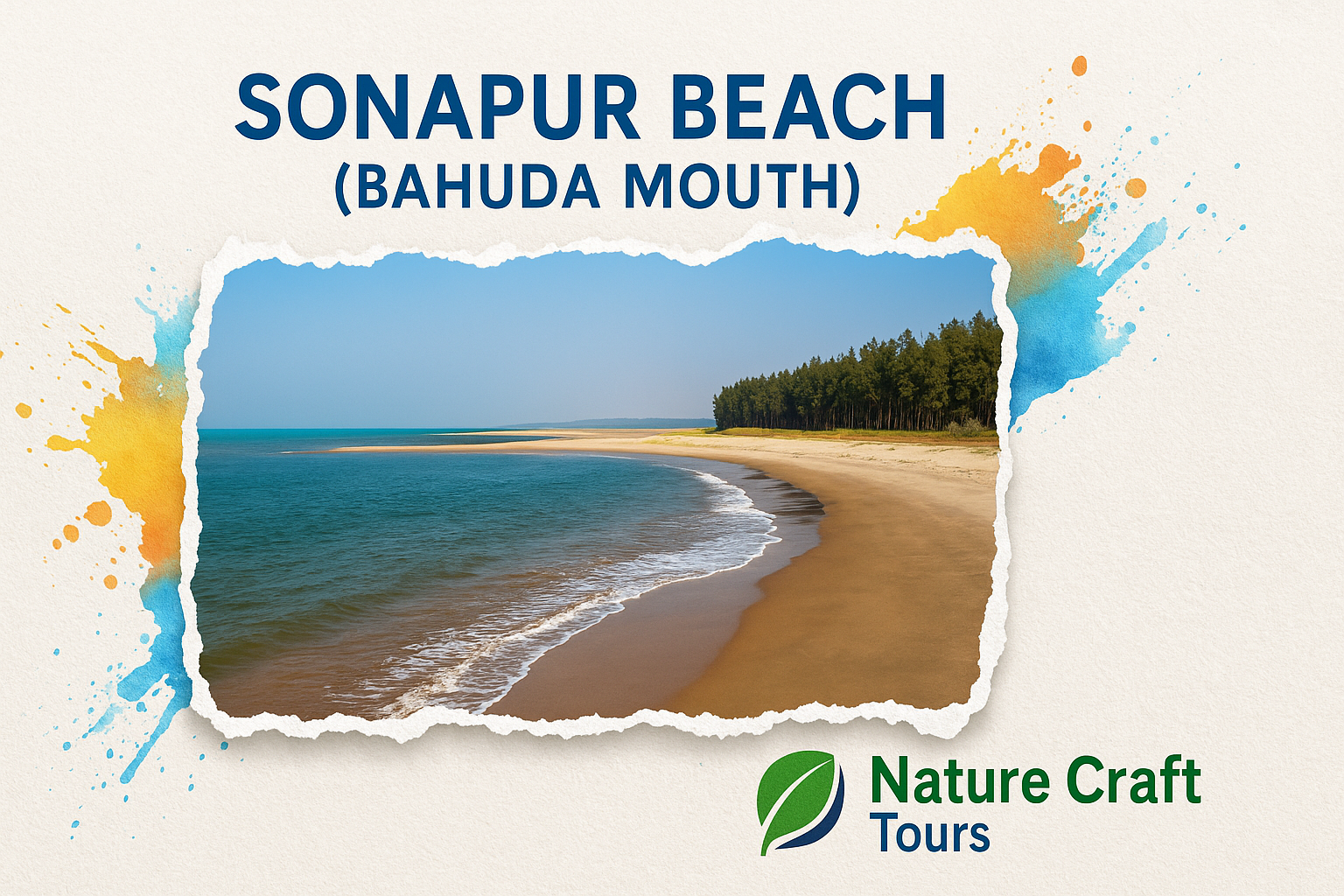
Sonapur Beach, located near the serene Bahuda River Mouth on the Odisha–Andhra Pradesh border, is one of the most pristine, untouched, and ecologically rich coastal landscapes of Eastern India. Known for its vast golden sands, crystal-clear waters, and the unique confluence where the Bahuda River merges gracefully with the Bay of Bengal, the region is an haven for travellers who seek solitude, nature, and wilderness far from crowded beach destinations.
The uncommercialised character of Sonapur Beach makes it especially appealing to environmental researchers, coastal geomorphology students, birdwatchers, photographers, and families searching for a tranquil holiday. Its remote ambience, framed by casuarina forests and the rhythmic flow of the Bahuda River, creates an unforgettable coastal experience enriched with marine biodiversity and cultural heritage.
Introduction to Sonapur Beach and Bahuda Mouth
Sonapur Beach lies about 30 km from Berhampur and close to Ichchapuram town of Andhra Pradesh. The Bahuda River, originating in the Eastern Ghats, travels through Odisha and Andhra Pradesh before meeting the Bay of Bengal at this stunning deltaic mouth. This convergence forms shifting sandbars, tidal pools, and a flourishing estuarine ecosystem that changes dramatically with seasons, positioning the region as a point of interest for environmental studies and tourism development planners.
The beach is a part of the broader coastal conservation initiatives undertaken by the Government of Odisha, documented by the Odisha Tourism Department (.gov). Its wide shoreline, shallow waters, and ecological quietude transform the area into one of the most visually compelling and richly biodiverse coastal corridors in the eastern seaboard.
Why Sonapur Beach Is Special
Sonapur Beach is celebrated for its understated natural grandeur. The landscape is shaped by gentle sea waves, expansive dune systems, and clusters of casuarina and palm trees that shield the coastline from strong winds. Unlike many popular beaches of Odisha such as Puri or Gopalpur, Sonapur retains an untouched environment where human footprints are sparse.
The Bahuda Mouth adds an entirely distinct charm: a silent, meandering river flowing into the ocean, creating an ever-changing estuary ecosystem filled with aquatic life, migratory birds, and nutrient-rich sediments that support a thriving ecological zone.
Major Attractions and Important Points to See
1. The Bahuda River Confluence (Bahuda Mouth)
This is the crown jewel of Sonapur Beach. The serene Bahuda River, with its soft ripples and deep blue-green waters, flows directly into the Bay of Bengal. At the confluence, travellers witness a magnificent interplay of freshwater and saline waves. During low tide, sandbars emerge, forming natural walkways where visitors can observe crabs, shells, small fish, and aquatic plants.
2. The Golden Sand Stretch
The expansive sandy belt is one of the cleanest on India’s eastern coast. The texture of the sand is exceptionally fine, making sunrise and sunset walks enchanting. Long exposure photographers often visit to capture the soft, trailing footprints in the sand accompanied by gentle sea breeze and pastel evening colours.
3. Casuarina Forest Belt
A dense stretch of casuarina trees borders parts of the beach. These create a cool, shaded environment and offer a striking contrast with the otherwise open, sunlit coastline. The rustling sound of casuarina leaves merging with the sound of waves forms a natural symphony that is both calming and immersive.
4. Estuarine Biodiversity Zone
The meeting of river and sea produces brackish water conditions that support a varied ecosystem. The estuary hosts:
- Small marine fish and juvenile species
- Crabs and molluscs
- Coastal birds like egrets, sandpipers, and herons
- Rare mangrove-associated plants in some pockets
For students of coastal ecology, this zone serves as a natural outdoor laboratory.
5. Sunrise and Sunset Points
Due to its relatively isolated location, Sonapur Beach offers uninterrupted sky views. The orange hues at dawn and the crimson-red glow in the evening reflect beautifully on the ocean surface, creating picture-perfect scenery.
6. Local Fishermen’s Hamlets
Near the northern edges of the beach lie modest fishing settlements. Their traditional boats, age-old fishing methods, and cultural practices offer travellers an insight into the coastal lifestyle of Odisha and Andhra Pradesh.
7. Sand Dune Systems
These natural dunes act as protective barriers against sea erosion. Their formation and erosion patterns fascinate geology and geography enthusiasts. During certain seasons, grasses and shrubs cover the dunes, creating a dramatic natural tapestry.
Distances from Major Locations
Understanding key distances helps travellers plan their itinerary efficiently:
- Berhampur to Sonapur Beach: 30–32 km approx.
- Gopalpur to Sonapur Beach: 42–45 km approx.
- Bhubaneswar to Sonapur Beach: 175–180 km approx.
- Ichchapuram (AP) to Sonapur Beach: 4–5 km approx.
- Bhubaneswar Airport to Sonapur Beach: 180–185 km approx.
- Brahmapur Railway Station to Sonapur Beach: 35 km approx.
How to Reach Sonapur Beach (Bahuda Mouth)
1. By Air
The nearest airport is Biju Patnaik International Airport, Bhubaneswar. From there, travellers can hire a cab or take a bus toward Berhampur and proceed to Sonapur Beach via Ichchapuram.
2. By Rail
The closest major railway station is Brahmapur (BERHAMPUR) on the Howrah–Chennai line. From here, taxis and local vehicles are easily available for the final stretch of the journey.
3. By Road
Sonapur Beach is accessible through well-maintained roads, connecting it seamlessly to Odisha and Andhra Pradesh. Travellers can use:
- NH16: The primary route connecting Brahmapur and Ichchapuram.
- Local connecting roads: Leading directly to the beach entry point.
The final approach to the beach is scenic, with casuarina plantations and open coastal plains.
Staying Options (Properties) Near Sonapur Beach
While Sonapur Beach remains largely untouched, several accommodation options have emerged in and around the region, including:
- Beachside eco-cottages
- Casuarina forest lodges
- Homestays run by local families
- Private cottages near Ichchapuram
- Small resort-style properties between Berhampur and the border area
Most accommodations provide essential facilities such as:
- Comfortable rooms with natural ventilation
- Local cuisine (fish curry, rice, coastal vegetables)
- Guided trips to Bahuda Mouth
- Bonfire arrangements during winter
- Transportation support for nearby sightseeing
Travellers are encouraged to book in advance during winter and festive seasons, as availability becomes limited due to the region’s growing popularity among offbeat explorers.
Best Time to Visit Sonapur Beach
1. Winter (November to February)
The most pleasant season with cool temperatures, clear skies, and ideal beach conditions. The ocean remains calm, and the estuary becomes highly photogenic.
2. Post-Monsoon (October to Early November)
After the monsoon, the landscape rejuvenates with fresh greenery, cooler winds, and revitalised tidal patterns.
3. Summer (March to June)
Warm but manageable, especially during mornings and evenings. Ideal for travellers who appreciate quieter beaches.
4. Monsoon (June to September)
Though scenic, the strong waves and unpredictable tides make monsoons less suitable for swimming. The estuary, however, becomes extremely lush and dramatic.
Flora and Fauna of the Sonapur–Bahuda Region
The unique merging of marine and freshwater environments creates a rich biodiversity belt. Travellers may spot:
Marine and Estuarine Life
- Crabs and hermit crabs
- Small coastal fish
- Juvenile prawns near river mouth
- Shell species in tidal pools
Bird Species
- Sandpipers
- Storks
- Egrets
- Sea gulls
- Herons
Floral Elements
- Casuarina trees
- Coastal grasses
- Sandy dune shrubs
- Occasional mangrove species near estuary pockets
Things to Do at Sonapur Beach
1. Estuary Walks
Walking along the Bahuda Mouth during low tide offers unique insights into tidal ecology and river–sea interactions. The calm waters create mirror-like reflections.
2. Sunrise Photography
The eastern horizon lights up early, bathing the coastline in pastel shades. Long exposure shots near the waterline are particularly rewarding.
3. Nature Trails Through Casuarina Groves
Short walks through the forest belt provide shade and an immersive soundscape created by rustling leaves and distant waves.
4. Birdwatching Sessions
The estuarine zone attracts migratory species in winter, making it ideal for birding enthusiasts.
5. Interaction with Local Fishing Community
Travellers may observe traditional fishing techniques, wooden boat maintenance, and daily coastal life, enriching cultural understanding.
6. Beach Picnics
Families often spend an entire day enjoying the tranquil coastal landscape, especially during winter.
Safety Tips and Responsible Travel Guidelines
- Avoid deep-sea swimming as tidal conditions vary.
- Carry sunscreen, hats, and adequate hydration during summer.
- Respect fishing zones and avoid disturbing marine habitats.
- Keep the beach plastic-free; follow leave-no-trace principles.
- Observe the estuary from a safe distance during high tide.
Meaningful External References
To aid travellers and researchers:
Conclusion
Sonapur Beach (Bahuda Mouth) stands as one of the most enthralling, serene, and environmentally significant beach destinations of Eastern India. Its unspoilt charm, the gentle merging of river and sea, and the deep stillness of its vast sandy expanse create an atmosphere that is both soothing and awe-inspiring. Whether you are a traveller seeking solitude, a photographer capturing coastal beauty, or a researcher studying estuarine ecology, Sonapur Beach offers a unique and enriching experience that leaves an enduring impact on the heart and mind.