Sukhiapokhri & Jorpokhri
– Twin Himalayan Retreats of Mist, Monasteries, and Alpine Serenity
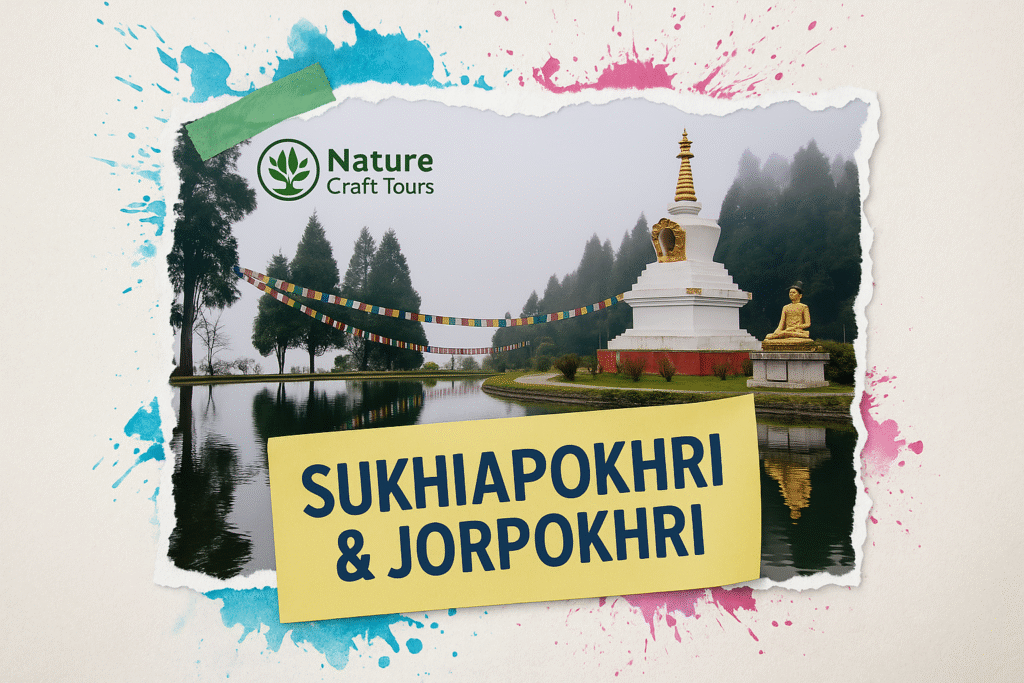
Nestled along the scenic Darjeeling–Mirik ridge, Sukhiapokhri and Jorpokhri stand as two of the most serene and soul-stirring destinations in the Eastern Himalayas. Located at an altitude of about 7,200 feet, these twin hamlets are blessed with lush green forests, mist-clad hills, rare Himalayan species, shimmering high-altitude lakes, and breathtaking views of snow-covered ranges.
While Sukhiapokhri serves as a lively hill bazaar and a cultural hub connecting several mountain villages, Jorpokhri is a tranquil, forest-fringed sanctuary built around twin water ponds that host the iconic and endangered Himalayan Salamander. Together, they create a uniquely harmonious blend of Himalayan wilderness, Buddhist spirituality, mountain culture, and scenic beauty.
For travellers seeking an offbeat Himalayan experience away from the crowds of Darjeeling, these destinations offer the perfect opportunity to explore untouched nature, indulge in slow travel, and unwind in the captivating ambiance of the hills.
Understanding Sukhiapokhri – Gateway to Himalayan Wilderness
Sukhiapokhri, often written as Sukhia Pokhri or Sukhipokhri, is a charming high-altitude settlement located approximately 11–12 km from Ghoom and 6–7 km from Lepchajagat. It acts as a major junction on the road connecting Darjeeling, Mirik, Manebhanjan, and the Indo-Nepal border regions.
The name “Sukhiapokhri” is derived from the Nepali words “Sukhia” (dry) and “Pokhri” (pond), referring to the historic pond that once existed at the center of the town. Today, the area is known for its colourful bazaars, vibrant local culture, peaceful monasteries, and panoramic views of the valleys stretching into Nepal.
Owing to its elevation, Sukhiapokhri experiences cool weather throughout the year, accompanied by rolling mists, pine-scented breezes, and breathtaking mountain sunrises.
Understanding Jorpokhri – The Land of Twin Lakes and Misty Forests
Jorpokhri lies just 2–3 km uphill from Sukhiapokhri and is one of the most tranquil viewpoints in the entire Darjeeling district. The word “Jorpokhri” comes from “Jor” (pair) and “Pokhri” (pond), referring to the twin water bodies that stand at the centre of this quiet hilltop.
A beautiful white stupa, fluttering prayer flags, manicured gardens, and lush forest surroundings make the Jorpokhri viewpoint exceptionally photogenic. The ponds also serve as a protected habitat for the critically endangered Himalayan Salamander, one of the rarest amphibians in the world.
Standing at the viewpoint on clear days, travellers may experience stunning panoramic views of Mt. Kanchenjunga, Darjeeling town, Meghma ridges, and even distant peaks of the Nepal Himalayas.
Major Attractions in Sukhiapokhri & Jorpokhri
1. Sukhiapokhri Viewpoint
The Sukhiapokhri viewpoint offers sweeping vistas of surrounding valleys, terraced villages, and forested ridgelines. On clear days, the silhouettes of the Nepal Himalayas appear at the horizon. The viewpoint is especially captivating during sunrise when hues of gold and pink illuminate the distant peaks.
2. Jorpokhri Twin Lakes
The twin ponds of Jorpokhri are the heart of the region. Enclosed within lush forestland, the ponds are home to rare aquatic life, including the Himalayan Salamander. A well-maintained walkway surrounds the water bodies, making it an ideal place for reflection, relaxation, and photography.
3. White Stupa and Buddha Statue
Jorpokhri features a beautifully crafted white stupa accompanied by a golden Buddha statue. Surrounded by prayer flags and set against a backdrop of mist-laden forests, the stupa creates a divine ambiance. Visitors often meditate here, enjoying the peaceful energy of the surroundings.
4. Forest Trails and Birdwatching
Both Sukhiapokhri and Jorpokhri are embraced by deep pine, fir, oak, and rhododendron forests that host numerous Himalayan bird species. Nature enthusiasts can explore several scenic trails that meander through forest corridors where:
- Kalij pheasants
- Himalayan bulbuls
- Minivets
- Fire-tailed sunbirds
- Drongos
- Woodpeckers
are frequently sighted. The forest environment also provides a serene setting for nature walks and photography sessions.
5. Indo-Nepal Border (Pashupati Market)
Located just 7–8 km from Sukhiapokhri, the Pashupati Border Market offers unique shopping experiences with imported products, local souvenirs, and Nepalese handicrafts. Travellers may also enjoy panoramic vistas of the rolling Nepal Himalayas en route.
6. Lepchajagat Forest Trails
Lepchajagat, situated around 6–7 km from Sukhiapokhri, is known for its dense forests, romantic trails, and stunning Kanchenjunga viewpoints. Many visitors staying at Sukhiapokhri often take short trips to this nearby paradise to enjoy forest hiking and panoramic views.
7. Ghoom & Its Monasteries
Around 11–12 km away lies Ghoom, home to the historic Yiga Choeling Monastery, one of the oldest Tibetan monasteries in the region. Travellers often combine this with their Sukhiapokhri–Jorpokhri sightseeing plan.
8. Mirik Lake
Located approximately 25–28 km away, Mirik Lake is a popular destination for boating, lakeside walks, and photography. The drive from Sukhiapokhri to Mirik is scenic, offering views of pine forests, valley farmlands, and distant mountain ranges.
Additional Points of Interest
- Monsoon orchids and wildflowers
- Misty hill roads and sunset points
- Local tea gardens on the Mirik–Sukhiapokhri road
- Herbal vegetation and medicinal plants
- Village markets selling traditional mountain produce
Major Distances from Sukhiapokhri & Jorpokhri
| Location | Distance | Approx. Travel Time |
|---|---|---|
| Darjeeling | 16–18 km | 45–55 minutes |
| Ghoom | 11–12 km | 30–40 minutes |
| Lepchajagat | 6–7 km | 15–20 minutes |
| Manebhanjan | 10–11 km | 25–35 minutes |
| Mirik | 25–28 km | 1.5 hours |
| Pashupati Border | 7–8 km | 20 minutes |
| NJP Railway Station | 65–70 km | 2.5–3 hours |
| Bagdogra Airport | 70–75 km | 3–3.5 hours |
How to Reach Sukhiapokhri & Jorpokhri
By Air
The nearest airport is Bagdogra Airport, located approximately 70–75 km away. Travellers can hire private taxis from the airport and take the Siliguri–Ghoom–Sukhiapokhri route, which offers panoramic hill views. The journey typically takes 3–3.5 hours.
By Rail
The closest major railway station is New Jalpaiguri (NJP). From NJP, shared jeeps are available up to Ghoom or Darjeeling, from where reserved vehicles can carry travellers to Sukhiapokhri and Jorpokhri.
By Road
Sukhiapokhri is accessible via:
- Siliguri – Ghoom – Sukhiapokhri
- Siliguri – Mirik – Sukhiapokhri (a scenic route through tea gardens)
- Darjeeling – Ghoom – Lepchajagat – Sukhiapokhri
The roads are well-maintained, though fog during winter and monsoon can reduce visibility. Private vehicles are recommended for a comfortable journey.
Accommodation Options
Both Sukhiapokhri and Jorpokhri offer cosy, nature-centric accommodations ranging from homestays and forest bungalows to small hillside cottages. Most properties feature:
- Wooden rooms suited for cold climates
- Himalayan or forest views
- Warm blankets and basic room heating
- Home-cooked meals featuring local ingredients
- Tranquil sit-out spaces and gardens
- Exclusive proximity to viewpoints
Types of Stays Available
- Homestays – Ideal for travellers seeking cultural experiences and family-style hospitality.
- Forest Bungalows – Located amid pine forests with serene surroundings.
- Mountain Cottages – Cosy wooden structures with picturesque views.
- Eco-lodges – Sustainable stays designed to blend with natural landscapes.
Food and Local Cuisine
Meals in these hill villages reflect the traditional Himalayan palette. Common dishes include:
- Rice, dal, and local vegetables
- Chicken curry or egg curry
- Seasonal greens and stir-fried herbs
- Tibetan dishes like momos and thukpa
- Nepali thalis with ghee, pickles, and lentils
- Organic teas from local plantations
Homestays typically prepare fresh, home-style food using organic produce grown in nearby farms. The warmth of these meals enhances the comfort of staying in high-altitude climates.
Best Time to Visit Sukhiapokhri & Jorpokhri
These twin destinations offer distinct beauty across seasons:
Spring (March–May)
Rhododendrons bloom, forests brighten with fresh foliage, and the mountain views remain clear. Ideal for hiking and nature trails.
Autumn (September–November)
This is the best period for crystal-clear Himalayan vistas. The weather is dry, pleasant, and perfect for sightseeing.
Winter (December–February)
Cold temperatures, mist-laden mornings, and cosy evenings define winter here. Snowfall is possible at higher spots near Jorpokhri.
Monsoon (June–August)
The forests turn lush green, and clouds float low over the roads. While scenic, heavy rain may restrict movement, making this season more suitable for relaxation rather than extensive sightseeing.
Activities to Enjoy
- Forest walks around Jorpokhri
- Birdwatching and wildlife spotting
- Sunrise and sunset photography
- Short treks to Lepchajagat and Ghoom
- Boating and sightseeing trips to Mirik Lake
- Shopping at local bazaars and the Indo-Nepal border
- Meditation near the Jorpokhri stupa
Travel Tips for Visitors
- Carry warm clothing throughout the year
- Wear good walking shoes for forest trails
- Fog is common — drive carefully
- Network connectivity may fluctuate
- Respect forest conservation rules
- Avoid littering around the lakes and viewpoints
- Pre-book accommodation during peak seasons
Conclusion
Sukhiapokhri and Jorpokhri represent some of the most enchanting Himalayan hideaways near Darjeeling. Whether it is the mystical beauty of the twin lakes, the serene forests, the calming stupa, or the panoramic mountain views, these destinations offer a refreshing escape into nature’s lap.
Ideal for peace-seekers, photographers, nature lovers, and anyone wishing to reconnect with the Himalayan wilderness, Sukhiapokhri and Jorpokhri ensure a deeply fulfilling and memorable travel experience.