Tea Estates & Tea-Tasting Trails of the Darjeeling Belt:
An Explorer’s Journey into Altitude, Aroma, and Agricultural Heritage
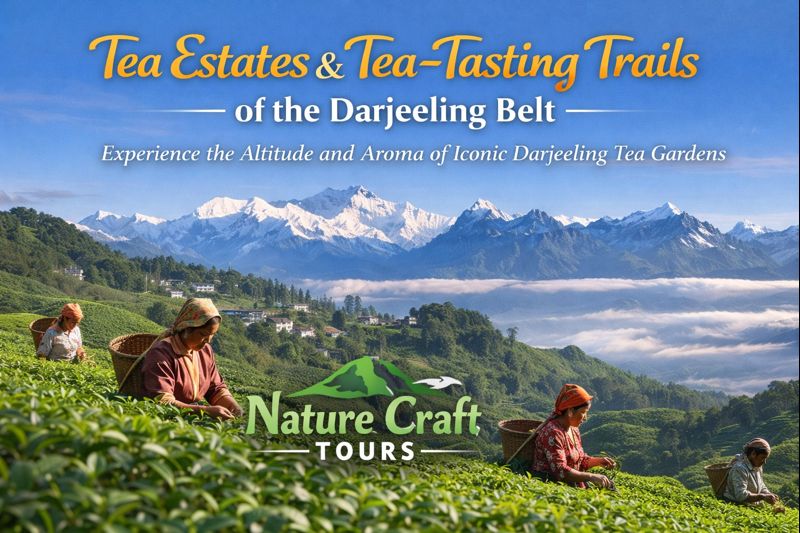
The Darjeeling Belt is not merely a tea-producing region; it is a living cultural landscape shaped by altitude, climate, colonial history, and generations of skilled plantation communities. Stretching across undulating Himalayan foothills at elevations ranging from 600 to over 2,000 meters, the tea estates of Darjeeling produce one of the most geographically distinctive agricultural products in the world. To walk through these estates, to taste tea at its place of origin, and to understand the science and art behind each leaf is to experience a form of travel that is slow, sensory, and profoundly educational.
This explorer-oriented guide presents a complete and research-based journey through the Tea Estates and Tea-Tasting Trails of the Darjeeling Belt. It covers destinations, ideal travel timing, estate circuits, tea seasons, processing insights, tasting methodologies, and a carefully structured tour plan that allows travelers to appreciate tea not as a beverage alone, but as a reflection of land and labor.
The Darjeeling Tea Belt: Geography and Terroir
The Darjeeling Tea Belt occupies a narrow Himalayan corridor where steep slopes, mist-laden mornings, cool temperatures, and acidic mountain soils combine to create a rare agricultural microclimate. Tea bushes here grow slowly due to cooler conditions, concentrating aromatic compounds that define Darjeeling tea’s celebrated floral character.
This concept of terroir — the relationship between geography and flavor — is central to understanding Darjeeling tea. Unlike lowland tea regions, the Darjeeling Belt experiences sharp diurnal temperature variations, frequent cloud cover, and seasonal rainfall patterns that influence leaf chemistry at every stage of growth.
Altitude and Its Influence on Flavor
Higher-altitude estates, often above 1,500 meters, produce teas with lighter body, pronounced aroma, and complex muscatel notes. Lower-altitude gardens yield fuller-bodied cups with stronger vegetal or fruity tones. This vertical diversity allows travelers to experience dramatic flavor variations within short distances.
Historical Foundations of Darjeeling Tea Estates
Tea cultivation in Darjeeling began in the mid-19th century when experimental plantations were established by British planters seeking alternatives to Chinese imports. Over time, structured estates emerged, many of which remain operational today, preserving architectural, botanical, and managerial legacies.
These estates functioned as self-contained ecosystems, with factories, labor lines, schools, and medical units. Modern tea tourism offers insight into how these colonial frameworks evolved into contemporary, community-driven production systems.
Estate Architecture and Cultural Landscape
Traditional tea estates feature colonial-era bungalows, narrow-gauge rail sidings, and gravity-assisted factory layouts designed for efficient leaf movement. Walking these estates reveals how terrain dictated industrial design long before mechanized transport.
Tea Seasons of Darjeeling: Timing Your Journey
Tea in Darjeeling is harvested in distinct flushes, each producing leaves with unique sensory profiles. Understanding these seasons is essential for planning a tea-tasting trail.
First Flush (March to April)
First flush teas are light, floral, and brisk, often described as the “spring teas” of Darjeeling. Estate visits during this period allow travelers to witness delicate plucking practices and early-season processing.
Second Flush (May to June)
Second flush teas are richer and more complex, known for muscatel notes. This is the most sought-after period for serious tea connoisseurs and tasting-focused travelers.
Monsoon and Autumn Flushes
While monsoon teas are less aromatic, autumn flush offers mellow, rounded flavors. Post-monsoon landscapes are lush, making this season ideal for estate walks and photography.
Key Tea Estate Circuits in the Darjeeling Belt
A structured tea-tasting trail combines multiple estates across elevations, ensuring diversity of flavor and perspective.
Upper Darjeeling Estates Circuit
Estates located near Darjeeling town and Ghoom are among the highest in the region. Visits here emphasize slow growth, artisanal processing, and panoramic Himalayan views.
Kurseong and Mid-Elevation Gardens
Kurseong’s tea estates occupy gentler slopes and warmer conditions. These gardens often focus on balanced teas and provide clearer access to factory operations.
Mirik and Southern Belt Estates
Southern Darjeeling estates benefit from heavier rainfall and deeper soils, producing robust teas. These gardens are ideal for understanding volume production and blending techniques.
Inside a Tea Factory: From Leaf to Cup
Tea-tasting trails are incomplete without factory immersion. Visitors observe each stage: withering, rolling, oxidation, firing, sorting, and grading. The absence of automation in many Darjeeling factories underscores the importance of skilled human judgment.
Subtle variations in temperature, humidity, and oxidation time can significantly alter flavor outcomes. Explorers gain appreciation for why Darjeeling tea cannot be standardized like mass-produced beverages.
The Art and Science of Tea Tasting
Tea tasting in Darjeeling follows a disciplined methodology. Liquor color, aroma, mouthfeel, and aftertaste are evaluated systematically. Estate tastings often compare multiple batches from the same day, illustrating how minor changes affect results.
Travelers who appreciate layered ecosystems often find parallels between tea terroir and other fragile landscapes. Experiences like a Sundarban Tour offer complementary insight into how environment shapes livelihood and culture.
Sensory Training for Visitors
Guided tastings train visitors to identify floral, fruity, vegetal, and mineral notes. This process deepens appreciation and transforms casual consumption into informed enjoyment.
Complete Tea-Tasting Tour Plan
Day 1: Arrival and Orientation
Arrive in Darjeeling via New Jalpaiguri or Bagdogra. The day is reserved for acclimatization and introductory sessions on Darjeeling tea history, terroir, and tasting basics.
Day 2: Upper Darjeeling Estates and Factory Visits
Visit high-altitude estates early in the morning to observe leaf plucking. Afternoon factory tours focus on first-stage processing. Evening tastings compare fresh batches.
Day 3: Kurseong Tea Belt Exploration
Travel to Kurseong for mid-elevation estate walks. Interact with tea workers to understand sustainable plucking cycles and labor practices.
Day 4: Southern Belt and Advanced Tasting
Explore southern estates and engage in comparative tastings across flushes and elevations. Discussions emphasize market grading and export standards.
Day 5: Cultural Integration and Reflection
Conclude the journey with cultural interactions, estate heritage walks, and reflective tastings. This day emphasizes the human dimension of tea cultivation.
Responsible Tea Tourism and Sustainability
Tea estates depend on ecological balance. Responsible tourism respects plucking schedules, minimizes disturbance, and supports estate-run sustainability initiatives. Ethical travel models practiced in sensitive regions such as Sundarban Travel demonstrate how tourism can coexist with conservation and livelihoods.
Why the Darjeeling Tea Trail Endures
The Tea Estates and Tea-Tasting Trails of the Darjeeling Belt endure because they offer more than scenic beauty. They provide an education in patience, precision, and respect for natural limits. Each cup tasted at its source tells a story of altitude, climate, labor, and time.
For explorers, this journey transforms tea from a daily habit into a geographical narrative. It reveals how landscapes shape flavor and how communities sustain traditions under changing global pressures. The Darjeeling tea trail is not fast travel; it is mindful exploration — one leaf, one aroma, one hillside at a time.