Tripura Heritage & Temple Circuit – 4 Days
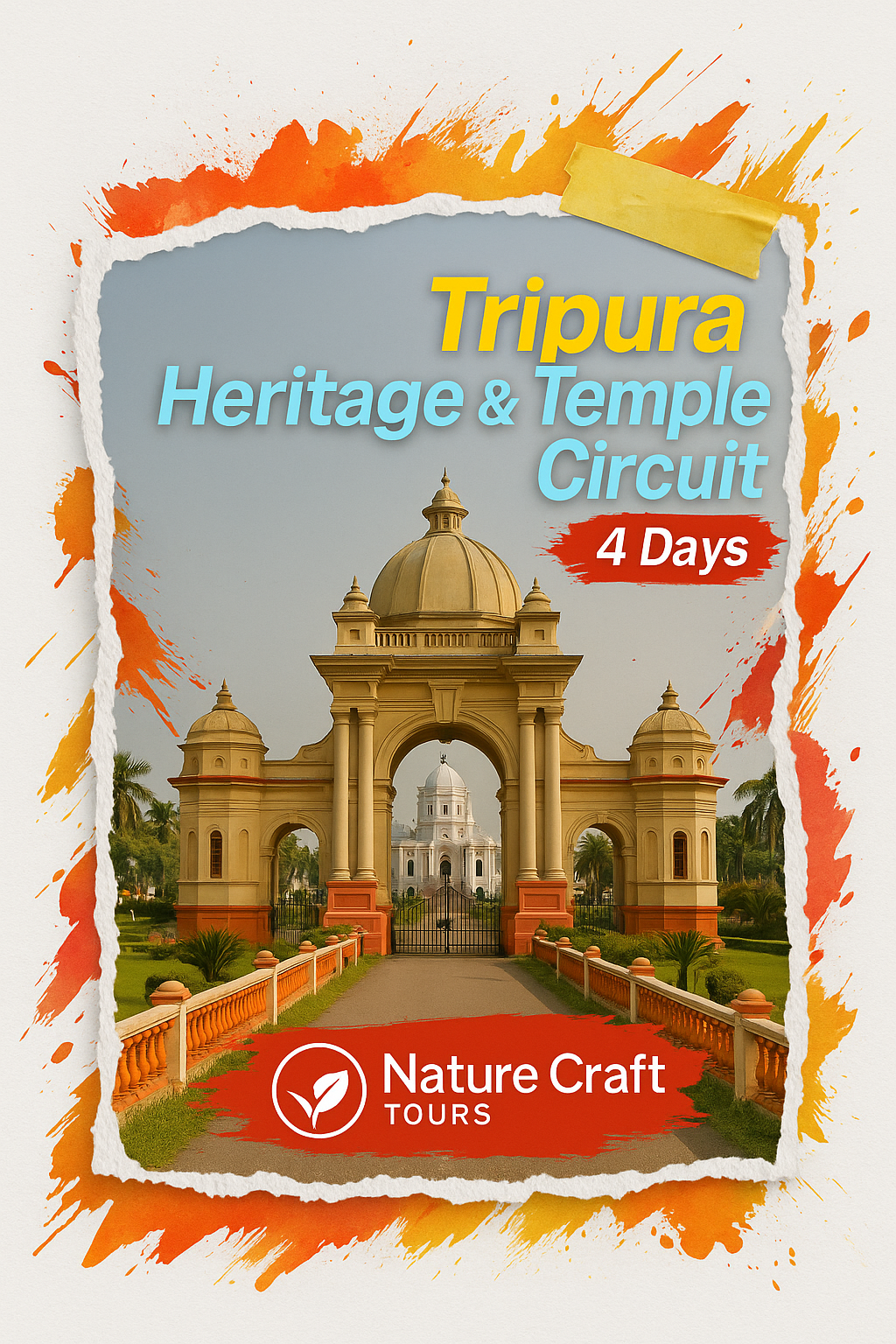
The Tripura Heritage & Temple Circuit Tour is an enchanting 4-day journey through one of Northeast India’s most culturally rich and historically significant states. Known as the “Land of Eternal Charm,” Tripura is a beautiful blend of royal heritage, ancient temples, verdant landscapes, and serene lakes. From the majestic Ujjayanta Palace in Agartala to the sacred Tripura Sundari Temple in Udaipur, and from the mystic rock carvings of Unakoti to the peaceful hilltop temples of Matabari, this tour takes you deep into Tripura’s glorious past and spiritual soul.
Steeped in legends and royal traditions, Tripura remains one of India’s most underrated travel destinations. This itinerary offers a perfect balance of sightseeing, history, and spiritual experiences — ideal for cultural enthusiasts, pilgrims, and explorers alike.
Overview of Tripura Heritage & Temple Circuit
Tripura, bordered by Bangladesh on three sides, is India’s third smallest state but one of the most scenic and culturally vibrant. Once a princely state ruled by the Manikya dynasty, it boasts a fascinating history that blends Hinduism, tribal customs, and colonial influences. Its capital, Agartala, is a charming city dotted with palaces, temples, museums, and parks. Beyond the capital, towns like Udaipur, Unakoti, and Neermahal preserve the grandeur of Tripura’s royal and spiritual heritage.
The Tripura Heritage & Temple Circuit connects these important destinations through scenic drives, offering travelers glimpses of hills, lakes, and tribal villages along the way. With serene landscapes and deeply rooted traditions, this tour promises an unforgettable cultural experience.
Day-wise Itinerary – Tripura Heritage & Temple Circuit (4 Days / 3 Nights)
Day 1: Arrival in Agartala – Exploring the Capital’s Royal Heritage
Arrive at Maharaja Bir Bikram Airport in Agartala, the capital of Tripura. After checking in to your hotel, begin your exploration of this beautiful city known for its royal architecture and green surroundings.
- Ujjayanta Palace: Begin your journey with a visit to this magnificent white-domed palace, built by Maharaja Radha Kishore Manikya in 1901. The palace now serves as the State Museum, showcasing artifacts from Tripura’s royal past, tribal traditions, and art collections. Its Mughal-style gardens, reflection pools, and grand halls are architectural marvels.
- Jagannath Temple: Located near the palace, this 19th-century temple dedicated to Lord Jagannath features unique octagonal architecture and brightly painted walls.
- Tripura State Museum: A must-visit for history lovers, it houses collections of ancient coins, tribal ornaments, sculptures, and rare manuscripts.
- Heritage Park: A beautifully landscaped park offering miniature models of Tripura’s iconic monuments and temples — a great way to understand the state’s cultural geography.
- Evening Leisure: Take a stroll through the city’s lively markets, especially the Gol Bazaar and Purbasha Emporium, where you can shop for bamboo crafts and handwoven textiles.
Overnight stay in Agartala.
Day 2: Agartala – Udaipur (55 km / 2 hours drive)
After breakfast, drive towards Udaipur (also known as Rangamati), one of the oldest towns in Tripura, located on the banks of the Gomati River. Known as the “City of Lakes and Temples,” Udaipur was once the capital of the Manikya kings and still retains its spiritual charm.
- Tripura Sundari Temple (Matabari): The most sacred shrine in Tripura, this 500-year-old temple is dedicated to Goddess Tripureswari — one of the 51 Shakti Peethas in India. The temple’s square-shaped sanctum and turtle-shaped hill setting make it a significant pilgrimage site. Devotees believe that Sati’s right foot fell here.
- Gunabati Temple: Built in 1668 by Queen Gunabati, this temple complex features exquisite carvings and is dedicated to Lord Vishnu.
- Bhubaneswari Temple: Another historic temple built by Maharaja Govinda Manikya, overlooking the Gomati River. It is an architectural gem and was featured in Rabindranath Tagore’s plays “Rajarshi” and “Bisarjan.”
- Udaipur Lakes: Visit Kalyan Sagar and Jagannath Dighi — scenic lakes that add serenity to the temple town. You can enjoy boating or photography here.
In the evening, walk around the temple markets where artisans sell traditional lamps, sweets, and handicrafts. Return to your hotel for dinner and rest.
Overnight stay in Udaipur.
Day 3: Udaipur – Neermahal – Unakoti (190 km / 6 hours drive total)
After breakfast, set out for a day trip covering two of Tripura’s most iconic sites — the floating palace of Neermahal and the ancient rock carvings of Unakoti.
- Neermahal Palace: Located in the middle of Rudrasagar Lake, this “Water Palace” was built in the 1930s by Maharaja Bir Bikram Kishore Manikya as a summer retreat. A fusion of Hindu and Mughal styles, it’s one of India’s few lake palaces outside Rajasthan. Take a boat ride across the lake to reach the palace, admire its grand corridors, and enjoy birdwatching around the lake.
- Unakoti: Continue to Unakoti, about 145 km from Agartala, a UNESCO tentative site and one of India’s most mysterious archaeological wonders. The site features massive rock-cut sculptures of Hindu deities dating back to the 8th–9th centuries CE. The central figure of Lord Shiva, known as Unakotiswara Kal Bhairava, stands 30 feet tall. Legends say there were once a crore (ten million) gods here, but only one less — hence the name “Unakoti” meaning “one less than a crore.”
- Photography & Nature Walks: The entire site is surrounded by lush hills, waterfalls, and dense forests, making it a paradise for nature photographers and spiritual travelers.
Return by evening and stay overnight either in Kailashahar or drive back to Agartala for overnight stay.
Day 4: Agartala Local Sightseeing & Departure
After breakfast, explore the remaining highlights of Agartala before departure.
- Chaturdash Devta Temple (Old Agartala): Dedicated to the 14 deities of Tripura’s royal family, this ancient temple complex hosts the annual Kharchi Puja festival — one of the state’s grandest celebrations.
- Benuban Vihar: A peaceful Buddhist monastery that holds relics of Lord Buddha, reflecting the coexistence of multiple faiths in Tripura.
- Sepahijala Wildlife Sanctuary (Optional Visit): Located 25 km from Agartala, it’s a scenic sanctuary and botanical garden with lakes, clouded leopards, and migratory birds — perfect for nature lovers.
- Local Market Visit: Buy souvenirs like bamboo furniture, handloom shawls, and organic tea before heading to the airport.
Transfer to Maharaja Bir Bikram Airport for your onward journey, carrying with you the soulful memories of Tripura’s temples, palaces, and legends.
Major Attractions of Tripura Heritage & Temple Circuit
- Ujjayanta Palace: Royal palace-turned-museum with a grand Mughal-style layout.
- Tripura Sundari Temple (Matabari): One of the 51 Shakti Peethas, a major pilgrimage destination.
- Neermahal: India’s only lake palace in the East, reflecting royal luxury.
- Unakoti: Ancient rock carvings and sculptures dating back over 1,000 years.
- Bhubaneswari Temple: Architectural beauty linked to Tagore’s literary works.
- Chaturdash Devta Temple: Seat of Tripura’s ancient royal rituals.
- Heritage Park & State Museum: Exhibiting Tripura’s art, history, and tribal heritage.
Major Distances
- Agartala to Udaipur: 55 km (Approx. 2 hours drive)
- Udaipur to Neermahal (Melaghar): 25 km (Approx. 45 minutes drive)
- Neermahal to Unakoti: 145 km (Approx. 4–5 hours drive)
- Agartala to Kailashahar: 178 km (Approx. 6 hours drive)
- Agartala to Sepahijala Sanctuary: 25 km (Approx. 40 minutes drive)
How to Reach Tripura
By Air: The nearest airport is Maharaja Bir Bikram Airport (Agartala), well-connected to Kolkata, Guwahati, and Delhi by regular flights.
By Train: Agartala Railway Station connects Tripura with major cities like Guwahati, Silchar, and Kolkata through express trains.
By Road: National Highway 8 connects Tripura with Assam and other northeastern states. Regular bus and taxi services operate from Guwahati, Shillong, and Silchar.
Accommodation Options – Where to Stay
Tripura offers a variety of accommodation options ranging from comfortable government lodges to boutique hotels and heritage properties.
- Hotel Sonar Tori (Agartala): A premium stay option near the city center with modern amenities and a rooftop restaurant.
- Ginger Agartala: A mid-range hotel with well-furnished rooms and easy access to major attractions.
- Udaipur Tourist Lodge: Government-run lodge near Matabari Temple offering comfortable accommodation for pilgrims.
- Neermahal Tourist Resort (Melaghar): Lakeside property managed by Tripura Tourism with beautiful views of Rudrasagar Lake.
- Kailashahar Lodge: Basic accommodation for travelers visiting Unakoti and nearby areas.
Best Time to Visit Tripura
- October to March (Winter): The most pleasant time to explore the state, with cool weather ideal for sightseeing and temple visits.
- April to June (Summer): Warm but manageable; perfect for exploring historical sites and lakes.
- July to September (Monsoon): The state becomes lush and green, but heavy rainfall may disrupt travel plans.
Festivals to Experience:
- Kharchi Puja (July): A major festival celebrated at the Chaturdash Devta Temple, where 14 deities are worshipped with grand rituals.
- Durga Puja (October): The most celebrated festival in Agartala, marked by vibrant decorations and processions.
- Diwali & Kali Puja: Particularly beautiful at the Tripura Sundari Temple, where thousands of lamps illuminate the temple complex.
Travel Tips
- Carry a valid government ID for check-ins and temple entries.
- Respect local customs and remove footwear before entering temples.
- Cash is preferred in smaller towns; ATMs are limited outside Agartala.
- Carry light woolens in winter and rain gear during the monsoon.
- Photography may be restricted in certain temple premises; seek permission.
- Try traditional dishes like Mui Borok (fermented fish curry), Chakui rice cake, and Bamboo Shoot Pickle.
- Buy authentic souvenirs from Purbasha — a state-run handicraft outlet promoting tribal artisans.
Nearby Attractions for Extended Tours
- Jampui Hills (200 km from Agartala): Known for its orange orchards, sunrise points, and cool climate — often called “Tripura’s Hill Paradise.”
- Dumboor Lake (120 km): A vast lake dotted with 48 islands, ideal for birdwatching, boating, and picnics.
- Chabimura Rock Carvings: Located near Amarpur, featuring ancient rock reliefs along the Gomati River cliffs.
- Pilak Archaeological Site: Showcasing Buddhist and Hindu stone sculptures dating back to the 8th–9th centuries CE.
Conclusion
The Tripura Heritage & Temple Circuit is a journey through time, faith, and art — a discovery of royal legacies and divine energy. From the mystical carvings of Unakoti to the shimmering waters of Neermahal and the sacred aura of Matabari, every destination reveals a new facet of Tripura’s rich cultural tapestry.
With its warm people, lush landscapes, and deeply spiritual essence, Tripura is more than just a destination — it is an experience of tranquility and devotion. Whether you are a history lover, a pilgrim, or a traveler in search of hidden gems, this four-day circuit offers a soul-stirring glimpse into the heritage heartland of Northeast India.
Embark on this spiritual and cultural journey with Nature Craft Tours and uncover the timeless treasures of Tripura — where every temple, palace, and carving tells a story that echoes through the hills of time.