Tsomgo (Changu) Lake, East Sikkim
— A High-Altitude Chronicle of Water, Faith, and Mountain Memory
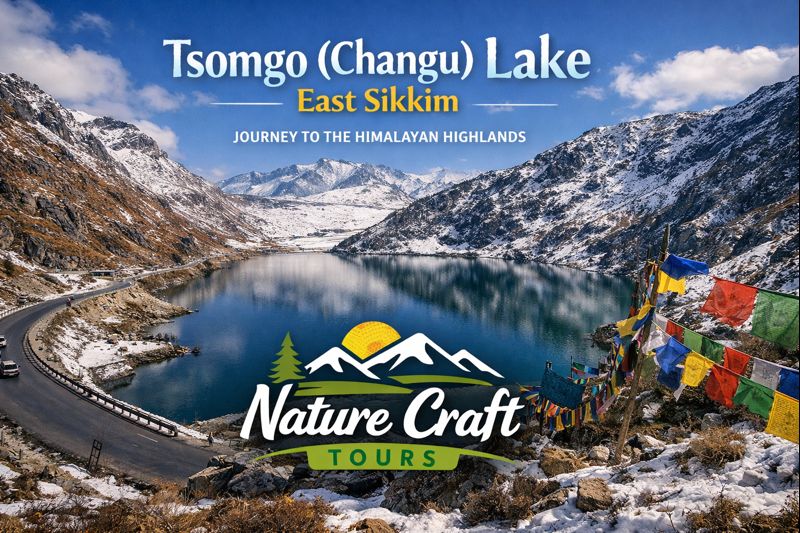
Where the Mountains Learn to Reflect
High above the subtropical valleys of eastern Himalaya, where the air thins and the land begins to speak in silences rather than sounds, lies Tsomgo Lake—also known by its colonial-era name, Changu Lake. Set at an altitude of approximately 3,753 metres (12,313 feet) above sea level in East Sikkim, this glacial lake is not merely a scenic waypoint on the Nathula axis; it is a geographic threshold where geology, climate, belief systems, and human endurance converge.
For the experienced traveller, Tsomgo Lake reveals itself gradually. It is not a destination that overwhelms instantly. Instead, it unfolds through altitude gain, breath control, changing vegetation zones, and a perceptible shift in light. The lake’s surface, often mirror-like in early hours, absorbs the moods of the surrounding mountains and returns them as reflection—snow-laced in winter, cobalt and grey during the monsoon, and burnished steel under post-monsoon skies. This article examines Tsomgo Lake not as a postcard attraction, but as a living highland system shaped by ice, culture, and strategic geography.
Geographical Setting and Physical Characteristics
Location and Altitude Context
Tsomgo Lake is situated approximately 38 kilometres east of Gangtok, the capital of Sikkim, along the strategic Gangtok–Nathula corridor. The lake occupies a glacial depression carved by ancient ice movements from the surrounding Eastern Himalayan ranges. Its high-altitude placement places it within the alpine climatic zone, marked by low atmospheric pressure, high ultraviolet exposure, and sharp seasonal contrasts.
The lake remains frozen for a substantial part of the year, typically from late December to March, depending on snowfall intensity and temperature trends. During warmer months, it is fed by melting snow from the surrounding slopes, which maintains its water level and clarity.
Hydrology and Seasonal Behaviour
Tsomgo Lake is a closed-basin glacial lake with no visible surface outflow. Hydrological balance is maintained through snowmelt input, precipitation, and subsurface seepage. During monsoon months, the lake’s water level can rise noticeably, and the colour shifts from deep blue to slate grey due to suspended sediments carried by surface runoff.
The seasonal freezing and thawing cycle plays a critical role in shaping the lake’s ecology. Ice cover reduces evaporation and biological activity during winter, while the thaw period initiates a brief but intense biological window during summer.
Ecological Landscape Around Tsomgo Lake
Alpine Vegetation Zones
The approach to Tsomgo Lake offers a textbook transition of Himalayan vegetation zones. Lower elevations are dominated by temperate broadleaf forests interspersed with conifers, gradually giving way to subalpine shrubs and alpine meadows as altitude increases. Near the lake, vegetation becomes sparse, limited to hardy alpine grasses, dwarf rhododendrons, and seasonal wildflowers.
During late spring and early summer, the slopes surrounding the lake are punctuated by blooms of alpine flora, creating brief but vivid contrasts against the otherwise austere landscape.
Faunal Presence and Avifauna
Wildlife sightings near Tsomgo Lake are infrequent due to altitude, temperature, and human presence, yet the region supports specialised species adapted to thin air and cold conditions. Occasional sightings of Himalayan marmots, yaks, and high-altitude birds such as snow pigeons and lammergeiers are recorded in quieter stretches.
The lake itself supports limited aquatic life due to low nutrient availability and prolonged freezing, but microbial and planktonic systems exist during summer months, forming the base of a fragile high-altitude food web.
Cultural and Spiritual Dimensions
Sacred Geography in Sikkimese Belief
For local communities, particularly among the Lepcha and Bhutia populations, Tsomgo Lake is a sacred site. Traditional belief holds that Buddhist monks once interpreted omens by observing the changing colours of the lake. Dark hues were seen as signs of hardship, while lighter tones were interpreted as favourable indicators.
The presence of a small shrine near the lake reflects its spiritual significance. Prayer flags fluttering along the shoreline represent a dialogue between human aspiration and elemental forces, reinforcing the lake’s role as a place of reverence rather than mere observation.
Role in Local Ritual Cycles
Though large-scale ritual gatherings are rare due to climate constraints, Tsomgo Lake features in seasonal prayer circuits and ceremonial journeys linked to Nathula and surrounding high passes. These movements reinforce cultural continuity in a landscape where habitation is sparse but meaning is dense.
Historical and Strategic Significance
Trade Routes and Border Geography
Historically, the Tsomgo–Nathula axis formed part of an ancient trade corridor connecting the Tibetan plateau with the Indian subcontinent. Salt, wool, and grain moved across these passes long before modern borders were defined. The lake, though not a trade stop itself, lay within the logistical sphere of these movements.
In contemporary times, the region’s proximity to the Indo-China border has imbued it with strategic importance. Military infrastructure and regulated access protocols reflect this reality, shaping how travellers experience the landscape today.
Route and Accessibility
Approach from Gangtok
The standard access route begins in Gangtok, following the Jawaharlal Nehru Road towards Nathula Pass. The road ascends steadily, passing through check-posts where permits are verified. Travel time typically ranges from 1.5 to 2 hours, depending on weather and traffic conditions.
The journey itself is an integral part of the experience, with frequent altitude-related pauses and visual transitions that prepare travellers physically and mentally for high-altitude conditions.
Permit and Regulation Framework
As Tsomgo Lake lies within a protected and strategically sensitive zone, Indian nationals require official permits issued through registered channels in Gangtok. Foreign nationals are generally restricted from visiting the lake due to border regulations. These measures, while limiting spontaneous travel, have contributed to controlled footfall and reduced ecological pressure.
Best Time and Seasonal Experience
Winter (December to March)
Winter transforms Tsomgo Lake into a frozen expanse surrounded by snow-laden slopes. Temperatures often drop well below freezing, and accessibility depends on snowfall conditions. While visually striking, winter travel demands careful acclimatisation and physical preparedness.
Spring and Early Summer (April to June)
This period marks the gradual thawing of the lake and the re-emergence of alpine vegetation. Visibility improves, and the region experiences relatively stable weather, making it the most balanced season for visitation.
Monsoon and Post-Monsoon (July to October)
Monsoon months bring cloud cover, mist, and occasional landslides along the access road. Post-monsoon, however, offers some of the clearest skies of the year, with dramatic light conditions and reduced tourist density.
Ideal Travel Duration and Integration into Sikkim Itineraries
A visit to Tsomgo Lake is typically structured as a half-day excursion from Gangtok, often combined with nearby high-altitude points along the Nathula route. However, for travellers seeking deeper engagement, allocating additional time allows for slower acclimatisation and observational pauses.
Within broader travel planning, destinations such as Tsomgo Lake contrast meaningfully with lowland ecosystems elsewhere in India. For instance, travellers who have explored riverine wilderness through a Sundarban Tour often find the stark alpine environment of East Sikkim to be a compelling counterpoint, illustrating India’s ecological range.
Key Highlights and Observational Points
Lake Perimeter Walks
Short, guided perimeter walks allow visitors to experience subtle variations in perspective and light. Even small shifts in position alter reflections and colour tones, underscoring the lake’s dynamic visual character.
Surrounding Mountain Vistas
Clear days reveal layered mountain profiles extending towards the Tibetan plateau. These views contextualise the lake within a much larger geological system shaped by tectonic uplift and glacial erosion.
Practical Travel Insights
Altitude Acclimatisation
Due to the rapid gain in elevation, travellers are advised to move slowly, stay hydrated, and avoid overexertion. Mild altitude symptoms are common and should be monitored carefully.
Clothing and Equipment
Layered clothing is essential year-round. Even during summer, temperatures can drop sharply due to wind exposure. Sunglasses and sun protection are critical due to high UV intensity.
Environmental Responsibility
The high-altitude ecosystem around Tsomgo Lake is extremely fragile. Visitors should avoid littering, refrain from disturbing vegetation, and respect local customs and restrictions.
Tsomgo Lake in the Broader Travel Context
When viewed alongside other Indian travel experiences, Tsomgo Lake occupies a distinctive position. Its stark alpine character contrasts with forested deltas, deserts, and coastal plains. Travellers planning diversified itineraries often juxtapose mountain regions with wetland ecosystems, such as combining a Sikkim journey with a Sundarban Tour Package, thereby engaging with India’s climatic and ecological breadth.
Reading the Landscape Beyond the Surface
Tsomgo (Changu) Lake is not defined solely by altitude or scenery. It is a site where natural processes, cultural memory, and strategic geography intersect in quiet but enduring ways. For the attentive traveller, the lake offers lessons in restraint, adaptation, and perspective. Its frozen winters, fleeting summers, and reflective waters remind us that some destinations are best understood not through speed or spectacle, but through patience and observation.
In East Sikkim’s highlands, Tsomgo Lake stands as a testament to the Himalayan capacity for both severity and grace—a place where the mountains pause long enough to see themselves.