Udayagiri & Khandagiri Caves – A Timeless Journey into Odisha’s Rock-Cut Heritage
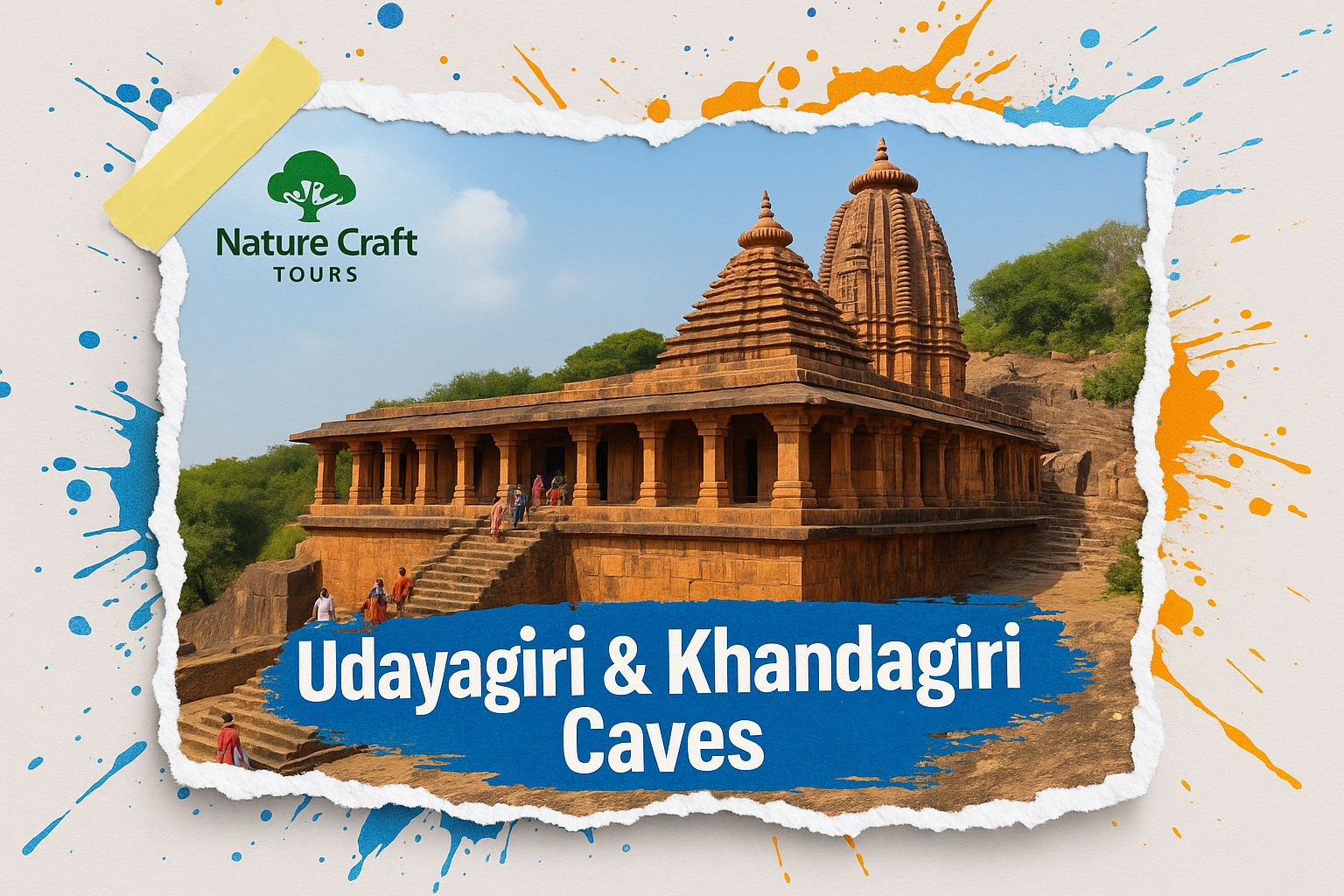
Udayagiri and Khandagiri Caves, located on the western outskirts of Bhubaneswar in Odisha, stand as magnificent remnants of India’s ancient rock-cut architecture. These twin hill complexes, carved during the reign of Emperor Kharavela of the Mahameghavahana dynasty (1st century BCE), represent a unique fusion of Jain heritage, artistic endeavour and historical documentation. Spread across two hilltops, the caves functioned as residential chambers for Jain monks and ascetics, offering them a peaceful environment for meditation, study and spiritual retreat.
Today, these caves form one of Odisha’s most important archaeological monuments—admired by historians, architects, travellers, students and spiritual seekers. Their inscriptions, sculptural details, carvings and natural ambience bring to life a time when monastic traditions flourished and artistic excellence reached new heights. This comprehensive guide provides an in-depth exploration of the caves, major attractions, distances, how to reach, staying options, the best time to visit and practical travel advice.
Historical Significance and Origins
The Udayagiri–Khandagiri complex has its origins in the 1st century BCE under the patronage of King Kharavela, one of the most celebrated rulers of ancient Kalinga. His reign marked a period of cultural revival, military expansion, artistic innovation and religious tolerance. The caves were excavated primarily to support the Jain ascetic orders, who preferred isolated sites suitable for austere living.
The most significant inscription at the site—known as the Hathigumpha Inscription—is carved on a large natural cavern at Udayagiri. This inscription outlines Kharavela’s achievements, conquests, public works, religious patronage and benevolence towards Jain institutions. It serves as one of the most important historical texts of ancient India, meticulously detailing the political landscape of the period.
These caves not only provide insight into monastic life but also reflect the artistic and technical skills of early Indian craftsmen. Their pillars, arches, sculpted panels, reliefs and structural layouts represent an early phase of Indian rock-cut architecture, predating many Buddhist and Hindu cave complexes across the subcontinent.
Overview of the Cave Complex
Udayagiri (“Hill of Sunrise”) comprises 18 caves, while Khandagiri (“Broken Hill”) consists of 15 caves. Together, they form a sprawling archaeological landscape set against a backdrop of greenery, rocky slopes and open skies. Visitors often begin their exploration with Udayagiri, as it contains the most significant carvings and inscriptions, before crossing over to Khandagiri through a pathway or road.
The caves were primarily carved as two-storeyed dwellings or meditation chambers. Many have verandas supported by pillars, intricately carved doorways, small shrines, devotional motifs, relief panels depicting royal scenes and animals, and inscriptions documenting patronage. The natural setting, combined with ancient craftsmanship, creates a powerful sense of antiquity.
Major Attractions at Udayagiri Caves
Udayagiri’s caves are historically richer, artistically superior and contain several unique carvings that make it the highlight of the complex.
1. Hathigumpha (Elephant Cave)
Hathigumpha is the most important historical feature of Udayagiri. This large natural cave bears the famous 17-line inscription of King Kharavela written in Brahmi script. Although weathered with time, it remains one of the most detailed royal records of ancient India. The inscription narrates the king’s lineage, administrative reforms, military victories, public welfare activities, construction of canals and gardens, and above all, his unwavering support for Jainism.
The name “Hathigumpha” derives from the elephant-shaped rock formations surrounding the cave. Visitors often spend considerable time here reading the translations, studying the script and understanding the significance of each line.
2. Rani Gumpha (Queen’s Cave)
Rani Gumpha is the largest and most architecturally impressive cave in the entire complex. It is a double-storeyed monastery featuring:
- Beautifully carved pillars
- Elegant archways and niches
- Exquisite friezes depicting hunting scenes, musicians, dancers and royal processions
- Carvings of animals such as elephants, lions and horses
- Courtyard-style layout for communal living and meditation
The artistic scenes displayed in Rani Gumpha showcase early examples of narrative relief in Indian cave architecture. The grandeur and detailing of its carvings suggest royal patronage, possibly directed towards honouring queens or female ascetics.
3. Ganesh Gumpha
Ganesh Gumpha, named after a later-period carving of Lord Ganesha near its entrance, is another major attraction. Though originally a Jain cave, it features reliefs that appear to merge Jain and Hindu motifs, reflecting the region’s religious harmony. The cave has an upper chamber with simple cells and a lower courtyard containing sculptures of elephants flanking the entrance.
4. Jaya Vijaya Gumpha
This double-storeyed chamber features decorative pillars and small reliefs that may represent attendants or guardians. The positioning of the cave provides scenic views of the surrounding landscape. Its carvings, though simpler than those of Rani Gumpha, represent an important phase of cave evolution.
5. Bagh Gumpha
Bagh Gumpha (“Tiger Cave”) is notable for its dramatic gateway shaped like a tiger’s mouth. Visitors walk through a sculpted arch resembling open jaws—an artistic expression believed to symbolize protection and strength. The simplicity of the interior contrasts strikingly with the imposing entrance.
6. Vyaghra Gumpha
Similar to Bagh Gumpha, Vyaghra Gumpha showcases another creative zoomorphic entrance design. Many believe these caves served as prominent meditation chambers, guarded symbolically by sculpted animal figures.
Major Attractions at Khandagiri Caves
Khandagiri Caves, though less ornate than Udayagiri, offer their own charm through elevated viewpoints, meditation chambers and inscriptions linked to Jain monastic life.
1. Ananta Gumpha
Ananta Gumpha contains carvings of serpents and protective motifs, symbolizing spiritual guardianship. The cave’s structural patterns suggest a blend of decorative artistry and functional monastic architecture.
2. Navamuni Gumpha
This cave showcases relief panels depicting nine Jain Tirthankaras carved with distinctive iconographic details. For those interested in Jain theology, this cave offers valuable artistic expressions of the Tirthankara lineage.
3. Barabhuji Gumpha
Barabhuji Gumpha earns its name from a multi-armed depiction of a deity—believed to be a later addition influenced by regional traditions. Although primarily a Jain retreat, many caves show signs of syncretic worship, revealing the complex religious landscape of ancient Kalinga.
4. Tatowa Gumpha (I & II)
The entrance to these caves is adorned with carved parrots—hence the name “Tatowa,” meaning parrot. The interiors include cells arranged systematically, reflecting the caves’ role as structured monastic residences.
5. Viewpoint at Khandagiri Hilltop
Climbing up the Khandagiri hill rewards visitors with panoramic views of Bhubaneswar city, the National Highway and the sprawling urban landscape below. This spot is ideal for photography, capturing dramatic sunsets and appreciating the geographic placement of the caves.
Experiences and Activities at the Cave Complex
A visit to Udayagiri and Khandagiri is not merely an archaeological excursion—it is a multisensory experience blending nature, history, spirituality and exploration.
1. Archaeological Exploration
The site is a haven for students, researchers and heritage enthusiasts. The inscriptions, architectural patterns and rock-cut techniques offer a vivid understanding of India’s early sculptural traditions and cultural interactions.
2. Meditative Walks
The natural slopes, shaded pockets and elevated platforms provide peaceful spaces ideal for reflection. Many Jain monks even today occasionally visit these caves during special periods of retreat.
3. Wildlife and Nature Observation
The hills are covered with native vegetation, attracting birds, butterflies, squirrels and lizards. During early mornings, the site resonates with chirping sounds and cool breezes, making it an appealing nature walk.
4. Photography and Sketching
The caves’ textures, shadows, carvings, animal motifs, and panoramic viewpoints offer excellent subjects for photography and fine arts. Many visitors spend hours capturing the interplay of light and stone surfaces.
5. Guided History Tours
Local guides often accompany visitors through the caves, explaining historical narratives, decoding inscriptions, and providing lesser-known stories about the kings, artisans and monks who shaped this site.
Major Distances
- Bhubaneswar Railway Station to Udayagiri & Khandagiri: approx. 6–7 km
- Biju Patnaik International Airport to the caves: approx. 7–8 km
- City Centre (Master Canteen) to the caves: about 8 km
- Nandankanan Zoological Park: around 20–22 km
- Dhauli Shanti Stupa: 14–15 km
The proximity of the caves to urban Bhubaneswar makes them ideal for half-day tours, heritage walks and educational visits.
How to Reach Udayagiri & Khandagiri Caves
By Road
The caves are located along National Highway 16, connecting Bhubaneswar with Cuttack and other major cities. Public buses, auto-rickshaws, app-based taxis and private vehicles provide easy connectivity from all parts of Bhubaneswar.
By Rail
Bhubaneswar Railway Station serves as the nearest major railhead. From the station, visitors can hire taxis or autos to reach the caves in 15–20 minutes depending on traffic.
By Air
Biju Patnaik International Airport is the closest airport, located within 8 km of the site. Air travellers can book taxis directly from the airport to reach the caves with ease.
Staying Options Around the Region
The cave complex lies within the greater metropolitan zone of Bhubaneswar, ensuring a wide range of accommodation options.
1. Premium Hotels in Bhubaneswar
High-end hotels in the city centre and near the airport provide comfortable stays with modern amenities such as fine dining, gymnasiums, pools and conference halls. These hotels are ideal for travellers seeking luxury and convenience.
2. Mid-Range Hotels
Numerous mid-range properties located within 5–8 km of the caves offer clean rooms, in-house restaurants and easy access to transportation. These are suitable for families, business travellers and heritage tourists.
3. Budget Lodges and Guest Houses
Budget accommodations are available throughout the city, catering to backpackers, students and pilgrims. These provide essential facilities and an economical base for sightseeing.
4. Eco-friendly and Boutique Stays
A few boutique properties emphasise cultural ambience with ethnic décor, artistic themes and greenery. These offer a more immersive local experience while remaining close to the cave complex.
Best Time to Visit Udayagiri & Khandagiri
The caves are open year-round, but seasonal variations affect the quality of the experience.
Winter (November to February)
This is the most pleasant season, with cool temperatures ideal for exploring the caves and climbing the trails. Clear skies enhance photography and panoramic viewing.
Post-Monsoon (September to October)
The vegetation becomes lush green, making the hillsides extremely scenic. The weather remains moderately warm but comfortable for sightseeing.
Summer (March to June)
Summer afternoons can be hot, but early mornings and late evenings remain conducive for exploration. Travellers should carry water and avoid peak noon hours.
Monsoon (June to August)
Monsoon showers add freshness to the environment, but slippery steps may make climbing challenging. Those who enjoy rain-washed landscapes may still find it beautiful.
A Suggested One-Day Itinerary
- Morning arrival at Udayagiri
- Explore Hathigumpha and Rani Gumpha in detail
- Walk through smaller caves including Bagh and Jaya Vijaya
- Lunch break in nearby areas
- Proceed to Khandagiri hill
- Visit Ananta, Navamuni and Tatowa Gumphas
- Climb to the Khandagiri Viewpoint for sunset
Essential Travel Tips
- Wear comfortable footwear suitable for climbing rocky steps.
- Carry drinking water, especially during summer months.
- Early morning visits help avoid heat and crowds.
- Photography is permitted but avoid touching ancient carvings.
- Local guides add tremendous value to historical understanding.
- Be cautious on uneven surfaces and narrow stairways.
- Respect the site’s heritage and do not litter.
Conclusion – A Living Chronicle of Ancient Odisha
Udayagiri and Khandagiri Caves stand as a remarkable fusion of architecture, history and spiritual legacy. Their carvings preserve some of the earliest stories of ancient Odisha, their inscriptions serve as valuable historical records and their natural surroundings create a timeless, meditative atmosphere. Whether you are a historian tracing the footsteps of Kharavela, an art lover seeking early sculptural marvels, or a traveller drawn to serene landscapes, these caves promise a profound experience.
As you walk through their corridors, climb their slopes, study their carvings and gaze at the horizon from their hilltops, you connect with centuries of heritage embedded in living stone. Udayagiri and Khandagiri are not merely archaeological monuments—they are vibrant storytellers, preserving the spirit of ancient Kalinga for generations to come.