Western Sahara Travel Guide
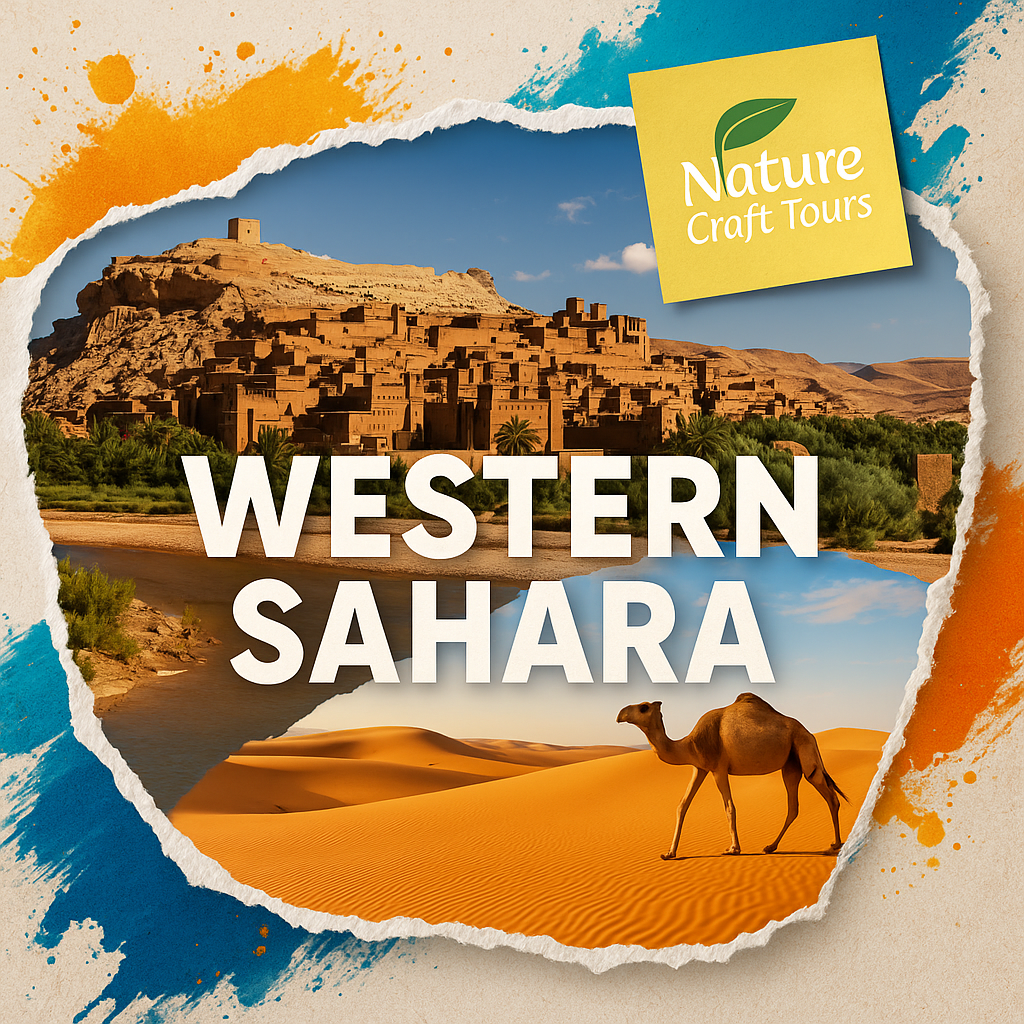
– A Comprehensive Journey Manual for Indian Travellers
Western Sahara, a sparsely populated desert region along the Atlantic coast of North-West Africa, is one of the most unique and geopolitically complex destinations in the world. Known for its dramatic sand dunes, pristine coastal stretches, traditional Sahrawi culture, and quiet desert towns, the region offers a landscape of vastness, silence, and surprising diversity. Although Western Sahara is a disputed territory—administered largely by Morocco but claimed by the Sahrawi Arab Democratic Republic (SADR)—certain areas are accessible to travellers under controlled conditions.
For Indian travellers, especially those starting their journey from Kolkata or Delhi, Western Sahara presents a rare opportunity to explore untouched desert environments, ancient caravan routes, and unique cultural experiences. This detailed research-driven guide explains key places to visit, major distances, travel routes, visa considerations, accommodation options (without contact details), best time to visit, and essential practical guidelines for a safe and meaningful journey.
Understanding Western Sahara (Disputed Territory)
Western Sahara lies south of Morocco, west of Algeria, and north of Mauritania, with a long coastline along the Atlantic Ocean. Most of the territory is administered by Morocco, referred to as the “Southern Provinces” by Moroccan authorities. The Sahrawi Arab Democratic Republic (SADR), backed by the Polisario Front, controls the eastern portion known as the “Free Zone.” The region’s political status remains unresolved, making it one of the most sensitive and least-explored regions of Africa.
Tourism is primarily possible in the Moroccan-administered areas, including Laayoune, Dakhla, Smara, and several coastal desert stretches. Travellers must remain informed, cautious, and respectful of local regulations and the geopolitical environment.
Major Tourist Attractions in Western Sahara
1. Laayoune (El Aaiún) – Administrative & Cultural Hub
Laayoune is the largest city in Western Sahara and serves as the administrative centre for Moroccan governance of the region. It is a quiet, desert-flavoured city with wide avenues, mosques, markets, and Sahrawi cultural districts.
- Laayoune Grand Mosque: A major religious landmark with regional architectural features.
- Place du Mechouar: A large central square known for cultural gatherings.
- Laayoune Souk: An ideal place to explore Sahrawi textiles, leather goods, and desert crafts.
- Saguia el-Hamra Riverbed: A seasonal river valley that shapes part of the city’s geography.
Distance: Laayoune Airport to city centre – approx. 5–8 km.
2. Dakhla – Coastal Paradise & Water Sports Capital
Dakhla is one of Western Sahara’s most famous destinations due to its extraordinary peninsula, lagoons, and pristine beaches. It attracts kitesurfers, nature lovers, and those seeking remote coastal tranquillity.
- Dakhla Lagoon: Known worldwide for wind sports and shallow turquoise waters.
- Atlantic beaches: Ideal for long walks, photography, and seafood experiences.
- Dragon Island: A scenic island accessible by boat during low tide.
- Oyster farms: A coastal culinary highlight.
Distance: Laayoune to Dakhla – approx. 530 km (via N1 highway).
3. Smara – Spiritual & Historical Town
Smara is an important cultural and historical centre of the Sahrawi people. Its traditional structures, desert surroundings, and spiritual heritage reflect ancient desert life.
Distance: Laayoune to Smara – approx. 220 km.
4. Aousserd Region – Remote Desert Landscapes
Aousserd is known for its untouched dunes, rocky desert formations, and wildlife habitats. It is a destination primarily for researchers or experienced travellers.
Distance: Dakhla to Aousserd – approx. 270–300 km.
5. Bir Gandouz – Gateway to Mauritania Route
This small settlement is known as a stopover for travellers heading towards Mauritania. It features striking open landscapes and desert plains.
Distance: Dakhla to Bir Gandouz – approx. 325 km.
6. Boujdour – Coastal Town on the Atlantic
Boujdour is a small but significant port town with a lighthouse, coastal views, and a strong fishing culture.
Distance: Laayoune to Boujdour – approx. 180 km.
7. Tarfaya – Historic Maritime Town
Although technically north of the disputed territory, Tarfaya is closely associated with the region’s cultural and maritime history.
- Antoine de Saint-Exupéry Museum
- Spanish-era fort ruins
Distance: Laayoune to Tarfaya – approx. 110 km.
How to Reach Western Sahara from India
Travel to Western Sahara is typically routed through Morocco. Indian travellers can reach Moroccan cities such as Casablanca, Agadir, or Marrakech, followed by connecting flights or long-distance road travel into Western Sahara. Direct entry from Mauritania is possible but requires careful planning.
From Kolkata
- Kolkata → Doha → Casablanca (Qatar Airways)
- Kolkata → Dubai → Casablanca (Emirates + Royal Air Maroc)
- Kolkata → Istanbul → Casablanca (IndiGo + Turkish Airlines)
Total travel time: approx. 15–22 hours depending on connections.
From Casablanca or Agadir:
- Flight to Laayoune (approx. 2 hours)
- Flight to Dakhla (approx. 2–2.5 hours)
From Delhi
- Delhi → Doha → Casablanca (Qatar Airways)
- Delhi → Dubai → Casablanca (Emirates + Royal Air Maroc)
- Delhi → Istanbul → Casablanca (Turkish Airlines)
Total travel time: approx. 13–20 hours.
By Road from Morocco
- Casablanca to Laayoune – approx. 1,075 km
- Agadir to Laayoune – approx. 530 km
- Laayoune to Dakhla – approx. 530 km
Visa Guide for Visiting Western Sahara
Since Western Sahara is administered by Morocco, entry procedures follow Moroccan visa regulations for travellers entering Moroccan-controlled areas. The Sahrawi-controlled zone is not normally accessible to foreign visitors without special permission.
Visa Requirements for Indian Travellers
Indian nationals require a Moroccan visa to enter Western Sahara. The visa is processed through the Embassy of Morocco in New Delhi.
Documents Required
- Valid passport with at least 6 months remaining
- Completed visa application form
- Recent passport-sized photographs
- Confirmed hotel reservations
- Travel itinerary
- Bank statements for financial proof
- Return flight bookings
- Travel insurance
Where to Apply – Embassy of Morocco in India
Embassy of the Kingdom of Morocco, New Delhi
Address: EP-41, Jesus & Mary Marg, Chanakyapuri, New Delhi – 110021
Visa Processing Time
- Standard processing: approx. 10–15 working days
Accommodation Options in Western Sahara
Accommodation in Western Sahara is concentrated primarily in Laayoune and Dakhla. As per requirements, no hotel contact details are provided.
1. Laayoune
- Mid-range hotels
- Modern business-class properties
- Budget-friendly stays
2. Dakhla
- Beachfront eco-lodges
- Kite-surfing resorts
- Mid-range guesthouses
3. Smara
- Basic lodges
4. Coastal Desert Camps
- Tented accommodations
- Adventure-style camps
Best Time to Visit Western Sahara
- October to April: Best season with mild desert temperatures.
- May to June: Warm but manageable.
- July to September: Hot desert conditions; less ideal for travel.
Internal Distances & Transportation
- Laayoune to Dakhla – approx. 530 km
- Laayoune to Boujdour – approx. 180 km
- Laayoune to Smara – approx. 220 km
- Dakhla to Bir Gandouz – approx. 325 km
- Dakhla to Aousserd – approx. 270–300 km
Important Travel Considerations
- Travellers should remain within Moroccan-administered zones unless part of special authorised expeditions.
- Political sensitivities require respectful behaviour.
- Long desert distances require proper planning and sufficient supplies.
- Travellers should stay updated with advisories before planning their journey.
Conclusion
Western Sahara is a land of silent dunes, sweeping coastlines, Sahrawi traditions, and desert solitude—a destination rarely explored but exceptionally rewarding for the mindful traveller. Despite its political complexities, the Moroccan-administered regions offer safe and organised routes for visitors interested in desert, culture, and coastline experiences.
For Indian travellers from Kolkata, Delhi, and other metros, accessing Western Sahara primarily through Morocco makes the journey straightforward. With careful planning, awareness of local sensitivities, and guidance from this research-based travel guide, visitors can enjoy a unique and immersive adventure into one of North Africa’s most enigmatic regions.